Budgeting: How much does photography cost as a hobby? A starter budget
The cost of a photography hobby depends mostly on the camera and lenses you buy, plus accessories, editing software and courses. In a worked example, a second-hand starter kit costs about 600.
 By Wealtie Team · 3 min read
Key takeaways
- The cost of a photography hobby depends mostly on the camera and lenses.
- In a worked example, a second-hand starter kit costs about 600.
- Your phone is a good place to start before buying anything.
- Lenses and skills matter more than an expensive camera body.
How much does photography cost as a hobby?
Photography can be one of the cheapest hobbies or one of the most expensive. You can start with the phone in your pocket for nothing. Once you want more control, a camera and lens are the main costs, followed by memory cards, a bag, editing software and perhaps a course. In a worked example, a second-hand starter kit costs about 600. A new kit of similar quality costs closer to 1,000.
The trap many photographers fall into is buying more gear in the hope it'll improve their photos. Skills and practice usually make a bigger difference than equipment.
What does a photography starter kit cost?
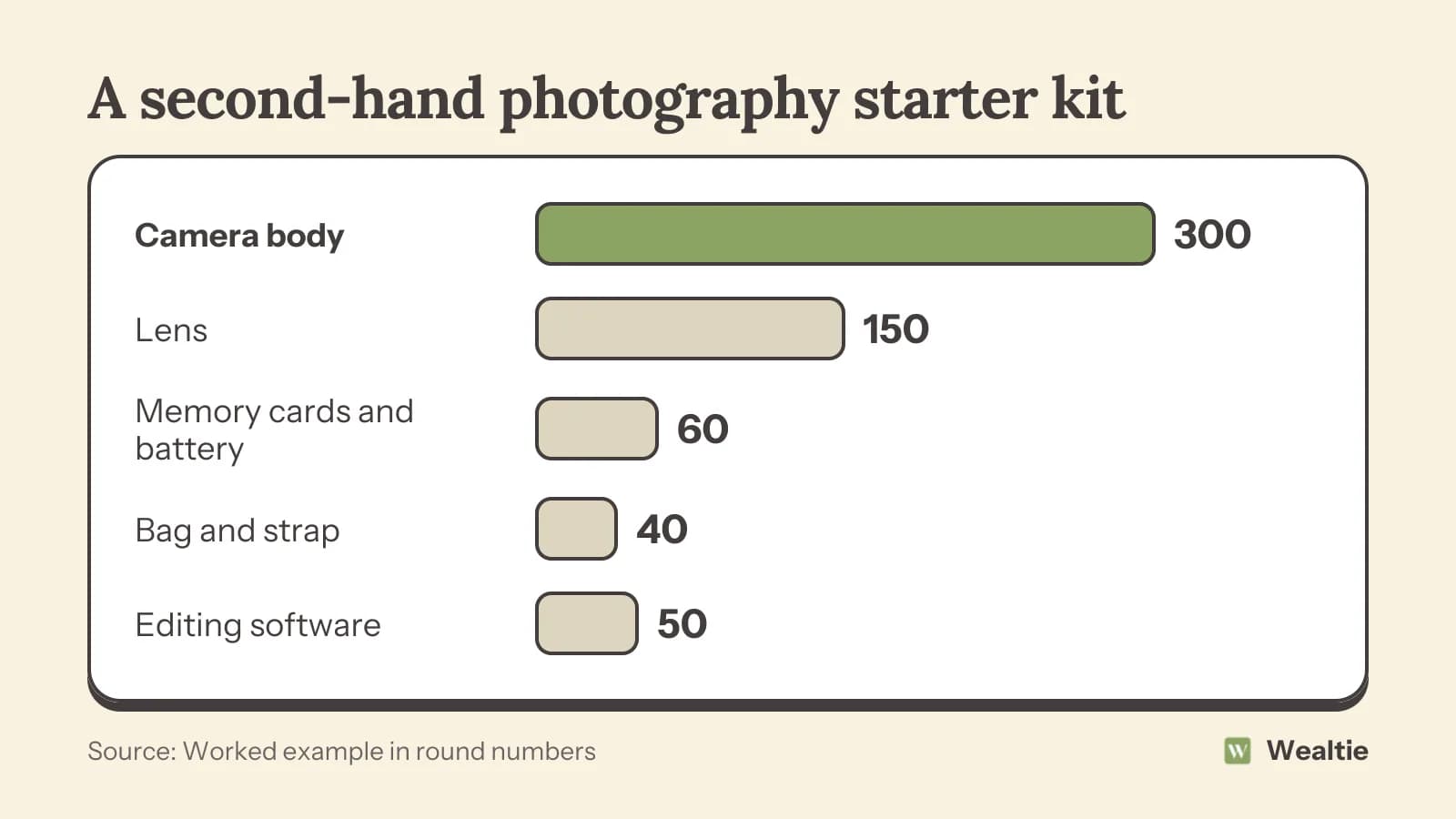
Here's a worked example of a second-hand starter kit, in round numbers that work in any currency:
| Item | Cost |
|---|---|
| Camera body | 300 |
| Lens | 150 |
| Memory cards and battery | 60 |
| Bag and strap | 40 |
| Editing software | 50 |
| Total | 600 |
What are the main photography costs?
Camera body
The camera is the biggest single cost. Entry-level and older models take excellent photos and cost much less than the latest ones. Camera models are updated often, so last year's model is often much cheaper and barely different.
Lenses
Lenses shape your photos more than the camera body. A versatile zoom lens covers most situations. A fixed lens, sometimes called a prime, is often cheap, sharp and great for portraits. Good lenses keep their value well, so buying second-hand is safe and they can be sold on.
Accessories
Spare batteries, memory cards, a bag and a strap are essentials. A tripod, filters and a flash can come later, once you know you need them.
Editing software
Free editing apps can do a lot. Paid software adds more control, often as a subscription. Try free options first.
Courses and books
Free online tutorials and library books cover the basics well. Paid courses and workshops can help with specific skills, like portraits or landscapes.
How can you save on photography?
Start with your phone
Modern phones take great photos. Learning composition, light and timing on your phone costs nothing and teaches skills you'll use on any camera.
Buy second-hand
Used cameras and lenses from reputable dealers or private sellers can cost much less than new. Check the shutter count, look for damage and test the camera before you pay.
Buy one good lens, not many average ones
A single good lens can cover most of what you'll shoot. Add more only when you find a clear gap.
Rent before you buy
Hire a lens or camera for a weekend before spending big. If you love it, buy one. If not, you've saved a lot.
Avoid gear creep
New gear is tempting, but it rarely makes as much difference as practice. Set a yearly budget for equipment and stick to it. How to save money on a hobby covers keeping hobby costs in check.
Can photography pay for itself?
Some hobbyists sell prints, shoot events for friends or sell stock photos. It rarely covers the full cost at first, but it can offset some of it. If you start earning, keep track of the income separately so you can see whether the hobby is paying its way.
Sell gear you don't use
Cameras and lenses hold their value well. Selling equipment you've outgrown funds the next purchase. How to sell things you don't use covers the best ways.
Work out the cost per use
A lens you use every weekend is good value even if it cost a lot. One that sits in a bag isn't. Cost per use helps you decide what's worth keeping.
What else adds to the cost of a photography hobby?
Once you're taking lots of photos, other costs creep in. Cloud storage or extra hard drives keep your photos safe, and many people pay a monthly fee for backups. Printing photos, frames and photo books cost money too, though seeing your work on a wall is part of the fun. Insurance for expensive gear is worth checking, since home insurance may not cover cameras taken out of the house. Travel to interesting places to shoot can be the biggest cost of all for landscape and wildlife photographers. Plan these into your yearly budget, so they don't surprise you.
How do you track photography costs in Wealtie?
Add a photography category to your expense categories and set a budget for it, so you can see how much you spend on gear, software and courses over a year. If you sell photos or gear, log that income in the income tracker to see the hobby's real cost.
Questions people ask
In a worked example, a second-hand starter kit with a camera, lens, accessories and editing software costs about 600.
The lens often matters more than the camera body. One good, versatile lens covers most situations.
Yes. Phones take great photos, and learning composition and light on a phone teaches skills you'll use on any camera.
Buy second-hand, start with one good lens, rent before buying expensive gear and sell equipment you don't use.
This article is general information, not financial, tax or legal advice. Your situation is your own; check the numbers that apply to you before you act on them.