Budgeting: The cost of painting as a hobby: paints, brushes and classes
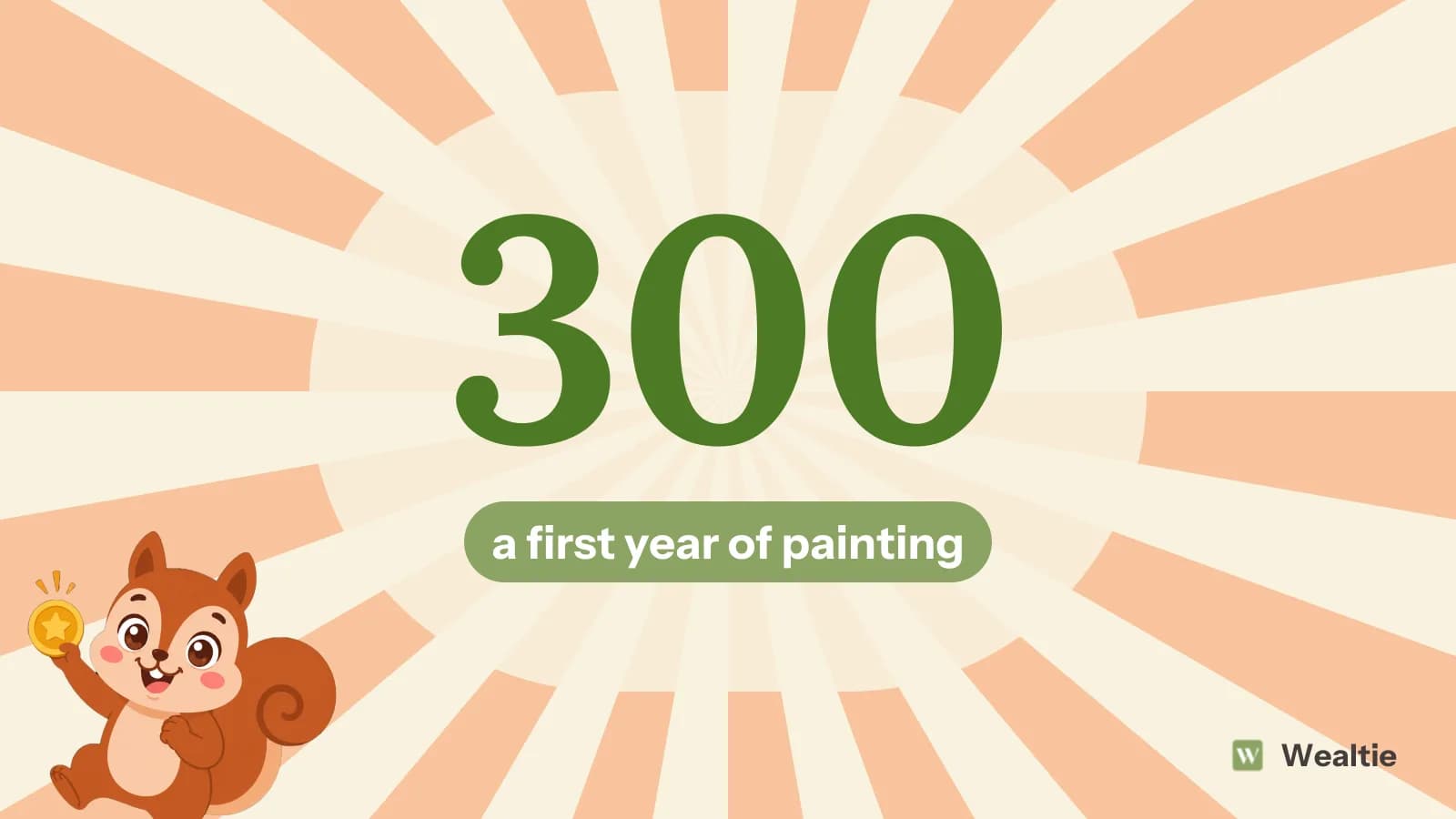
The cost of painting as a hobby depends on the medium, with watercolour and acrylic cheaper to start than oils, plus paper or canvas, brushes and any classes. In a worked example, a first year of acrylic painting costs about 300.
 By Wealtie Team · 3 min read
Key takeaways
- The cost of painting as a hobby depends on the medium you choose.
- In a worked example, a first year of acrylic painting costs about 300.
- Student-grade paints and a few good brushes are enough to start.
- Paper and canvas are ongoing costs, so practise on cheaper surfaces.
What is the cost of painting as a hobby?
Painting is a relaxing, creative hobby that can cost very little to start. You need paints, brushes, something to paint on and a bit of space. The medium you choose makes the biggest difference to cost. Watercolour and acrylic are cheap and easy to start with, while oil paints and their solvents cost more and need more ventilation. Classes help you learn faster but add to the bill. In a worked example, a first year of acrylic painting costs about 300.
Many beginners buy expensive artist-grade supplies straight away. Student-grade paints and a few good brushes are more than enough while you learn, and they leave money for classes or more paper.
The most useful thing you can do as a beginner is paint often, and that's easier when supplies feel cheap enough to use freely. If every sheet of paper feels precious, it's tempting to save it for a perfect painting that never comes. Cheaper practice materials let you experiment, make mistakes and learn quickly. Many painters keep a sketchbook of quick studies, which costs little and builds skill faster than occasional big pieces.
What does a first year of painting cost?
Here's a worked example for acrylic painting, in round numbers that work in any currency:
| Item | First year |
|---|---|
| Classes | 120 |
| Paints | 60 |
| Canvases and paper | 60 |
| Brushes | 30 |
| Easel and palette | 30 |
| Total | 300 |
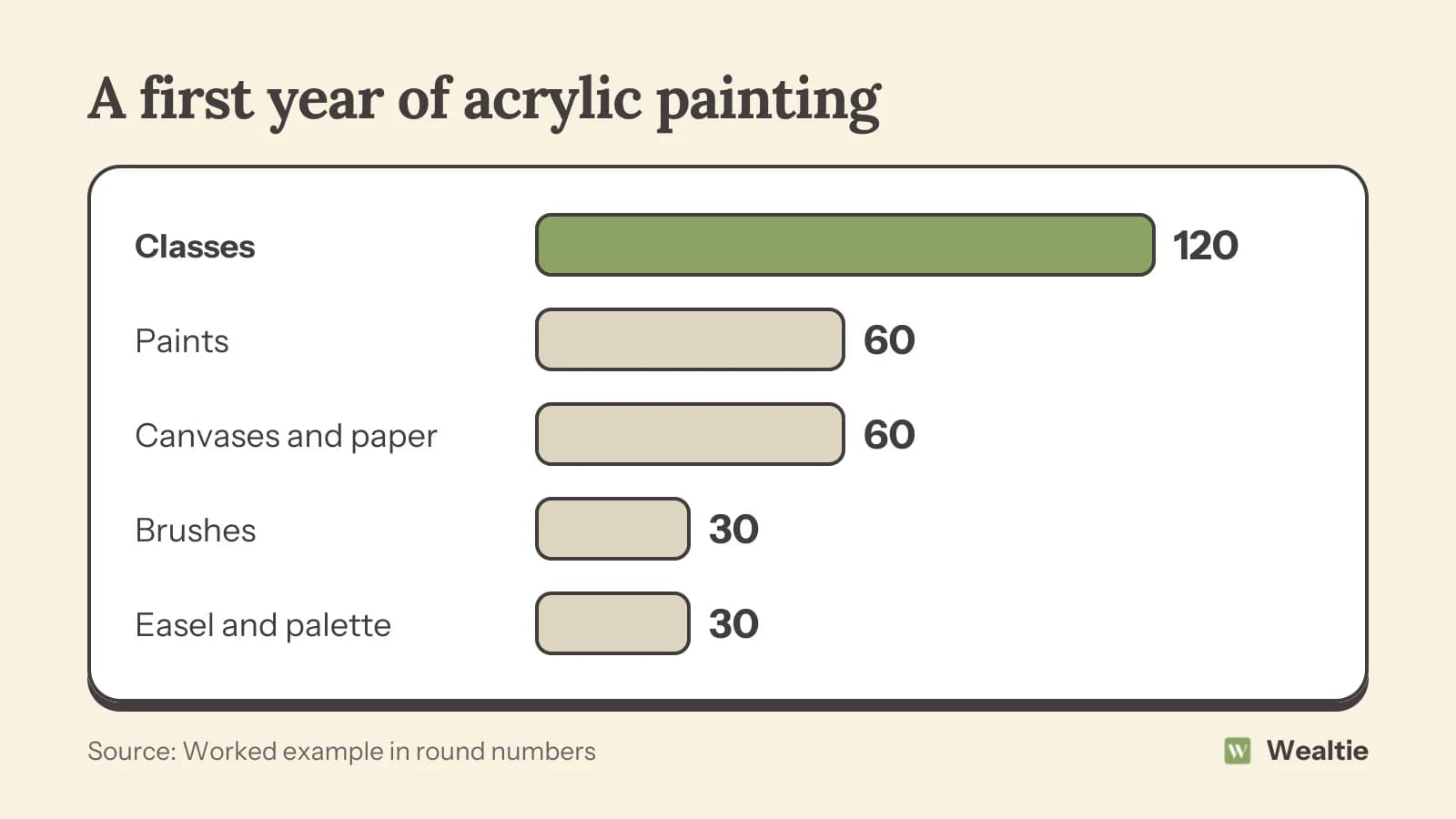
Without classes, the first year costs about 180. Learning from free online tutorials is a good alternative.
What are the main painting costs?
Paints
A starter set of student-grade paints in basic colours lets you mix most shades. Buying a few tubes of good quality in the colours you use most is a smart upgrade later. White usually runs out first, so a larger tube of it is worth having.
Brushes
A small set of good brushes lasts longer than a big set of cheap ones. Clean them well after each session and they'll last years.
Paper and canvas
This is the main ongoing cost. Watercolour paper, canvas boards and stretched canvases vary in price. Practise on cheaper paper or canvas boards, and save good surfaces for pieces you care about.
Easel and palette
A tabletop easel and a simple palette are cheap. A plate or an old tile works fine as a palette, and jam jars make good water pots for rinsing brushes.
Classes
Classes give feedback and structure, and are a good way to meet other painters. Community centres and colleges often run affordable courses. A short course of six or eight weeks is a good way to learn the basics of a new medium without committing to a year of fees, and many include some materials in the price so you can try before you buy.
What else adds to the cost of painting as a hobby?
Oil painting brings solvents, mediums and longer drying times, which add cost and need ventilation. Framing finished work can cost more than the painting itself, so frame only your favourite pieces. Workshops with well-known artists, art holidays and exhibition fees are tempting extras. As your skill grows, you may want better paints and surfaces, which raise the ongoing cost. Storage for finished paintings takes space too.
Space to paint matters as well. Acrylic and watercolour can be done at a kitchen table with a cover, while oils need somewhere they can dry undisturbed for days. Working out where you'll paint before buying supplies helps you choose a medium that fits your home and keeps costs down.
How can you paint for less?
Start with student-grade paints and a few good brushes. Practise on cheap paper or canvas boards. Mix colours from a basic set instead of buying many tubes. Use free online tutorials alongside or instead of classes. Look for art supply sales and second-hand supplies from people clearing out. Join a local art group, which often shares space, models and materials. How to save money on a hobby has more tips.
Can painting pay for itself?
Some painters sell originals, prints or commissions, like pet portraits. It can cover the cost of materials and sometimes more. How to earn money selling crafts covers pricing. Work out the cost per use of supplies before upgrading: paints you use every week are good value even at a higher price.
How do you track painting costs in Wealtie?
Add an art category to your expense categories and set a budget for supplies and classes. If you sell your work, log it in the income tracker to see the hobby's real cost.
Questions people ask
In a worked example, a first year of acrylic painting costs about 300, including classes, paints, canvases, brushes and an easel.
Watercolour and acrylic are usually cheaper to start than oil painting, which needs solvents and more ventilation.
No. Student-grade paints and a few good brushes are enough while you learn.
Practise on cheap paper or canvas boards, mix colours from a basic set, buy in sales and join a local art group.
This article is general information, not financial, tax or legal advice. Your situation is your own; check the numbers that apply to you before you act on them.