Budgeting: The cost of owning a bird: budgies to parrots
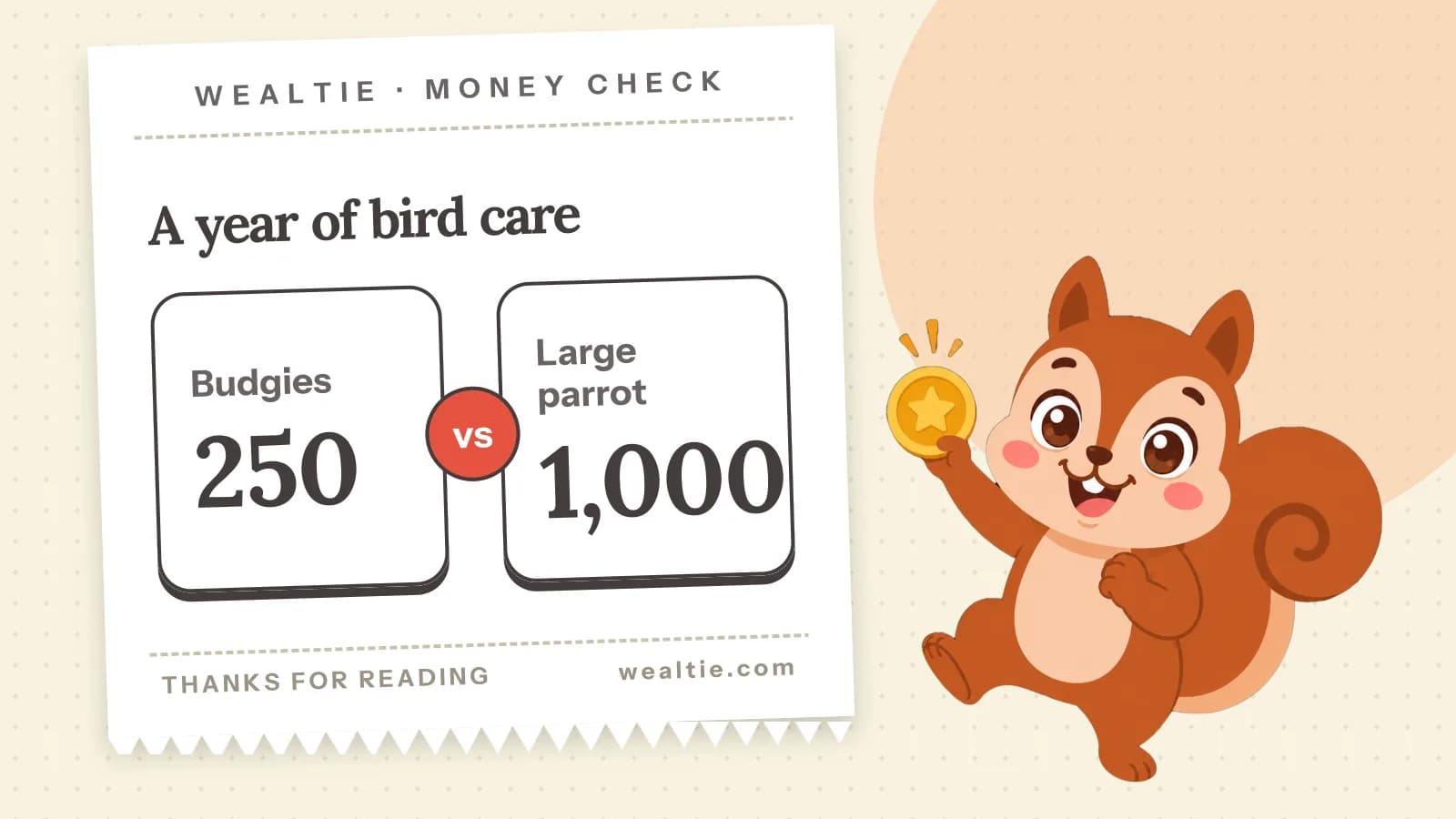
The cost of owning a bird ranges from modest for a pair of budgies to high for a large parrot that can live for decades. In a worked example, budgies cost about 250 a year, while a large parrot costs 1,000.
 By Wealtie Team · 3 min read
Key takeaways
- The cost of owning a bird depends mostly on the species and its size.
- Large parrots cost the most to buy, house and feed, and can live for decades.
- Avian vets can cost more than regular vets, so plan for check-ups.
- Toys and enrichment are an ongoing cost, especially for parrots.
What is the cost of owning a bird?
Birds can be lively, intelligent and affectionate pets, but costs vary enormously by species. A pair of budgies is one of the more affordable pets you can keep, while a large parrot can cost as much as a dog over its lifetime, which may be several decades. The cost of owning a bird depends on its size, how much space it needs, what it eats and how much care and enrichment it requires.
Here's a worked example of yearly costs, in round numbers that work in any currency:
| Type of bird | Yearly cost |
|---|---|
| Pair of budgies | 250 |
| Pair of cockatiels | 450 |
| Large parrot | 1,000 |
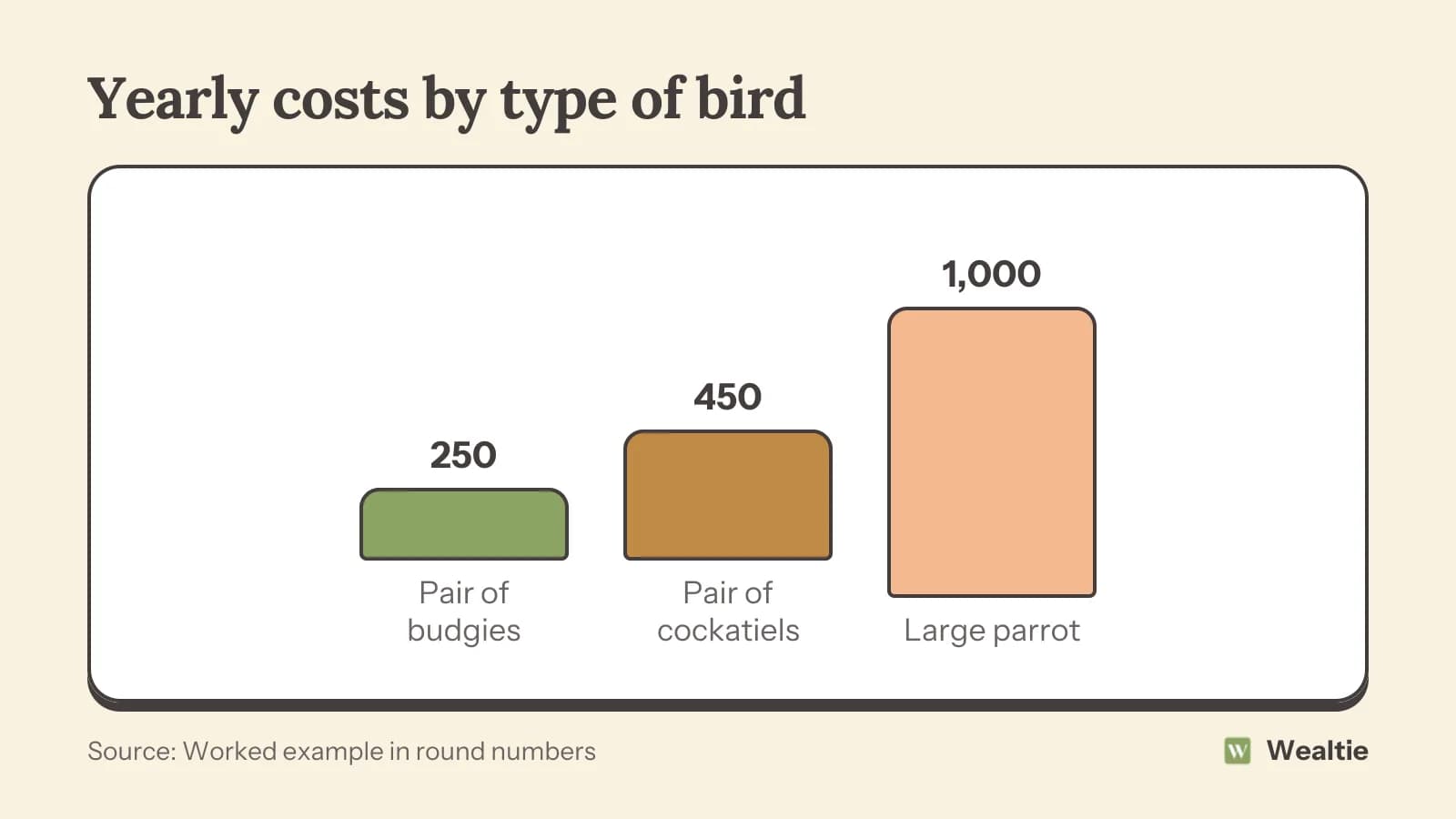
For a large parrot, that 1,000 might be made up of 300 for food, 250 for toys, 250 for vet care and 200 for insurance and other supplies. Setup adds more: a pair of budgies might cost around 200 including a cage, while a cage suitable for a large parrot can cost 600 or more on its own, before the price of the bird.
What are the main costs?
The bird
Small birds like budgies and finches cost relatively little to buy or adopt. Larger parrots can be expensive. Rescues often have birds needing homes, including parrots whose owners could no longer care for them.
The cage
Birds need a cage big enough to move, stretch their wings and play. Bigger birds need much bigger, stronger cages. Many birds also benefit from time out of the cage in a safe room.
Food
A balanced diet of pellets, seeds, fresh vegetables and some fruit keeps birds healthy. Larger birds eat more and may need a wider range of food.
Toys and enrichment
Parrots in particular are intelligent and need toys to chew, climb and solve. They destroy toys quickly, so replacing them is a steady cost. Homemade toys from safe materials can help.
Vet care
Birds need vets with experience of avian medicine, who can cost more than general vets and may be farther away. Annual check-ups help catch problems early, since birds often hide illness. How to build a vet bills fund covers saving for unexpected costs.
Insurance
Some insurers cover birds, which can help with large vet bills. Is pet insurance worth it? covers how to decide.
Why does lifespan matter for the budget?
Small birds like budgies often live for several years, while some large parrots can live for decades. That means the yearly cost continues for a very long time, and some parrots outlive their owners. Before getting a large parrot, think about who would care for it in the future and whether the cost fits your budget for many years.
How do you keep bird costs down?
Choose a species that fits your budget
Budgies, canaries and finches cost much less to keep than large parrots. Pick a bird whose needs you can meet comfortably.
Adopt from a rescue
Bird rescues often have healthy birds and sometimes include the cage, which can save a lot.
Buy food in bulk
Larger bags of pellets and seed usually cost less per day. Store them in airtight containers to keep them fresh.
Make toys at home
Untreated wood, cardboard, paper and safe natural materials make good chew toys for very little.
Buy cages second-hand
Good cages are often sold second-hand. Clean them thoroughly and check for rust or damage.
Who looks after your bird when you travel?
Birds need daily care, so you'll need a pet sitter or specialist boarding when you go away. Some friends or neighbours may help, but birds can be sensitive to changes in routine and need someone confident handling them. Add this cost to your travel budget. How to budget for a pet covers holiday care for different pets.
Birds also need your time, which is a cost of its own. Parrots in particular need daily attention, interaction and time out of the cage, and a bored bird can become noisy or stressed. Before choosing a species, think honestly about how much time you can give every day, not just how much money you can spend. A smaller, more independent bird may be a better fit for a busy household and a tighter budget.
Visiting a bird rescue is a good way to learn. Staff can tell you which species suit beginners, what owners tend to underestimate and what a realistic yearly budget looks like for each type of bird.
How can Wealtie help you track bird costs?
Log food, toys and vet visits in a pet expense category, and set a monthly budget for your bird. Over a year, you'll see the real cost of care, which helps you plan for vet bills and toy replacements.
Questions people ask
Costs vary by species. In a worked example, a pair of budgies cost about 250 a year, while a large parrot cost about 1,000.
Yes, compared with most pets. Budgies need a good cage, food, toys and occasional vet checks, but yearly costs are modest.
Large parrots need big cages, varied food, lots of toys and avian vet care, and they can live for decades.
Choose a species that fits your budget, adopt from a rescue, buy food in bulk, make toys at home and buy cages second-hand.
This article is general information, not financial, tax or legal advice. Your situation is your own; check the numbers that apply to you before you act on them.