Saving: How much do lottery tickets cost you over a year?
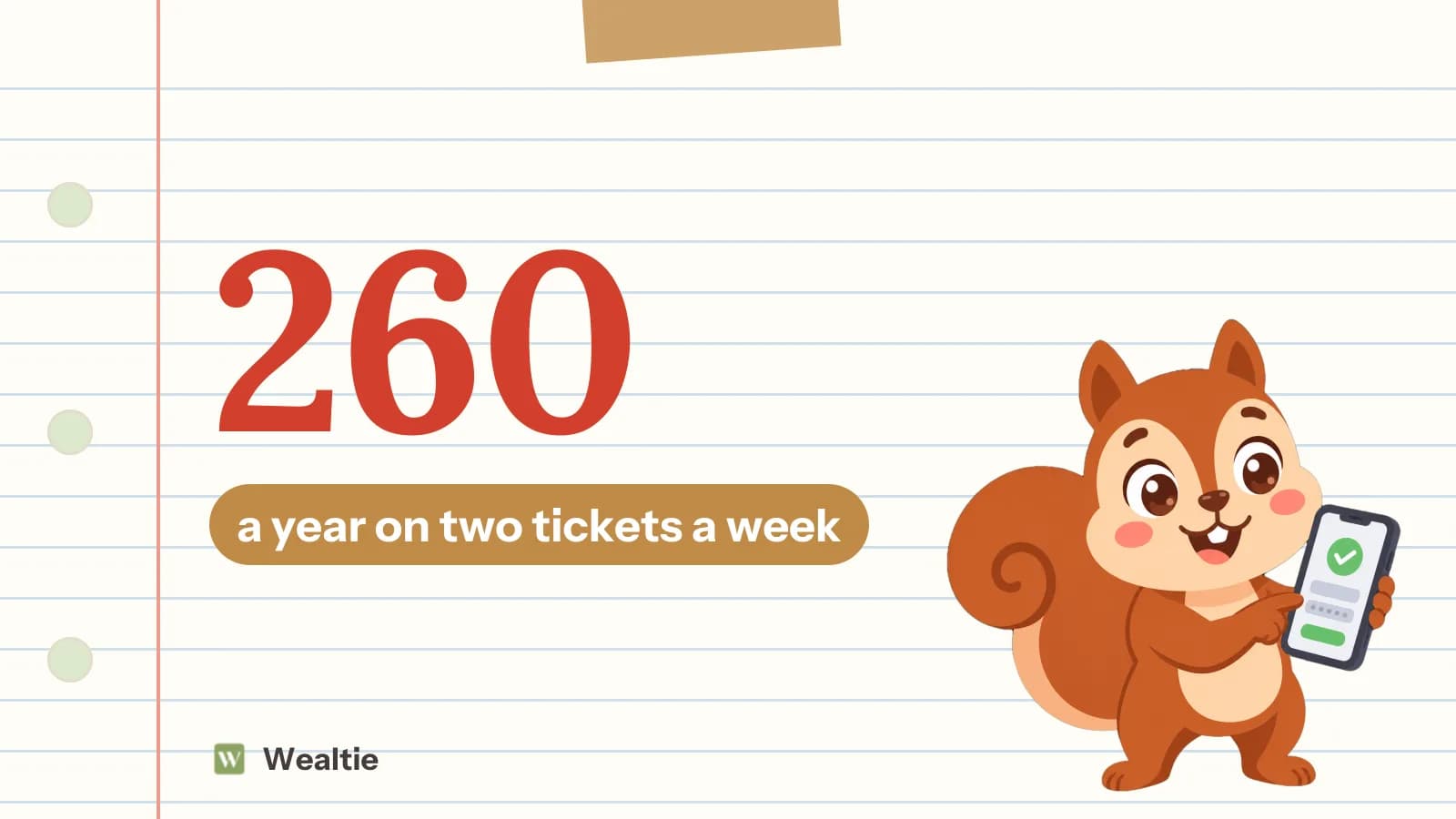
Lottery tickets cost more over time than they seem, because a small regular habit adds up. In a worked example, two tickets a week at 2.50 each cost 260 a year, and over 20 years that's 5,200 before any winnings, so it's worth treating as entertainment with a set limit.
 By Wealtie Team · 3 min read
Key takeaways
- A small weekly lottery habit adds up to a large total over the years.
- In a worked example, two tickets a week cost 260 a year and 5,200 over 20 years.
- The odds of a big win are extremely long, so treat tickets as entertainment, not a plan.
- Setting a monthly limit, or redirecting the money into savings, keeps the habit in check.
How much do lottery tickets cost?
More than they seem. A ticket or two a week feels like a small price for a bit of excitement, and on any single week it is. But it's a cost that repeats every week, often for years, and the total quietly grows into a large sum.
Many people enjoy playing, and there's nothing wrong with that. The point is to know what the habit costs, so you can decide how much you want to spend on it.
What does the habit add up to?
Here's a worked example for someone who buys two tickets a week at 2.50 each, in round numbers that work in any currency:
| Time | Total spent |
|---|---|
| 1 year | 260 |
| 5 years | 1,300 |
| 20 years | 5,200 |
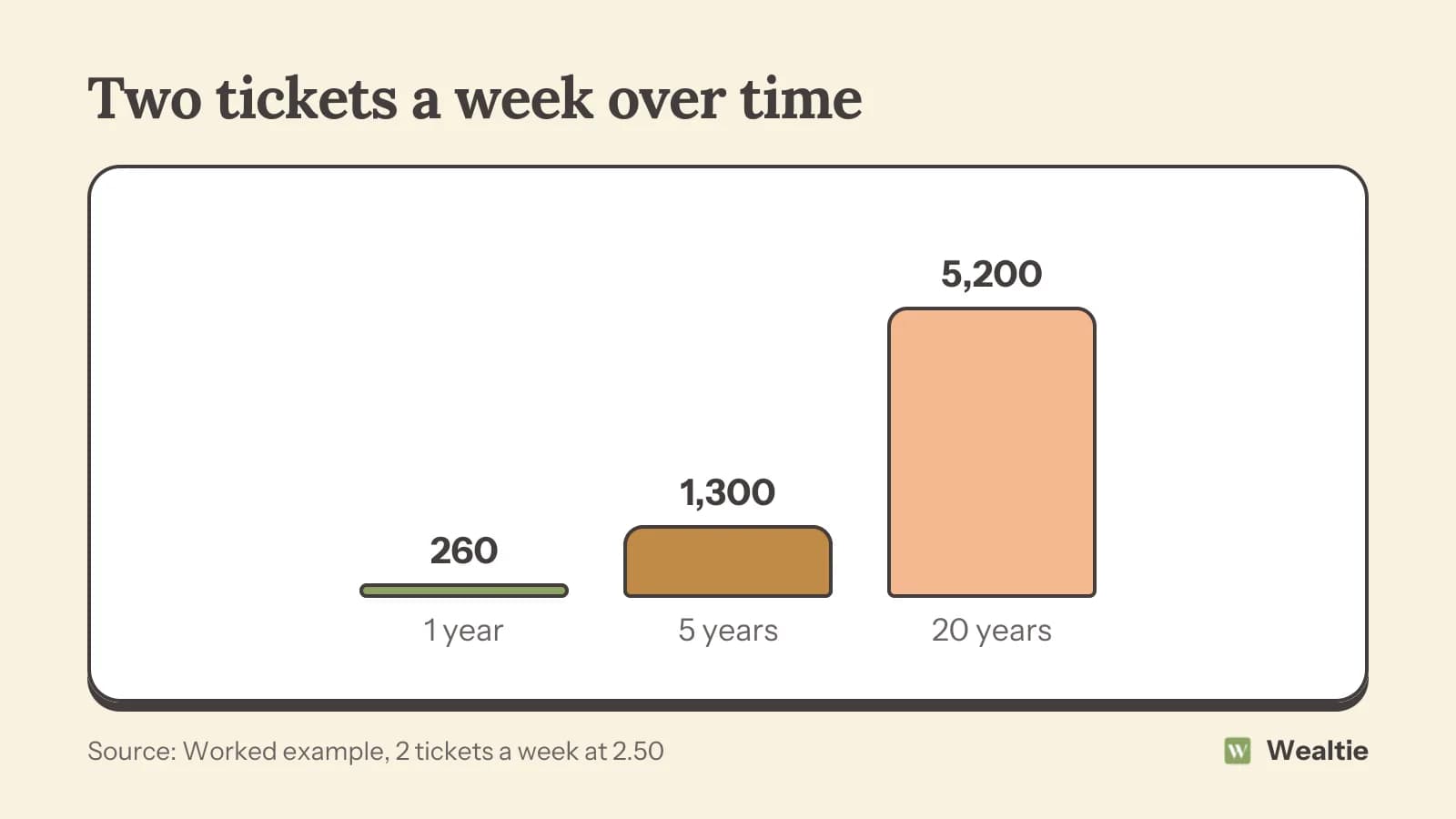
That's before any winnings. Small prizes come back now and then, but over time most players spend more than they win. Your own figures depend on how often you play, how many tickets you buy and whether you add scratchcards or online games.
To find your real number, add up what you spent on tickets last month and multiply by twelve.
Is the lottery worth it?
As entertainment, it can be, if you enjoy it and the amount fits your budget. As a way to get rich, no. The odds of winning a big prize are extremely long, far longer than most people imagine. Buying more tickets barely changes them.
It helps to think of tickets the way you'd think of a film ticket or a night out: money spent on a bit of fun, not an investment. If you'd be happy spending that amount on entertainment, a ticket is fine. If you're hoping it will solve money problems, that's a sign to look at other options.
Syndicates and office pools
Playing in a group, like an office pool, spreads the cost and can make it more social. Agree the rules in writing: who's in, how much each person pays, and how any winnings are shared. Keep your share within your entertainment budget, and don't feel pressured to join if it doesn't fit.
Why is a lottery habit easy to miss?
It's small, regular and often paid in cash or added to other shopping. A ticket bought with groceries or at a petrol station doesn't stand out on a statement, and buying online can make it automatic. Some people also keep playing the same numbers out of fear of missing the week they come up, which makes it hard to stop. Scratchcards and instant online games are quicker still, with results in seconds, which can make it easy to buy another straight away.
Seeing the yearly total is often what changes how people feel about it.
How do you set a limit?
Decide a monthly amount you're comfortable spending, and stick to it:
- Choose a fixed number of tickets, like one a week, rather than buying whenever you pass a shop.
- Avoid adding extra games or scratchcards on impulse.
- Turn off automatic renewals online, so each ticket is a choice.
- Never chase losses or spend money meant for bills.
Paying in cash, from an amount you set aside at the start of the month, makes the limit easy to see.
If you notice the amount creeping up, or you feel you can't stop, gambling support services can help, often for free and in confidence.
What could the money do instead?
Put it to work. The 260 a year in the example could start an emergency fund, cover a yearly bill or be saved towards a holiday. Some people keep playing but put the same amount into savings each week, so they grow a fund alongside the fun.
If you decide to stop, move the weekly ticket money into a separate pot on the same day you'd have bought a ticket. Seeing that pot grow can feel like its own small win. Other small habits add up in the same way. How much you spend on coffee works through a similar sum. Over twenty years, the 5,200 in the example could have covered a used car, a long holiday or a solid start on an emergency fund.
How do small habits compare?
Lottery tickets, coffees, snacks and small online orders all share the same pattern: a small amount, often, that feels like nothing. Adding them up once is usually enough to decide which ones you want to keep. How to stop impulse buying has ways to pause before small purchases.
How do you track lottery spending in Wealtie?
Give tickets their own line in your expense categories, so the monthly total is visible. A monthly limit in the budget tracker, with Budget Health, shows when you've reached your amount. If you're redirecting the money, add a savings account and move it across as a transfer, which isn't counted as spending.
Questions people ask
In a worked example, two tickets a week at 2.50 each cost 260 a year and 5,200 over 20 years, before any winnings.
Not if you enjoy it and the amount fits your budget. As a way to get rich, the odds are extremely long.
Decide a monthly amount, buy a fixed number of tickets, avoid impulse extras and turn off automatic renewals.
Start an emergency fund, cover a yearly bill or save towards something you want, moving the money on the day you'd have played.
This article is general information, not financial, tax or legal advice. Your situation is your own; check the numbers that apply to you before you act on them.