Budgeting: The cost of learning to fly: a private pilot budget
The cost of learning to fly depends mostly on how many flying hours you need, since aircraft hire and instruction are charged by the hour. In a worked example, a private pilot licence costs 12,000 over about 50 hours.
 By Wealtie Team · 3 min read
Key takeaways
- The cost of learning to fly is mostly hourly aircraft hire and instruction.
- Most students need more hours than the legal minimum.
- Flying regularly keeps skills fresh and cuts the total hours.
- Ongoing flying after the licence is a cost to budget for too.
What is the cost of learning to fly?
Learning to fly a small plane is a dream for many people, and a private pilot licence lets you fly for fun, take passengers and explore from the air. The cost of learning to fly is high compared with most hobbies, mainly because aircraft hire, fuel and an instructor are all charged by the hour, and you'll need a lot of hours.
Here's a worked example of a private pilot licence, in round numbers that work in any currency:
| Cost | Amount |
|---|---|
| Flying lessons, 50 hours | 10,000 |
| Ground school and books | 600 |
| Exams and skills test | 800 |
| Medical and licence fees | 300 |
| Headset and kit | 300 |
| Total | 12,000 |
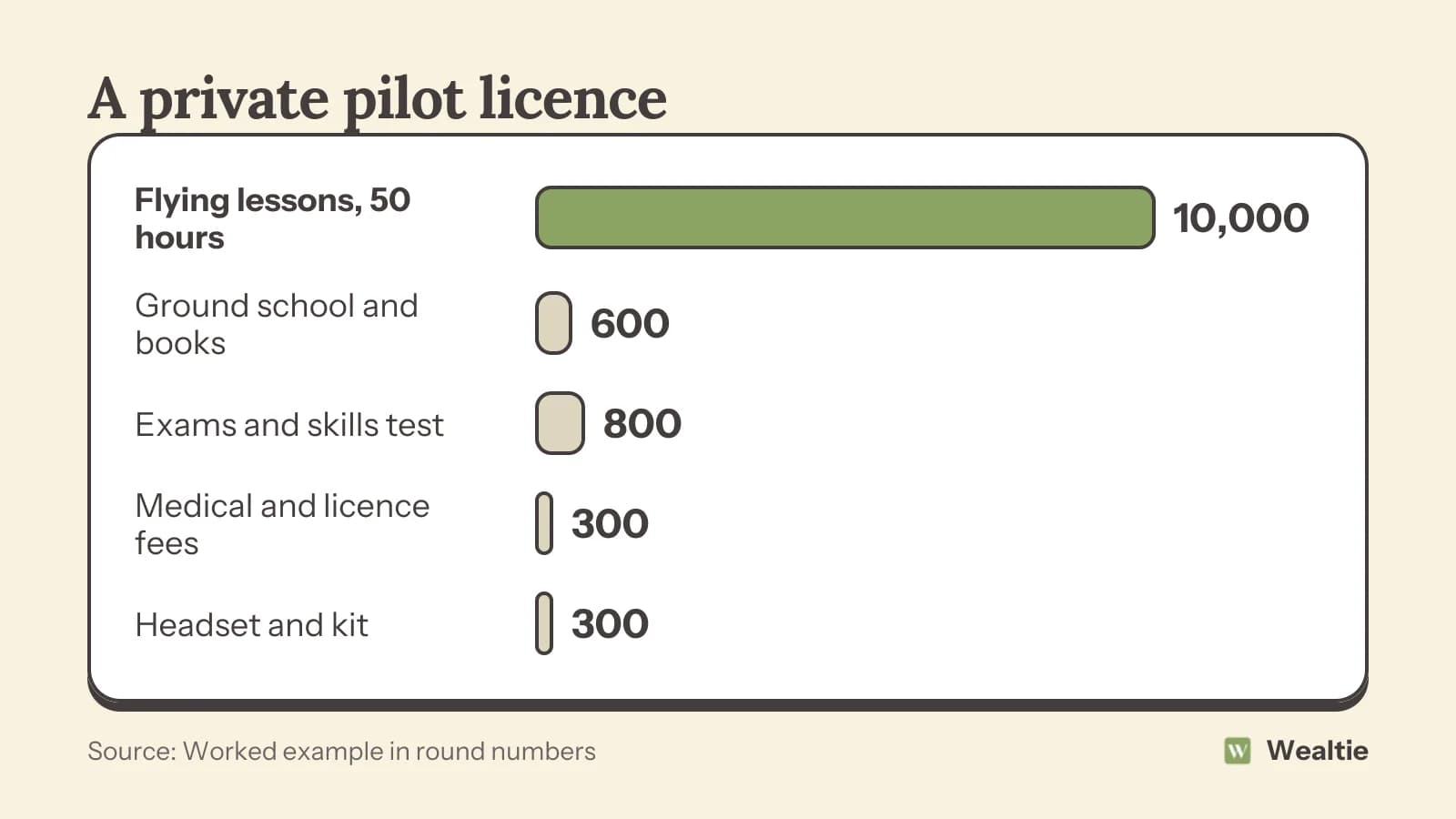
At around 200 an hour for the aircraft and instructor, 50 hours of flying makes up most of the cost. The legal minimum number of hours varies by country, but most students need more than the minimum, especially if there are long gaps between lessons. Prices vary a lot by location, aircraft and flying school.
What are the main costs?
Flying lessons
The biggest cost by far. You pay for the aircraft, fuel and instructor for each hour in the air, plus sometimes landing fees.
Ground school
You'll study theory like navigation, weather, air law and aircraft systems. Some schools run classes, while others let you study at home with books and online courses.
Exams and the skills test
Theory exams and a final flight test with an examiner each have fees.
Medical certificate
You'll need a medical exam from an approved doctor before flying solo.
Kit
A headset, charts, a flight bag and navigation tools add a few hundred. Second-hand headsets can save money.
Licence fees
Issuing the licence itself carries a fee from the aviation authority.
How long does it take?
Some people train full-time and finish in a few months, while others fly once a week or less and take a year or two. Flying regularly usually means fewer total hours, since you remember more between lessons and spend less time relearning. Weather can cause cancellations, which slows progress in some seasons.
How do you keep the cost down?
Fly regularly
Lessons every week, or more often, help you progress faster and need fewer hours overall.
Study at home
Preparing for each lesson by reading and using simulators means you get more from every expensive hour in the air.
Choose the right school and aircraft
Smaller clubs and older training aircraft often charge less per hour. Compare schools on price, aircraft availability and instructor continuity.
Block booking
Some schools offer discounts if you pay for a block of hours upfront. Make sure the school is financially sound before paying large sums in advance.
Consider other types of flying
Microlights, gliders and light sport aircraft can cost much less per hour and lead to their own licences. They're a good way to start if a full private pilot licence is out of budget.
What does flying cost after the licence?
To stay current and safe, pilots need to fly regularly. Flying two hours a month at 200 an hour costs 400 a month, or 4,800 a year. Some pilots join a flying group and share an aircraft, which can cut hourly costs. Planning for this ongoing cost before you start avoids getting a licence you can't afford to use. How to save money on a hobby covers ways to keep expensive hobbies affordable.
How do you save for flying lessons?
Saving ahead lets you fly regularly rather than in bursts, which saves money overall. If you want to spend 12,000 over 18 months, that's about 670 a month. How to save for a big purchase covers setting up a savings plan, and a sinking fund keeps the money separate.
If the full licence is a stretch, a trial lesson costs much less and shows whether you love flying before committing.
Visit a few flying schools before you choose. Ask about aircraft availability, how often lessons get cancelled, whether you'll have the same instructor each time and what's included in the hourly rate. A school that's slightly more expensive per hour but more reliable can work out cheaper overall, because you'll progress faster and need fewer extra hours to make up for gaps.
Talk to students and recently qualified pilots at the club, too. They can tell you how many hours they needed, what surprised them about the cost and how they kept flying affordable after getting their licence.
How can Wealtie help you budget for flying?
Log lessons, exams and kit in a flying expense category, and set a monthly budget for the hobby. You'll see how much each stage costs and whether your savings are keeping pace with your lessons.
Questions people ask
In a worked example, a private pilot licence cost about 12,000, with 50 hours of flying lessons making up most of it.
Every country sets a minimum, but most students need more than the minimum, especially if they fly infrequently.
Fly regularly, study at home, compare schools and aircraft, consider block booking and look at microlights or gliders.
In a worked example, flying two hours a month to stay current cost about 400 a month.
This article is general information, not financial, tax or legal advice. Your situation is your own; check the numbers that apply to you before you act on them.