Budgeting: The cost of learning a language, from free apps to tutors
The cost of learning a language ranges from nothing, with free apps and library books, to a lot, with private tutors and trips abroad. In a worked example, a year of weekly group classes plus a paid app costs about 700.
 By Wealtie Team · 3 min read
Key takeaways
- The cost of learning a language ranges from free to several thousand a year.
- In a worked example, a year of group classes plus a paid app costs about 700.
- Free tools cover the basics, and paid help speeds up speaking.
- Regular practice matters more than how much you spend.
How much does it cost to learn a language?
It depends on how you learn and how fast you want to progress. You can learn a lot for free with apps, podcasts, library books and videos. Paid apps add structure and extra features. Group classes give you a teacher and people to practise with. Private tutors give you one-to-one attention and cost the most, apart from living abroad for a while. In a worked example, a year of weekly group classes plus a paid app costs about 700.
The best approach for most people is a mix: free tools for daily practice, plus some paid help for speaking.
What does a year of language learning cost?
Here's a worked example of four ways to learn over a year, in round numbers that work in any currency:
| Option | A year |
|---|---|
| Free apps and library | 0 |
| Paid app | 100 |
| Group classes and app | 700 |
| Weekly private tutor | 1,500 |
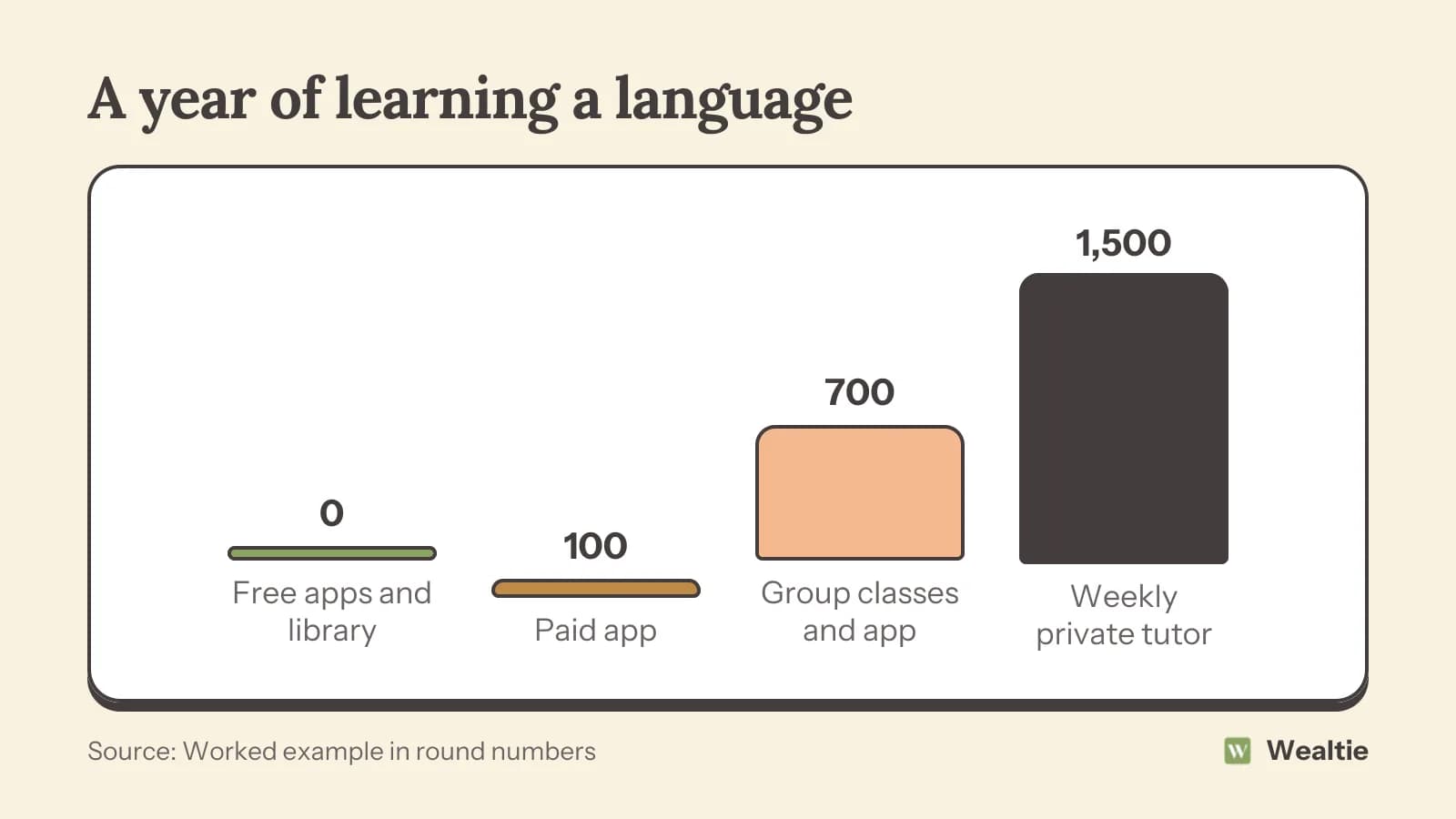
The group classes figure is 15 a week for 40 weeks, plus the app. The tutor figure is 30 a lesson for 50 weeks.
What are the main ways to learn?
Free apps and resources
Free apps, podcasts, videos and library books can take you from nothing to a solid beginner level. Libraries often have courses with audio, and some offer free access to paid language apps with a library card. The catch is that you need to motivate yourself.
Paid apps
Paid versions of apps remove ads and add features like offline lessons and speaking practice. Many offer a free trial, so test before you commit. Paying yearly is usually cheaper than monthly, if you're sure you'll keep going.
Group classes
Classes at a college, community centre or language school give you structure, a teacher and a group to practise speaking with. They cost less than private lessons and help you stay on track.
Private tutors
A tutor tailors lessons to you and gives you speaking time with feedback. Online tutors are often cheaper than in-person ones, and you can book shorter lessons to keep costs down.
Immersion
Living or studying abroad is the fastest way to improve, but it's also the most expensive. The study abroad budget covers the costs if you're considering it.
How can you learn a language for less?
- Start free: use free apps and library resources for the first few months.
- Use your library: many offer free courses, books and app access.
- Find a language exchange: practise with a native speaker who wants to learn your language, for free.
- Watch and listen: films, series, music and podcasts in your target language are free practice.
- Book shorter tutor sessions: 30 minutes once a week can be enough with daily practice.
- Join a group: classes cost less per hour than private lessons.
Buy books second-hand
Course books and readers are easy to find second-hand. How to save money on books has more ideas.
Is paying for language lessons worth it?
It can be, especially for speaking. Apps are good for vocabulary and grammar, but most people need conversation practice to become confident. One way to judge is to work out the cost per use: a paid app at 100 a year used every day costs very little per session, while one you open twice a month costs much more.
Practice beats spending
The biggest factor in learning a language is regular practice. Fifteen minutes a day does more than an expensive course you attend once a fortnight. Spend on what gets you practising most often.
Set a goal and a budget
Decide why you're learning: travel, work, family or fun. A clear goal helps you choose the right tools and stops you paying for things you don't need. How to save money on a hobby covers keeping hobby costs in check.
What else adds to the cost of learning a language?
A few costs are easy to forget. Official exams and certificates, which some jobs and visas require, charge an entry fee. Course books, readers and a good dictionary add up over a year. Some learners travel for a short trip to practise, which can cost more than a year of classes. And there's time: an hour a day is a real cost, so choose a method you enjoy enough to keep going. If you only need the language for a holiday, a few weeks of a free app may be all you need.
How do you track language learning costs in Wealtie?
Add a learning category to your expense categories and set a budget for it. Add app subscriptions and class fees as recurring transactions, so they log themselves on their date and you can see the full yearly cost.
Questions people ask
In a worked example, a year of weekly group classes plus a paid app costs about 700. Free apps and library resources cost nothing.
Yes, to a good beginner level, using free apps, podcasts, library courses and language exchanges.
They're the best way to improve speaking. Shorter online sessions once a week keep the cost down.
Free apps, library resources and a language exchange with a native speaker, practised for a short time every day.
This article is general information, not financial, tax or legal advice. Your situation is your own; check the numbers that apply to you before you act on them.