Budgeting: The cost of knitting: a beginner's budget
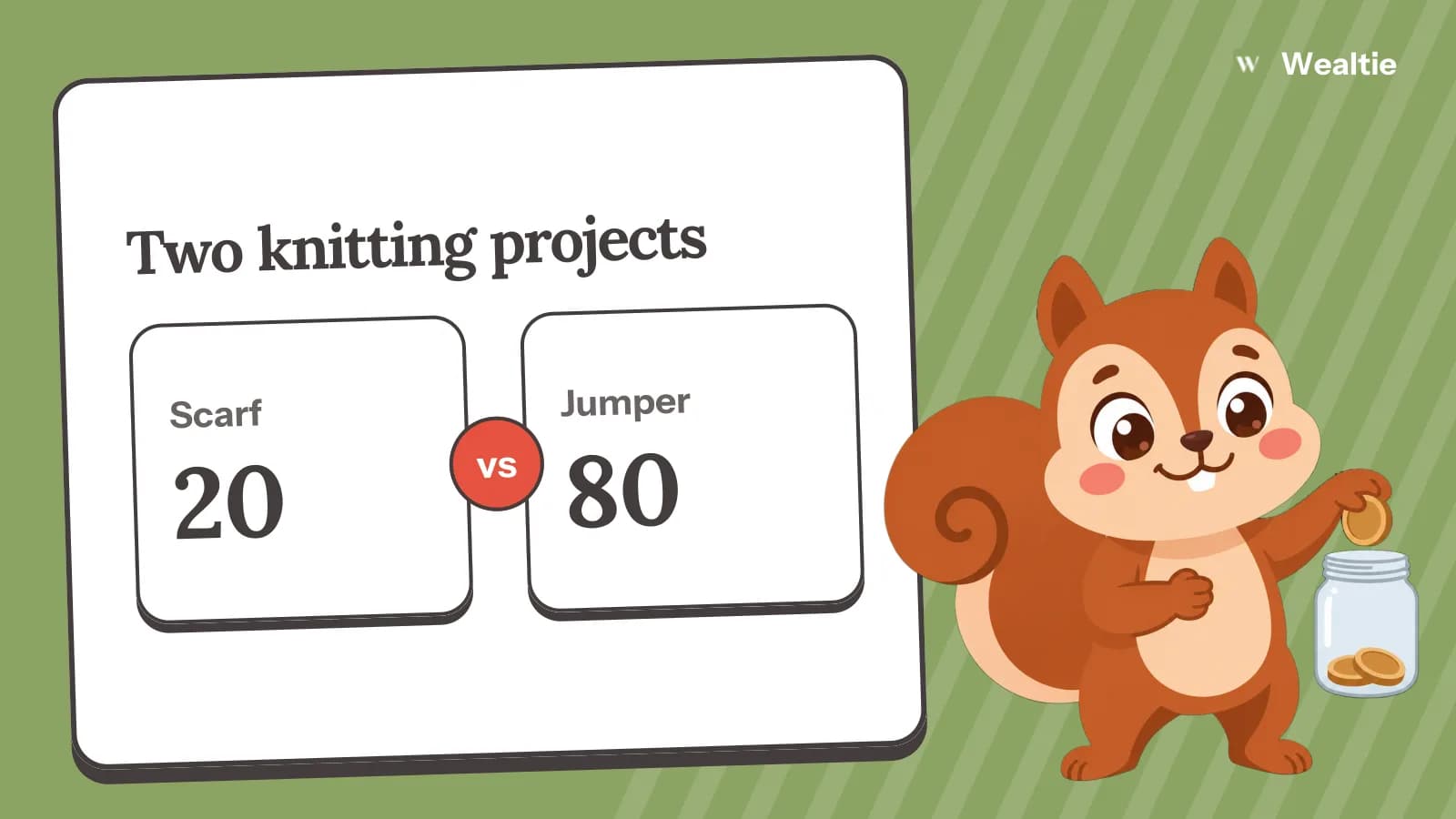
The cost of knitting is low to start, since needles and a first ball of yarn cost little, but yarn for bigger projects adds up. In a worked example, a beginner's scarf costs 20, while a jumper in good wool costs 80.
 By Wealtie Team · 3 min read
Key takeaways
- The cost of knitting is low to start, with needles and yarn the main costs.
- Yarn is the biggest ongoing cost, especially for large projects.
- Free patterns, yarn swaps and sales keep knitting affordable.
- A yarn stash can grow quickly, so buy for projects you'll start soon.
What is the cost of knitting?
Knitting is a relaxing, portable hobby that produces something useful at the end. It's also cheap to start: a pair of needles and a ball of yarn are all you need to learn. The cost of knitting grows with your projects, though, since yarn for a jumper or blanket costs much more than yarn for a scarf, and many knitters find it hard to resist buying beautiful yarn.
Here's a worked example of what different projects cost, in round numbers that work in any currency:
| Project | Cost |
|---|---|
| Dishcloth | 5 |
| Scarf | 20 |
| Hat and mittens | 30 |
| Jumper in good wool | 80 |
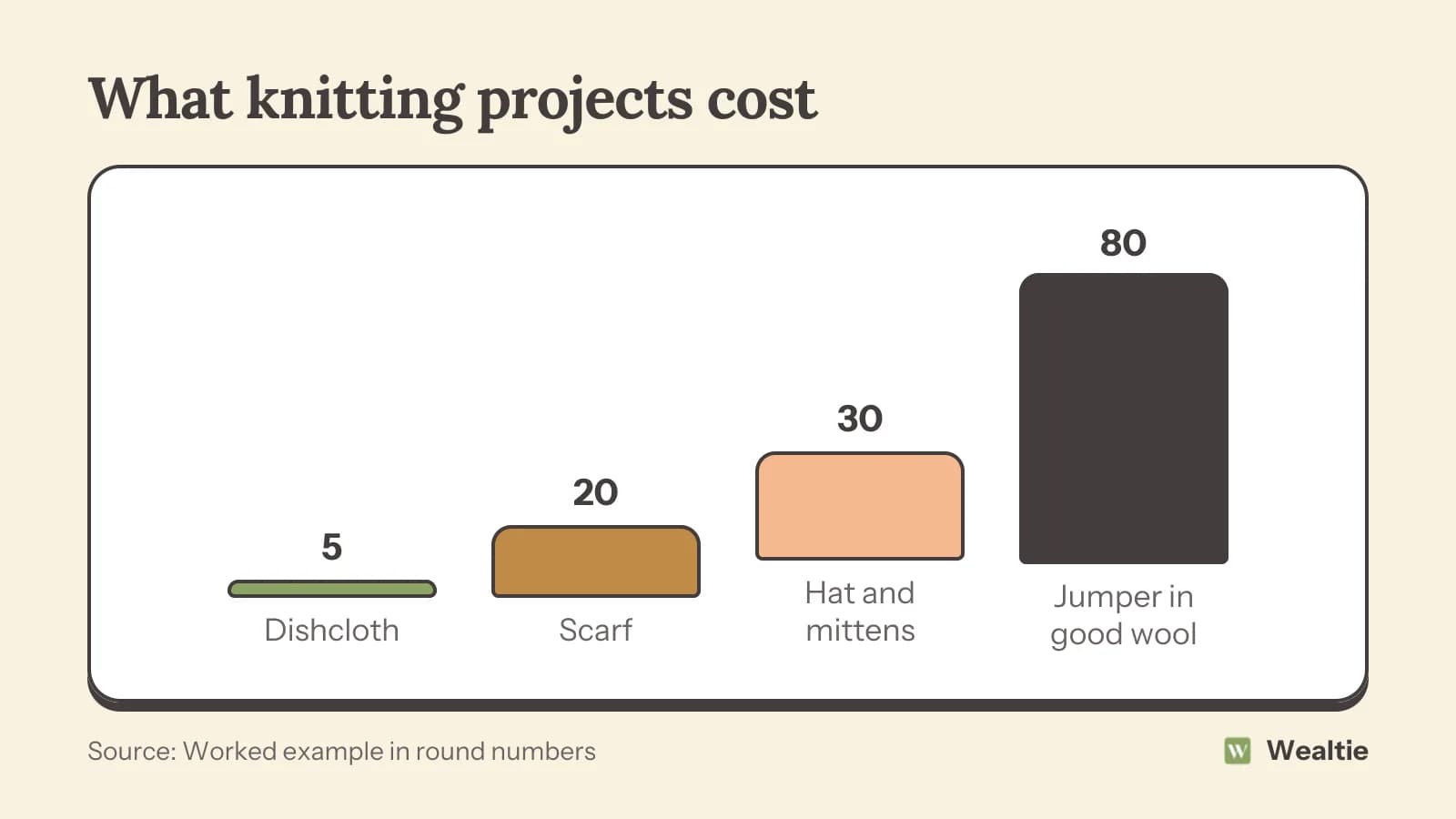
A beginner's scarf, with needles at around 10 and yarn at 10, comes to about 20. A jumper in good-quality wool might cost 80 in yarn alone. Acrylic and blended yarns cost less, while natural fibres like merino, alpaca and silk cost more.
What do you need to start?
Needles
A pair of medium-sized needles is enough to learn. Bamboo or wooden needles are often easier for beginners than slippery metal ones. You'll add sizes as you try new projects.
Yarn
Choose a smooth, light-coloured yarn in a medium weight, which makes it easier to see your stitches. Acrylic or wool blends are cheap and forgiving.
Basic tools
Scissors, a tapestry needle for weaving in ends and a tape measure are useful. Many people already have them.
Patterns and tutorials
Free patterns and video tutorials are widely available online, and libraries often have knitting books.
Why does yarn add up?
Yarn is the main ongoing cost of knitting. Big projects like jumpers, cardigans and blankets need a lot of it. Hand-dyed and luxury yarns cost much more. Many knitters also build up a stash of yarn bought on impulse or in sales, which can quietly become a big expense. How to save money on a hobby covers avoiding that trap.
How do you knit on a budget?
Start with small projects
Dishcloths, scarves and hats use little yarn and help you learn the basics before tackling a jumper.
Use free patterns
There are thousands of free patterns online, from beginner to advanced.
Choose affordable yarn
Acrylic and blended yarns are cheap, easy to wash and come in many colours. Save luxury yarns for special projects.
Buy in sales, for a project
Yarn sales can save a lot, but only buy for projects you'll start soon, not for the stash.
Swap and share
Knitting groups often swap yarn and needles, and charity shops sometimes sell yarn cheaply. Unravelling old jumpers is another way to get yarn for very little.
Buy an interchangeable needle set later
If you keep knitting, an interchangeable set, around 60 in round numbers, covers many sizes and can be cheaper than buying many separate pairs.
Can knitting save money?
Knitting rarely saves money on clothes, since a handmade jumper often costs more in yarn than a shop-bought one. But it gives you unique, well-made pieces that last, and handmade gifts are often treasured. How to save money on clothes covers other ways to cut clothing costs. Many knitters see it as a hobby first and a source of gifts second.
What about selling your knitting?
Some knitters sell their work, but pricing handmade items to cover yarn and time is difficult. Treat it as a bonus rather than a reliable income. How to sell things you don't use covers selling online more generally.
Joining a knitting group is one of the best ways to keep costs down and learn faster. Libraries, cafés and community centres often host free or low-cost groups where experienced knitters help beginners, share patterns and swap spare yarn. Online communities are full of advice too, and many people find the social side is as rewarding as the knitting itself.
It helps to finish one project before starting the next. Many knitters have several half-finished projects and bags of yarn waiting for them, which ties up money and space. Keeping to one or two projects at a time, and buying yarn only when you're ready to start, keeps spending under control.
Think about gifts too. Handmade hats, scarves and blankets make thoughtful presents, and planning gift projects early in the year spreads the cost of yarn and avoids a December rush.
Finally, look after your finished pieces. Washing wool items gently and storing them away from moths means they'll last for years, which makes the time and yarn you put in better value.
How can Wealtie help you track hobby costs?
Log yarn, needles and patterns in a hobby expense category, and set a monthly budget for knitting. Seeing your yarn spending each month makes it easier to enjoy the hobby without the stash taking over.
Questions people ask
Very little. In a worked example, needles and yarn for a beginner's scarf cost about 20.
It's cheap to start, but yarn for large projects and luxury fibres can add up. A jumper in good wool might cost 80 in yarn.
Usually not. Yarn for a jumper often costs more than a shop-bought one, but handmade pieces are unique and last well.
Start with small projects, use free patterns, choose affordable yarn, buy in sales only for planned projects and swap with other knitters.
This article is general information, not financial, tax or legal advice. Your situation is your own; check the numbers that apply to you before you act on them.