Budgeting: How much do hearing aids cost, and how to budget for them
The answer to how much do hearing aids cost depends on the technology, the level of care included and where you live, and the price often covers fitting and follow-up appointments. In a worked example, a pair costs about 2,500 and lasts around five years, which works out at about 42 a month.
 By Wealtie Team · 3 min read

Key takeaways
- How much hearing aids cost depends on the technology, the care included and where you live.
- In a worked example, a mid-range pair costs about 2,500, or about 42 a month over five years.
- Check what public health services or insurance provide before buying privately.
- Plan for batteries or charging, repairs and replacement every few years.
How much do hearing aids cost?
It depends on the technology, what's included and where you live. Hearing aids range from basic models to advanced ones with features like rechargeable batteries, phone connections and automatic adjustment to different sounds. Many prices include a hearing test, fitting and follow-up appointments, which matter as much as the device itself.
Which hearing aid is right for you is a question for an audiologist. This guide covers the money side.
How do the options compare?
Here's a worked example of typical prices for a pair, in round numbers that work in any currency:
| Level | Cost for a pair |
|---|---|
| Basic | 1,500 |
| Mid-range | 2,500 |
| Premium | 4,500 |
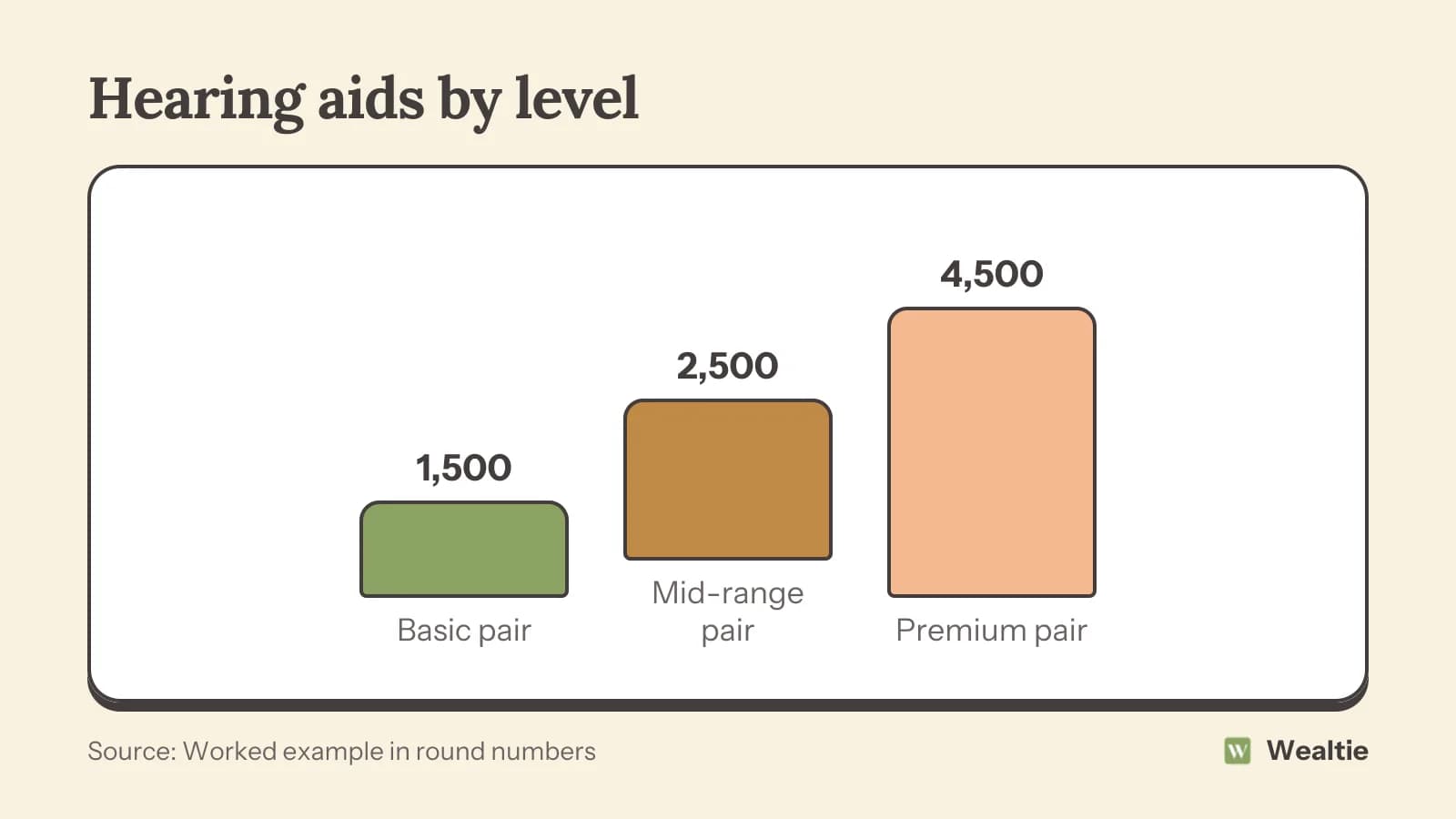
Your own prices could be very different. Costs vary a lot between countries, providers and models, so getting more than one quote is worth it.
What does the price include?
Ask before you buy, since packages differ. A price may include:
- A hearing test and consultation
- Fitting and adjustment
- Follow-up appointments over a set period
- A warranty and repairs
- A trial period, with a refund if the aids don't suit you
- Batteries or a charger
A lower price that leaves out aftercare can cost more over time, since adjustments and repairs are often needed, especially in the first few months. Some providers offer unbundled pricing, where you pay for the devices and then for each appointment, so compare both on the total over a few years.
Is there public or insurance support?
Check before paying privately. In many countries, public health services provide hearing aids free or at low cost to people who need them, sometimes after a wait. Waiting lists can be long in some places, so it's worth getting on the list early, even if you're also considering private options. Some insurance policies, employers or veterans' schemes help with the cost. Charities for people with hearing loss can often tell you what support exists where you live.
If you need hearing aids for work, ask your employer whether they can help, since some workplaces support equipment that helps staff do their jobs.
What about over-the-counter hearing aids?
In some places, hearing aids can be bought without a prescription for mild to moderate hearing loss. They can cost much less, but you'll usually set them up yourself, with less professional support. Having your hearing tested first helps you know whether they're suitable.
What are the ongoing costs?
Plan for them. Running costs can include:
- Batteries, if your aids don't recharge, which might cost about 50 a year
- Repairs after the warranty ends
- Cleaning supplies and small parts like domes and filters
- Insurance against loss or damage, if not included
- Replacement, usually every few years as aids wear out or technology improves
Rechargeable aids avoid battery costs but need a charger, and their batteries may eventually need replacing. In the worked example, a 2,500 pair lasting five years works out at about 42 a month, before running costs. Thinking of hearing aids as a monthly cost, rather than a single big purchase, makes planning easier.
How do you pay for hearing aids?
Saving ahead is the simplest way. When your current aids are a few years old, start setting money aside for the next pair. A sinking fund works well for costs like this that come round every few years. Some providers offer payment plans; check whether they charge interest and what the total cost will be.
For older relatives
Many people buy hearing aids later in life, when income may be fixed. How to budget in retirement covers planning for health costs on a pension. Family members sometimes help with the cost as a shared gift.
How do you keep hearing aids lasting longer?
Look after them. Clean them regularly, store them in their case, keep them dry and get them checked when something seems off. Small habits extend their life and reduce repair bills. A drying box can help in damp climates, and it's a modest one-off cost. How to save money on glasses covers similar ways to keep another health essential affordable, and how to budget for medical bills covers health costs in general.
How do you track hearing aid costs in Wealtie?
Add a savings account for the next pair and move money into it each month as a transfer, which isn't counted as spending. Log batteries, repairs and appointments in a health category in your expense categories, so you can see the yearly cost. A monthly limit in the budget tracker keeps everyday spending steady.
Questions people ask
In a worked example, about 1,500 for a basic pair, 2,500 for mid-range and 4,500 for premium. Prices vary a lot by place.
In many countries, public health services provide them free or at low cost to people who need them. Check before buying privately.
Often around five years, depending on care and use. Plan to replace them every few years.
Batteries, repairs after the warranty, cleaning supplies, insurance and eventual replacement.
This article is general information, not financial, tax or legal advice. Your situation is your own; check the numbers that apply to you before you act on them.