Budgeting: How much does climbing cost? Bouldering and rope climbing budget
The cost of climbing depends on how often you go, whether you pay per visit or buy a membership, and whether you boulder or climb with ropes. In a worked example, a year of weekly bouldering with your own shoes costs about 650.
 By Wealtie Team · 3 min read

Key takeaways
- The cost of climbing depends on how often you go and how you pay for entry.
- In a worked example, a year of weekly bouldering costs about 650.
- Bouldering needs less gear than rope climbing, so it's cheaper to start.
- A membership pays off once you climb often enough.
How much does climbing cost?
Climbing can be an affordable hobby once you're set up, but the costs depend on how often you go and what kind of climbing you do. Bouldering, where you climb short walls without ropes over thick mats, needs only shoes and chalk. Rope climbing needs a harness, a belay device and, for outdoor climbing, ropes and more. Gym entry or a membership is the main ongoing cost. In a worked example, a year of weekly bouldering with your own shoes costs about 650.
What does a year of climbing cost?
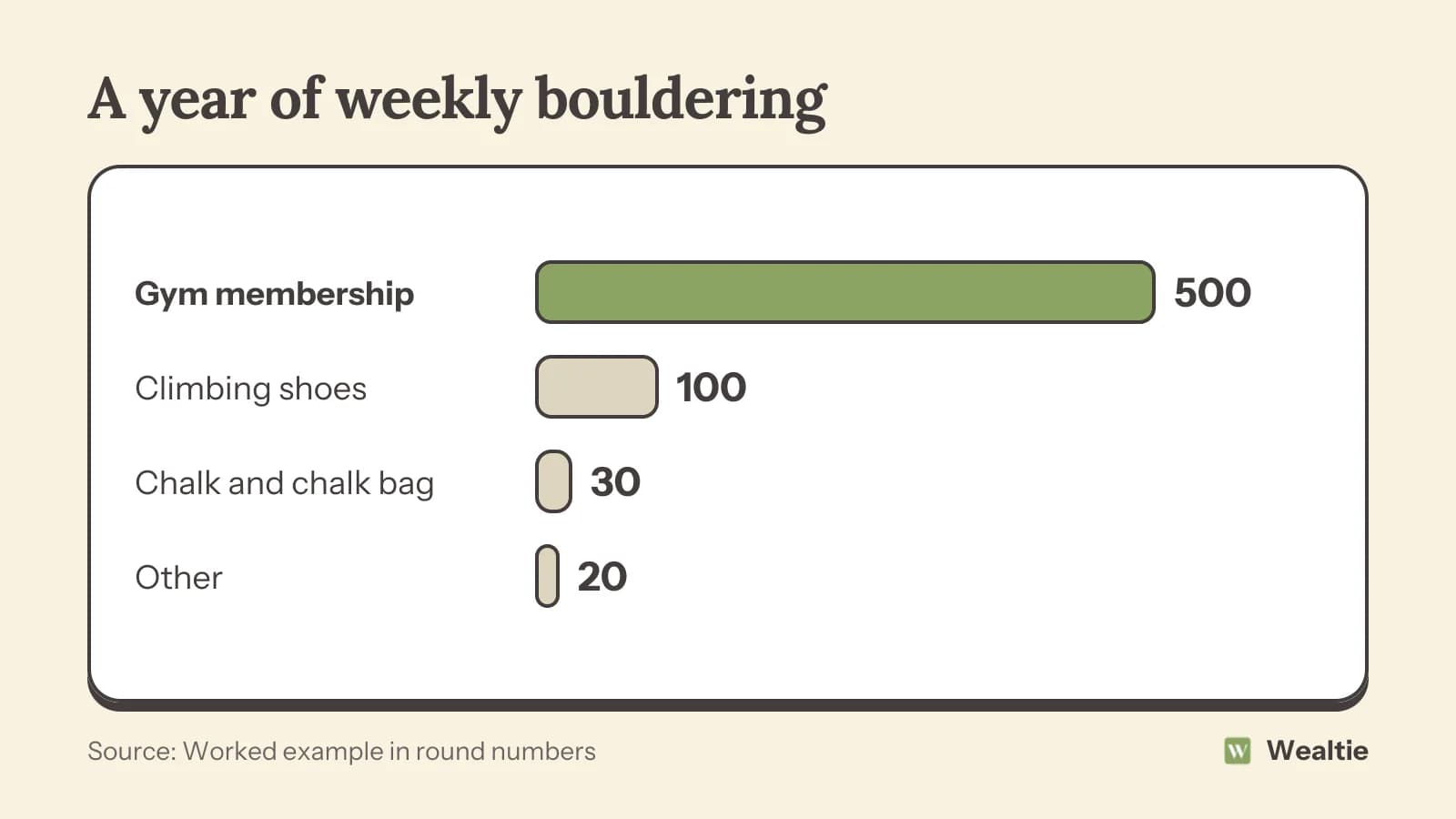
Here's a worked example for weekly bouldering, in round numbers that work in any currency:
| Item | A year |
|---|---|
| Gym membership | 500 |
| Climbing shoes | 100 |
| Chalk and chalk bag | 30 |
| Other | 20 |
| Total | 650 |
Climbing shoes wear out, especially if you climb often, so expect to replace or resole them every year or so.
What are the main climbing costs?
Gym entry or membership
You can pay per visit, buy a pass of several visits or take out a monthly membership. If a visit costs 12 and you go 50 times a year, that's 600, so a membership at 500 saves 100. If you go less often, a multi-visit pass may be better. Many gyms offer off-peak memberships that cost less.
Shoes
Climbing shoes are the one thing every climber needs. Beginner shoes are cheaper and more comfortable. Most gyms rent shoes, which is fine while you decide whether you like it.
Chalk
Chalk keeps your hands dry. A chalk bag and a block of chalk are cheap and last a long time.
Rope climbing gear
For rope climbing, you'll need a harness and a belay device, and you'll need to learn to belay safely, often on a paid course. In a worked example, a harness, belay device and rope cost about 240. Gyms usually provide ropes indoors.
Courses and outdoor trips
Introductory courses teach safe climbing and belaying. Outdoor climbing adds travel, guidebooks and sometimes a guide. These are optional extras, but worth budgeting for if you plan to climb outside.
How can you climb for less?
- Rent shoes at first: try climbing a few times before buying.
- Buy beginner shoes: they're cheaper and more comfortable while you learn.
- Climb off-peak: many gyms offer cheaper entry or memberships at quiet times.
- Buy a multi-visit pass: cheaper per visit if you don't go often enough for a membership.
- Resole shoes: replacing the rubber costs less than new shoes.
- Buy gear second-hand carefully: shoes and chalk bags are fine second-hand, but buy safety gear like harnesses and ropes new.
- Climb with friends: sharing travel and gear for outdoor trips cuts costs.
Is a climbing membership worth it?
Work out how often you'll go. Divide the membership price by the per-visit price to see how many visits you need to break even. If you'll climb more than that, a membership saves money. If you're not sure, try a multi-visit pass first. How to save money on a gym membership covers similar choices.
Compare with other ways to keep fit
Climbing can replace a gym membership for many people, since it builds strength and fitness. If you're paying for both, see whether you need both. The cost of yoga classes and the cost of cycling cover other active hobbies if you're comparing.
Watch for gear creep
As you improve, it's tempting to buy more shoes, gadgets and training boards. Set a yearly gear budget and stick to it. How to save money on sports kit has more tips.
What else adds to the cost of climbing?
A few extra costs are worth planning for. Travel to the gym adds up if it's far from home, so a gym near work or on your commute keeps costs down. Many climbers buy food or drinks at the gym café after a session, which can cost as much as entry over a month. Climbing is hard on fingers and shoulders, and physiotherapy for an injury can be expensive, so warming up and resting properly saves money as well as pain. As you improve, you might want training sessions, coaching or competitions, each with their own fees. Outdoor trips bring guidebooks, fuel, campsites and possibly a guide for your first time outside. None of these is essential, but a rough yearly figure for extras stops them catching you out.
How do you track climbing costs in Wealtie?
Add your membership as a recurring transaction, so it logs itself on its date. Put shoes, chalk and trips in a climbing category among your expense categories, and set a budget for it.
Questions people ask
In a worked example, a year of weekly bouldering with a gym membership and your own shoes costs about 650.
Yes. Bouldering needs only shoes and chalk, while rope climbing needs a harness, a belay device and often a course.
It is if you'll go more often than the number of visits needed to break even. Divide the membership price by the per-visit price to check.
Shoes and chalk bags are fine second-hand, but buy safety gear like harnesses and ropes new.
This article is general information, not financial, tax or legal advice. Your situation is your own; check the numbers that apply to you before you act on them.