Budgeting: The cost of beekeeping as a hobby: a first-year budget
The cost of beekeeping covers a beginner's course, a hive, the bees, protective clothing and basic tools. In a worked example, a first year with one hive costs about 700.
 By Wealtie Team · 3 min read

Key takeaways
- The cost of beekeeping covers a course, hive, bees, protective clothing and tools.
- In a worked example, a first year with one hive costs about 700.
- A course and a local association are the best first spend.
- Later years cost much less, mostly treatments, frames and jars.
What is the cost of beekeeping?
Beekeeping is a fascinating hobby that helps pollinators and can give you honey. It does need some upfront spending and plenty of learning. Most new beekeepers start with a course, then buy a hive, a colony of bees, protective clothing and a few tools. In a worked example, a first year with one hive costs about 700. After that, costs drop sharply, since the hive and clothing last for years.
Rules on keeping bees vary by country, and in some places you're asked to register your hives. A local beekeeping association is the best place to find out what applies, and many offer courses, mentors and shared equipment.
It's worth thinking about where the hive will go before spending anything. Bees need a sheltered, sunny spot away from paths and neighbours' windows, and you'll need easy access for inspections. If your garden isn't suitable, some associations run shared apiaries, and some farmers and landowners are happy to host hives in return for a jar of honey. Spending a season helping an experienced beekeeper before buying your own bees is a cheap way to be sure the hobby suits you. You'll learn far more than from books alone, and you'll find out whether you're comfortable around a busy hive.
What does a first year of beekeeping cost?
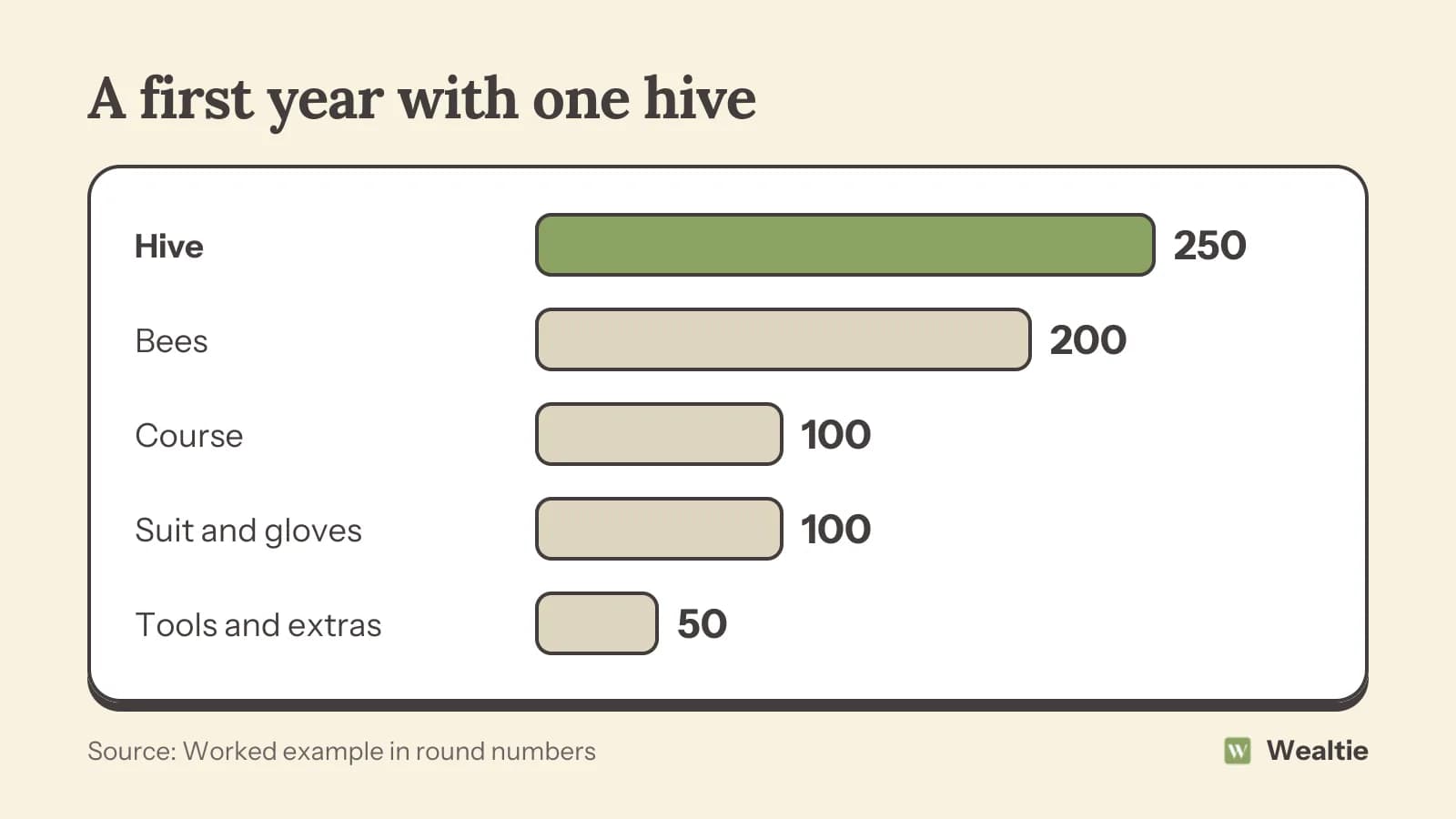
Here's a worked example with one hive, in round numbers that work in any currency:
| Item | First year |
|---|---|
| Hive | 250 |
| Bees | 200 |
| Course | 100 |
| Suit and gloves | 100 |
| Tools and extras | 50 |
| Total | 700 |
In later years, costs are mainly treatments to keep bees healthy, replacement frames and jars for honey, which might come to about 100 a year.
What are the main beekeeping costs?
A course
A beginner's course teaches you how to handle bees, spot disease and keep a colony healthy through the year. It's the most important first spend, since it helps you avoid costly mistakes and lost colonies. Many courses include supervised time with real hives.
Hive
A hive includes the boxes, frames, a roof and a floor. Wooden hives last many years with care. Second-hand hives can save money, but they must be cleaned and sterilised carefully to avoid spreading disease. Ask your local association for advice before buying used. Members sometimes sell good equipment when they reduce their number of hives, and they'll know its history.
Bees
You can buy a small colony, known as a nucleus, from a reputable local supplier. Local bees are often better suited to your climate. Some associations help new members get bees, and catching a swarm is sometimes possible with a mentor's help.
Protective clothing
A suit or jacket with a veil, plus gloves, protects you while you learn. A good fit and sturdy zips matter more than brand. Many beekeepers become comfortable with less protection over time.
Tools and extras
A hive tool, a smoker and a feeder are the basics. Extracting honey needs more equipment, but many associations lend or rent extractors.
What else adds to the cost of beekeeping?
Colonies can die over winter or from disease, so replacing bees is a possible cost. Treatments to keep bees healthy are needed through the year. If you want more than one hive, which many beekeepers recommend so you can compare colonies, costs rise. Jars, labels and storage for honey add up once you start harvesting. Travel to an apiary away from home, if you can't keep bees in your garden, is another cost to consider.
Can beekeeping pay for itself?
Sometimes, in a good year. A healthy hive can produce more honey than one household needs, and some beekeepers sell jars to friends or at local markets. Honey yields vary a lot with the weather and the colony, and the first year often produces little, since a new colony needs time to build up. If you start selling, check any food labelling rules where you live. How to earn money selling crafts covers pricing and costs for selling what you make.
Keep costs down
Join a local association to share equipment, buy second-hand only with expert advice, and start with one or two hives. How to save money on a hobby has more tips. Planting bee-friendly flowers helps your bees and costs little. How to save money on gardening covers growing on a budget.
How do you track beekeeping costs in Wealtie?
Add a beekeeping category to your expense categories and set a yearly budget for it. If you sell honey, log the money in the income tracker to see the hobby's real cost.
Questions people ask
In a worked example, a first year with one hive costs about 700, including a course, hive, bees, protective clothing and tools.
No, once you're set up. Later years cost much less, mostly treatments, frames and jars, about 100 a year in a worked example.
It's strongly recommended. A course helps you keep bees healthy and avoid costly mistakes.
Sometimes, by selling surplus honey, but yields vary and the first year often produces little.
This article is general information, not financial, tax or legal advice. Your situation is your own; check the numbers that apply to you before you act on them.