Budgeting: How much does a motorbike cost to run?
How much does a motorbike cost to run? Often less than a car for commuting, and in a worked example a commuter bike costs about 1,100 a year against about 2,000 for a small car.
 By Wealtie Team · 3 min read

Key takeaways
- How much a motorbike costs to run depends on the bike, insurance and distance.
- In a worked example, a commuter bike costs about 1,100 a year, against about 2,000 for a small car.
- Safety gear and training are upfront costs that matter as much as the bike.
- Tyres and chains wear faster than on a car, so include them in your budget.
How much does a motorbike cost to run?
Usually less than a car, especially for commuting. Motorbikes use less fuel, often cost less to tax and park, and can cut journey times in traffic. But insurance, safety gear, training and wear on parts all need budgeting for. Knowing the full cost helps you decide whether a bike makes sense for you. It's also worth trying a training day before committing, to see whether riding suits you.
Licensing rules for motorbikes vary a lot by country and engine size, so check what you'll need before you buy.
What does a year of riding cost?
Here's a worked example for a commuter motorbike, in round numbers that work in any currency:
| Cost | Amount |
|---|---|
| Fuel | 400 |
| Insurance | 300 |
| Servicing | 200 |
| Tyres and parts | 100 |
| Tax and other | 100 |
| Total | 1,100 |
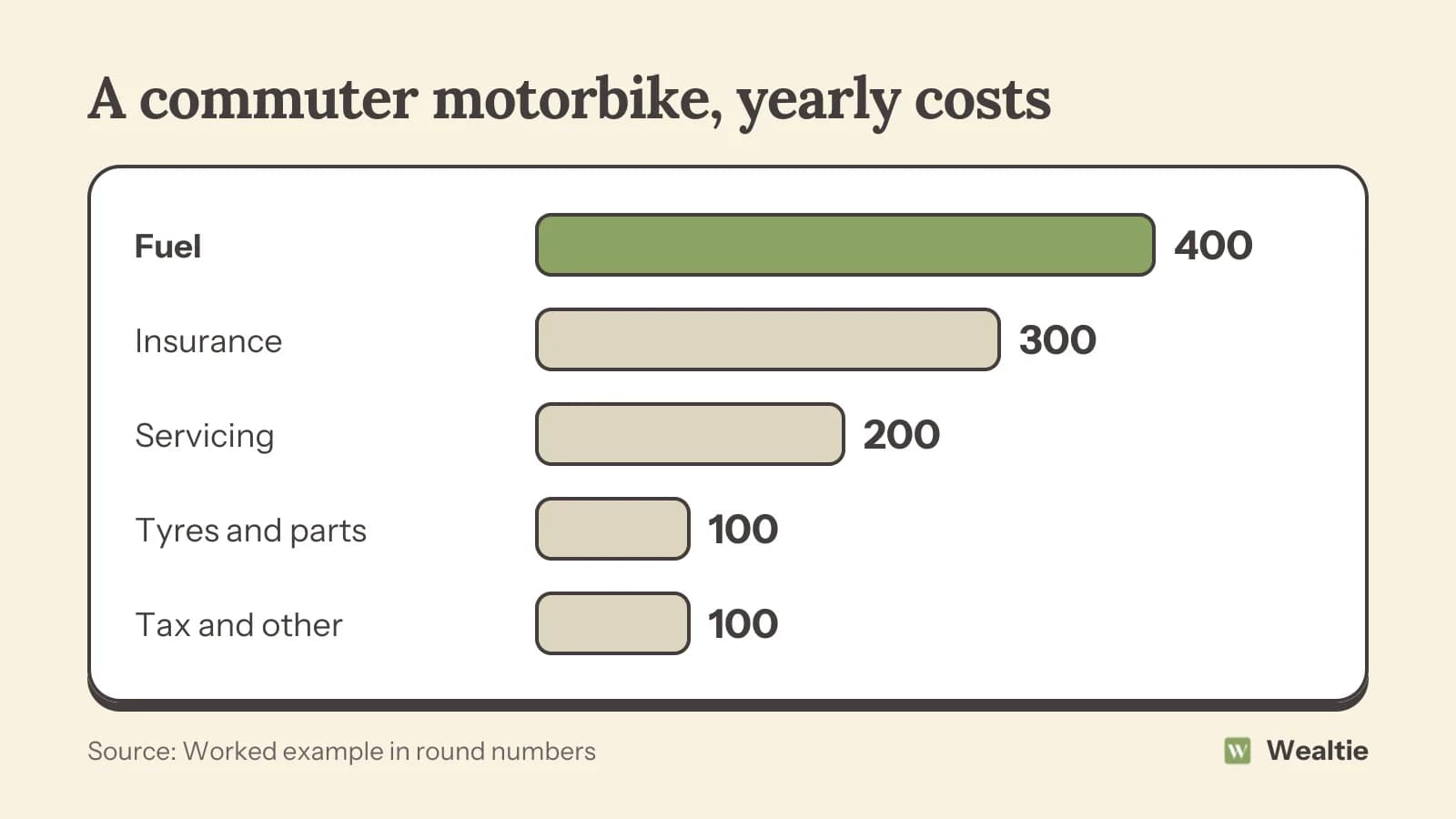
In this example, the bike costs about 1,100 a year to run, against about 2,000 for a small car doing the same journeys. Larger or high-performance bikes cost more to insure and run. If you ride only in good weather, your yearly mileage, and costs, may be lower still. Your own figures depend on the bike, where you live and your riding history.
What upfront costs should you plan for?
Beyond the bike itself:
- Training and licence: courses and tests, which vary by country
- Safety gear: a helmet, jacket, trousers, gloves and boots, perhaps 600 in a worked example
- Security: a strong lock or chain, and sometimes a tracker
- Waterproofs for riding in the rain
Good safety gear is essential and worth buying properly. A helmet should be new and meet current safety standards, since you can't tell if a used one has been damaged. Replace it after any crash, and check the manufacturer's advice on how long it lasts. Some other gear can be bought second-hand in good condition. Gear with built-in armour and reflective panels adds safety for a small extra cost.
How do you save on insurance?
Insurance can be one of the biggest costs, especially for new or young riders. Ways to lower it:
- Choose a smaller, lower-powered bike to start
- Keep the bike in a garage or secure place overnight
- Use approved locks and security devices
- Take advanced riding courses, which some insurers reward
- Compare quotes each year rather than auto-renewing
- Check whether limiting your mileage or riding history lowers the price
What about maintenance?
Motorbikes need regular servicing, and some parts wear faster than on a car. Following the service schedule in the handbook prevents small problems becoming expensive ones. Tyres, chains, sprockets and brake pads need replacing more often, especially with frequent riding. Learning basic checks, like chain cleaning and tyre pressures, saves money and keeps you safe. Keeping service records also helps when you sell the bike. Setting aside a little each month for parts avoids a big bill. Riding smoothly, without hard braking and fast acceleration, makes tyres and brakes last longer. The car repair fund works the same way for bikes.
Is a motorbike cheaper than a car?
Often, for commuting. Lower fuel, parking and tax costs add up, and in busy cities a bike can save time too. But a bike may not replace a car entirely if you carry passengers, shop for a family or ride in harsh weather. Some households keep one car and use a bike for commuting. That can cut fuel and wear on the car while keeping it for family trips. How to cut commuting costs covers other ways to save on travel. Bikes can often park for free or much less than cars in towns, which adds to the saving.
Scooters and electric bikes
Small scooters and electric motorbikes can cost even less to run, with very low fuel or charging costs. They suit short, urban journeys. Check licensing rules and insurance, which still apply. Charging at home usually costs very little, but check the battery's expected life and replacement cost.
How do you budget for a motorbike?
Add up the upfront costs and the yearly running costs, and check they fit your budget alongside your other transport. How much car can you afford uses a similar approach. Saving for gear and training before you buy the bike means you start safely and without debt. A good used bike from a reputable seller can cost much less than new, and smaller bikes hold their value well.
How do you track motorbike costs in Wealtie?
Log fuel, insurance, servicing and parts in a transport line in your expense categories, so you can see the true yearly cost. Insurance and any finance payments can be set up as recurring transactions with the bill tracker, so they're logged on time.
Questions people ask
In a worked example, about 1,100 a year for a commuter bike, covering fuel, insurance, servicing, parts and tax.
Often for commuting. In a worked example, about 1,100 a year against 2,000 for a small car.
In a worked example, about 600 for a helmet, jacket, trousers, gloves and boots. Buy the helmet new.
Start with a smaller bike, store it securely, use approved locks, take advanced training and compare quotes.
This article is general information, not financial, tax or legal advice. Your situation is your own; check the numbers that apply to you before you act on them.