Budgeting: Cavity wall insulation cost, savings and what to check first
Cavity wall insulation cost covers filling the gap between your home's outer and inner walls, which cuts heat loss through the walls. In a worked example, it costs about 1,500 for a typical house and saves about 200 a year on heating.
 By Wealtie Team · 3 min read

Key takeaways
- Cavity wall insulation cost covers filling the gap inside your external walls.
- In a worked example, it costs about 1,500 and saves about 200 a year.
- Not every home is suitable, so get a proper survey first.
- Grants can cover some or all of the cost in some places.
What is the cavity wall insulation cost?
Many homes built in the last century have external walls made of two layers with a gap, or cavity, between them. If that gap is empty, heat escapes through it. Cavity wall insulation fills the gap with insulating material, injected through small holes drilled in the outside wall, which are then filled. The work usually takes a day or less and causes little disruption inside. In a worked example, insulating a typical house costs about 1,500 and saves about 200 a year on heating.
Not every home is suitable. Homes with solid walls, which are common in older properties, need different and more expensive insulation. Homes in very exposed, wet locations, or with damp problems, may not be suitable for cavity insulation either.
Grants and energy company schemes can cover some or all of the cost in some places, so check before paying yourself.
Many people don't know whether their walls have a cavity, or whether it was filled by a previous owner. Looking for a pattern of small, filled holes in the outside brickwork can be a clue that insulation was added before. Your home's energy certificate, if it has one, may also say what type of walls you have and whether they're insulated. Finding this out before calling installers saves time and helps you spot anyone trying to sell work you don't need.
The work itself is usually quick. Installers drill a pattern of holes in the outside walls, blow in the insulation and fill the holes to match the brickwork, often in a single day.
How much does cavity wall insulation save?
Here's a worked example for a typical house, in round numbers that work in any currency:
| Item | Amount |
|---|---|
| Installation cost | 1,500 |
| Yearly heating saving | 200 |
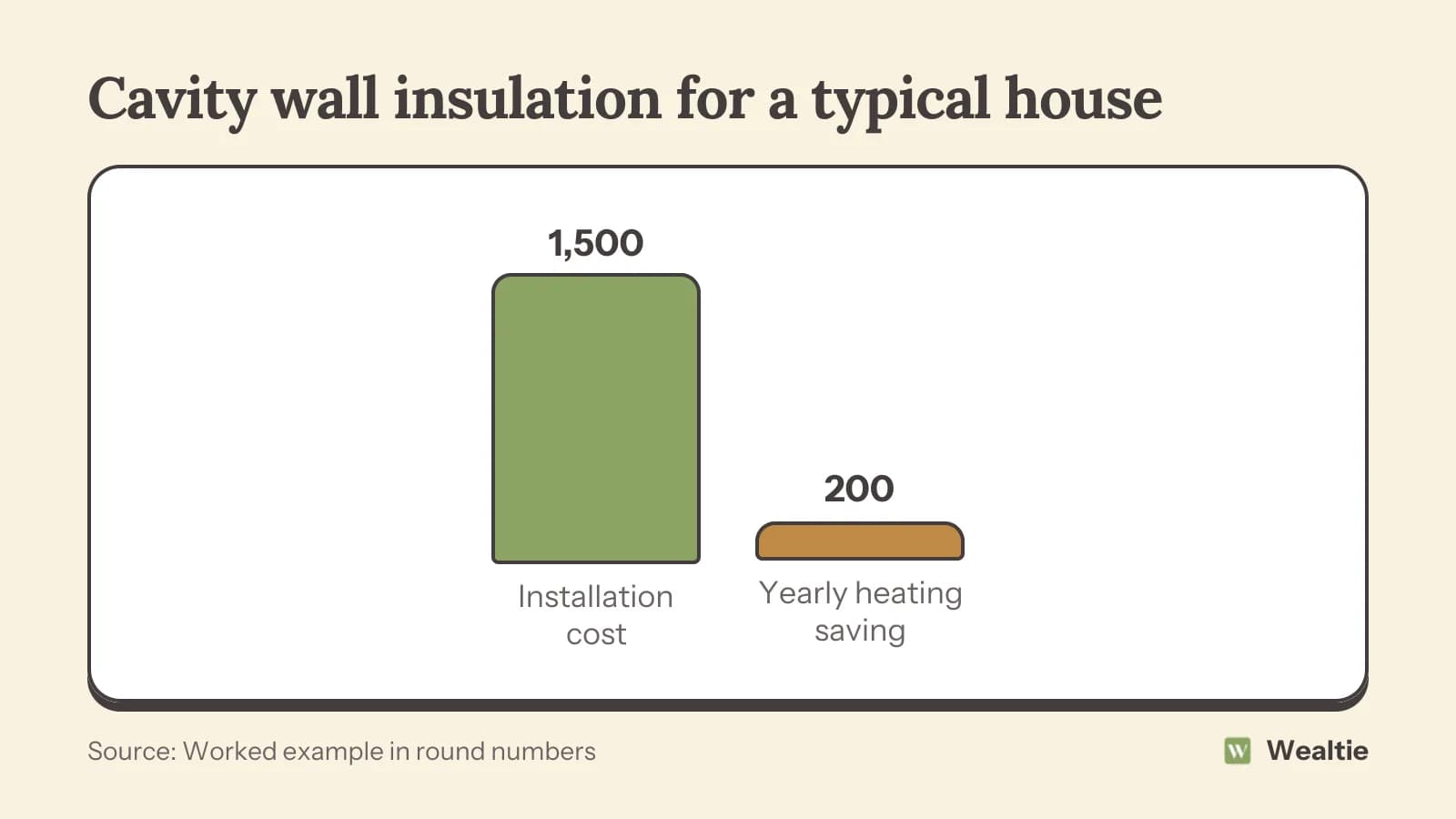
At 200 a year, the insulation pays for itself in about seven and a half years. After that, the savings continue for decades. Homes also feel warmer and less draughty, and rooms take less time to heat up when you switch the heating on. Your own figures depend on the size of your home, how you heat it and your energy prices.
How do you know if your home is suitable?
Check the walls
Cavity walls usually have bricks laid lengthways in a regular pattern. Solid walls often show the short ends of some bricks. Wall thickness at a window or door can also give a clue. A surveyor can confirm.
Check for existing insulation
Some homes already had cavity insulation added. An installer can check with a small inspection hole or a camera. If insulation is already there but poorly fitted, it may need checking rather than adding more.
Look for damp
If your walls are damp, the cause needs fixing first. Filling a cavity in the wrong conditions can make damp worse. Leaking gutters, cracked render and blocked air bricks are common causes worth checking before any insulation goes in.
Consider exposure
Homes facing strong wind-driven rain may need a particular type of insulation, or may not be suitable at all. A good surveyor will tell you.
What should you check before going ahead?
Get a proper survey from a qualified installer, not just a quick quote. Ask what material they'll use, whether your home is suitable and why. Check that the work comes with a long guarantee backed by an independent body, which protects you if problems appear later. Get more than one quote and compare what each includes, from the survey to making good the drilled holes. Be wary of cold callers offering free insulation with pressure to sign quickly.
What other insulation should you consider?
Loft insulation is usually cheaper and quicker to pay back, so many people do it first. Draught proofing is cheaper still. Solid wall insulation, inside or outside, costs far more but can make a big difference in older homes. How to save money on heating covers the cheapest steps, and the winter budget covers planning for higher bills while you save for bigger improvements.
Plan the cost
If a grant doesn't cover it, save a little each month in a sinking fund for home improvements. The home maintenance budget covers planning for jobs like this alongside other home costs.
How do you track heating savings in Wealtie?
Add energy bills as recurring transactions, so they log themselves on their date. Keep home improvements in their own expense category and compare winter bills before and after the work to see the saving.
Questions people ask
In a worked example, insulating a typical house costs about 1,500.
In a worked example, about 200 a year on heating, so it pays for itself in about seven and a half years.
Homes with empty cavity walls and no damp problems usually are. Solid walls and very exposed homes may not be. Get a survey.
In some places, yes. Check local and energy company schemes before paying yourself.
This article is general information, not financial, tax or legal advice. Your situation is your own; check the numbers that apply to you before you act on them.