Budgeting: Budgeting with ADHD: a money system that works with your brain
Budgeting with ADHD works best when the system does the remembering for you: bills and savings on autopilot, money you can see at a glance, and as few decisions as possible. Small, quick habits beat a detailed spreadsheet you'll abandon after a week.
 By Wealtie Team · 3 min read

Key takeaways
- Budgeting with ADHD works best when the system does the remembering.
- Automate bills and savings so they happen without a decision.
- Make money visible, with a weekly spending figure and a widget or note you see daily.
- Build in a buffer for forgotten costs and be kind to yourself when things slip.
Why is budgeting with ADHD hard?
Many people with ADHD find traditional budgeting advice hard to follow. Tracking every purchase in a spreadsheet, checking accounts daily and planning months ahead all depend on steady attention and memory, which can be the very things ADHD makes difficult. Bills get forgotten, impulse purchases slip through, and a missed week of tracking can make the whole system feel broken. It's not a lack of effort or intelligence. It's a mismatch between the system and how your brain works.
Many people with ADHD also describe a cycle of avoiding money because it feels overwhelming, then facing a pile of problems all at once. Breaking that cycle starts with making money tasks small and quick. A two-minute check is far easier to start than an hour-long review, and doing it often means there's rarely a pile waiting. The aim is to make good money habits the easy option, not the effortful one.
The answer isn't to try harder with a system that doesn't suit you. It's to build one that does the remembering for you, keeps money visible and cuts the number of decisions you have to make.
What does an ADHD-friendly budget look like?
Here's a worked example on an income of 2,000 a month, in round numbers that work in any currency:
| Part | Each month |
|---|---|
| Bills on autopilot | 1,300 |
| Savings on payday | 200 |
| Buffer for forgotten costs | 100 |
| Spending money, weekly | 400 |
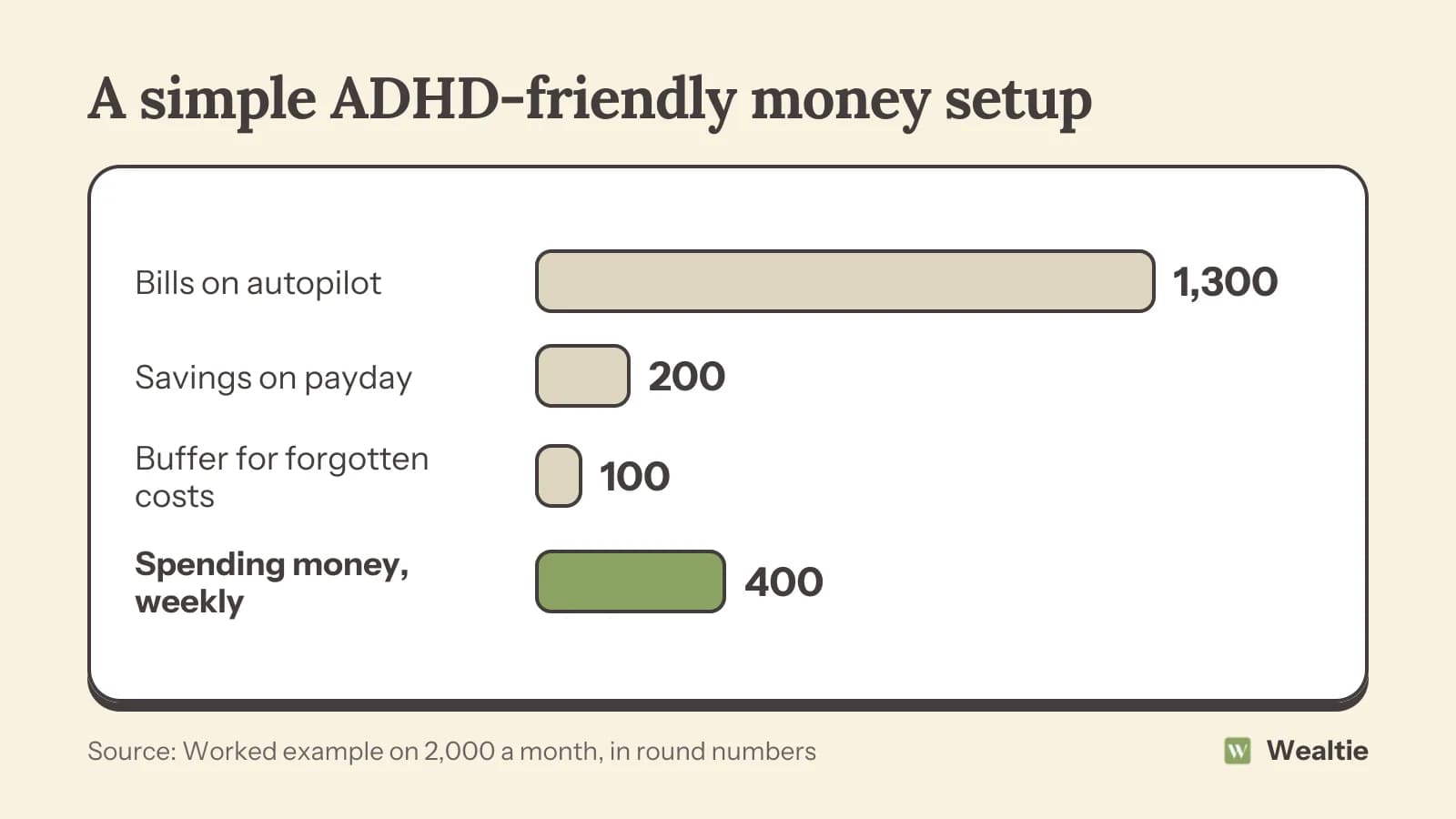
Bills and savings leave automatically. A small buffer covers the costs that always seem to come out of nowhere. Everything else is spending money, split into 100 a week, so there's only one number to watch.
How do you make budgeting with ADHD work?
Automate everything you can
Set up bills to pay automatically on fixed dates, ideally just after payday. Move savings out on payday too, before you can spend them. Every payment that happens on its own is one less thing to remember. Pay yourself first explains the savings side.
Use one weekly number
A monthly budget with many categories is a lot to hold in your head. A single weekly spending figure is far easier: you know what you have for the week, and if you overspend, a fresh week starts soon. Weekly vs monthly budget compares the two.
Make money visible
Out of sight is often out of mind. Put your weekly figure where you'll see it: a phone widget, a note on the fridge or your lock screen. Seeing it several times a day keeps it in your mind without needing to remember to check.
Build in a buffer
Forgotten subscriptions, late fees and surprise costs happen. A small buffer each month means they don't knock the whole budget over. If the buffer isn't used, move it to savings.
Reduce decisions
Fewer choices mean less chance of slipping. Unsubscribe from shop emails, delete saved cards from shopping sites and remove shopping apps from your home screen. A short pause before buying, like waiting a day, catches many impulse purchases. How to stop impulse buying has more ideas.
Make it rewarding
ADHD brains often respond well to quick rewards. Ticking off a week on budget, watching a streak grow or a small treat for a good month can make money habits feel more satisfying. Pairing a money task with something you enjoy, like a favourite drink or song, helps too.
What if you fall off track?
You will, sometimes, and that's fine. The goal isn't a perfect record. It's a system that's easy to restart. If you miss a week of logging, don't try to fill in every detail. Check your balance, note roughly where things stand and start again from today. Being harsh on yourself makes it more likely you'll avoid looking at money at all. Money anxiety covers ways to ease the stress that money can bring.
Get help if you need it
Some people find it helps to share money tasks with a partner, friend or family member, or to work with a coach. Talking to a doctor about ADHD support can help with money as well as other parts of life.
How can Wealtie help with ADHD budgeting?
Add bills and savings as recurring transactions, so they log themselves on their date and you don't have to remember them. Put a Wealtie widget on your home screen to see your budget at a glance, and use streaks for a small reward when you keep going. Wealtie Pro adds weekly budgets, so you can work with one weekly number. Set a weekly budget in Wealtie covers how.
Questions people ask
Traditional budgets rely on steady attention and memory, which ADHD can make harder. A system that does the remembering for you works better.
A simple one with bills and savings automated, a single weekly spending figure, a small buffer and as few decisions as possible.
Remove saved cards and shopping apps, unsubscribe from shop emails and wait a day before non-essential purchases.
Don't try to fill in every gap. Check your balance, note where things stand and start again from today.
This article is general information, not financial, tax or legal advice. Your situation is your own; check the numbers that apply to you before you act on them.