Budgeting: How to budget if you hate budgeting
You can budget if you hate budgeting by skipping detailed spreadsheets and using a simple system that runs mostly on its own. In a worked example, saving 200 on payday and spending freely from what's left takes five minutes a week.
 By Wealtie Team · 3 min read

Key takeaways
- If you hate budgeting, use a simple system that runs mostly on its own.
- In a worked example, saving 200 on payday and spending freely from the rest takes five minutes a week.
- Paying yourself first and automating bills do most of the work.
- A weekly glance at your balance is often enough tracking.
Can you budget if you hate budgeting?
Yes. Many people hate budgeting because they picture spreadsheets, receipts and tracking every coffee. Others have tried strict budgets before, failed after a few weeks and decided budgeting isn't for them. But a budget doesn't have to look like that. The best budget is one you'll keep, and for many people that means a simple system that needs very little attention. If you hate budgeting, focus on setting up a few things once, then letting them run. The goal is to spend less time thinking about money while still making progress.
What's the simplest way to budget?
Pay yourself first, automate your bills and spend what's left. Here's a worked example for someone who takes home 2,200 a month, in round numbers that work in any currency:
| Amount | |
|---|---|
| Bills, paid automatically | 1,300 |
| Savings, moved on payday | 200 |
| Free to spend | 700 |
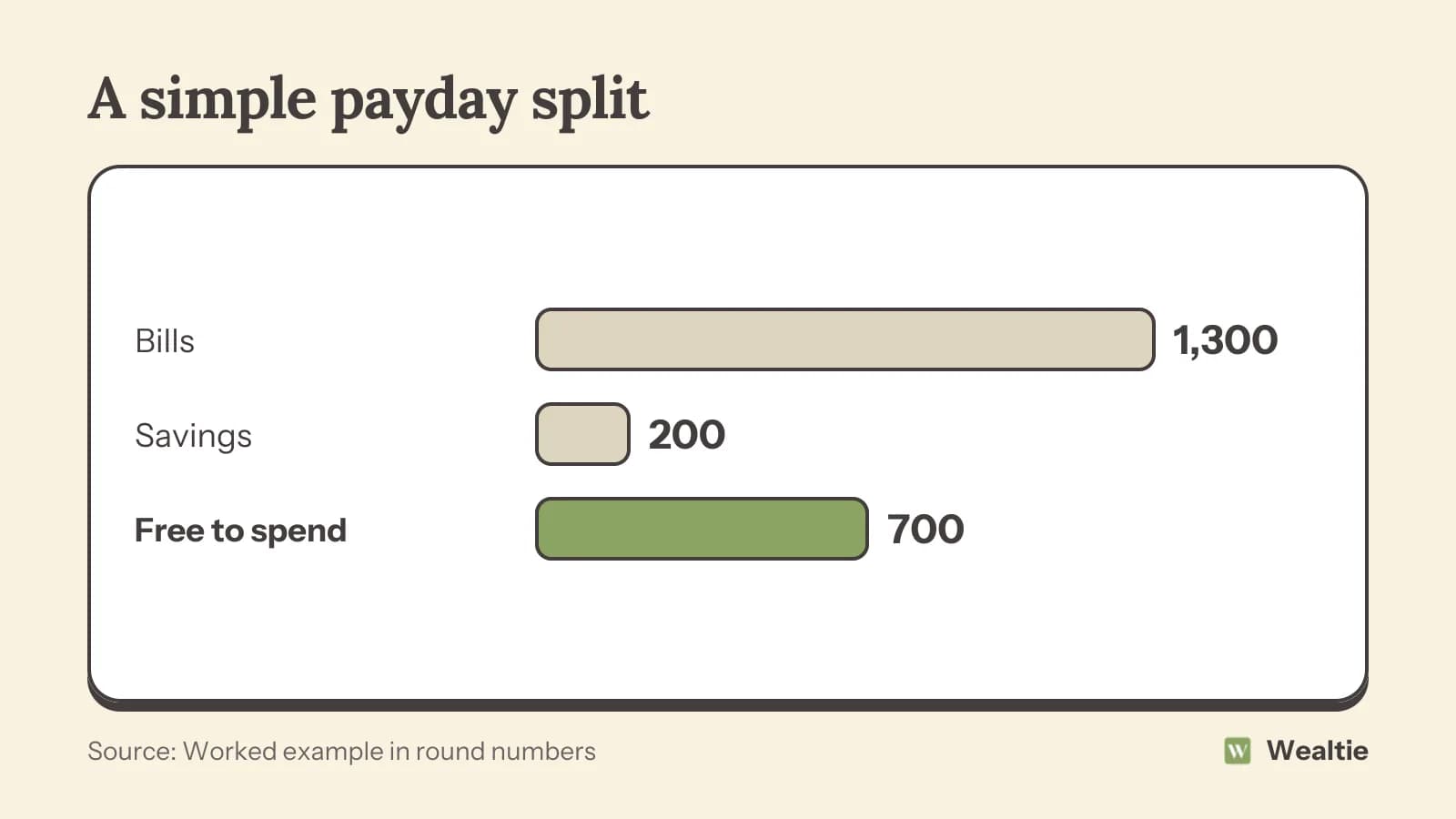
That 700 covers food, transport, fun and everything else. There's no need to track each category, as long as you don't run out before the end of the month. If you do run out, that's useful information, and next month you can adjust the split. Pay yourself first explains why saving first works so well.
How do you know if you're on track?
Glance at your spending account once a week, ideally on the same day each time. If you have 700 for the month, that's about 175 a week. If you've spent much more than that halfway through, slow down. This takes a minute and replaces detailed tracking for many people. Setting a reminder for the same time each week, like Sunday evening, makes it automatic. Weekly vs monthly budget covers which rhythm suits you.
Use a separate spending account
Having one account for bills and another for spending makes it easy. The spending account balance is what you can spend; the bills account looks after itself. Using the spending account's card for everyday purchases keeps everything in one place.
What other simple methods work?
The 80/20 budget
Save a set share first, and spend the rest however you like. The 80/20 budget rule explains it.
Envelopes
Put a fixed amount for each main area, like food and fun, into separate pots or envelopes. When one's empty, you stop. Envelope budgeting covers how it works with cash or digital pots.
One number
Some people track only one thing, like eating out or shopping, because that's where overspending happens. Everything else is left alone. It's a gentle way to fix the one habit that matters most to your budget.
Use an app that does the maths
If you'd rather not add things up, a budgeting app can show how much is left with a glance. Logging spending takes a few seconds each time, and the app handles the rest. It's the closest thing to budgeting without doing the budgeting.
Why do detailed budgets fail?
They take too much time, feel restrictive and break down after one bad week. Many people give up entirely when a detailed budget doesn't go to plan. A simple system is more forgiving. A bad week doesn't break it; you just carry on next week. Why budgets fail covers common problems and how to avoid them.
When do you need more detail?
If you keep running out before payday, or you're trying to pay off debt quickly, a little more detail can help. Track your spending for one month, just to see where it goes, then return to the simple system with any changes you need.
Review once in a while
Every few months, check that your bills and savings amounts still fit your life. Pay rises, new bills or new goals might mean adjusting the split. Putting part of each pay rise straight into savings keeps progress going without extra effort.
Make it rewarding
Give your savings a clear purpose, like a holiday or a cushion for emergencies, and check the balance now and then. Seeing it grow is often the reward that keeps people with the system, even if they never enjoy budgeting itself.
How can Wealtie make budgeting easier?
Set a single monthly limit in the budget tracker, and Budget Health shows whether you're on pace without you needing to add anything up. Bills set up as recurring transactions with the bill tracker log themselves, and you can use as few or as many expense categories as you like.
Questions people ask
Pay yourself first, automate your bills and spend what's left, checking your balance once a week.
No. Many people only check their spending account balance weekly.
Save a fixed amount on payday, pay bills automatically and spend the rest freely.
If you keep running out before payday or are paying off debt quickly, track for a month to see where money goes.
This article is general information, not financial, tax or legal advice. Your situation is your own; check the numbers that apply to you before you act on them.