Budgeting: Is a bread maker worth it? Cost per loaf and payback
Is a bread maker worth it? It can be if your household eats a lot of bread and you'll use it several times a week, and in a worked example a bread maker costing 80 pays for itself in about a year.
 By Wealtie Team · 3 min read
Key takeaways
- A bread maker can be worth it if you eat a lot of bread and use it often.
- In a worked example, it pays for itself in about a year.
- Homemade loaves are much cheaper than bakery bread, less so than cheap supermarket bread.
- It's only a saving if it replaces bread you'd buy, not if it sits unused.
Is a bread maker worth it?
It can be, if you'll use it. A bread maker mixes, kneads, proves and bakes a loaf with very little effort: you add the ingredients, press a button and come back to fresh bread. Homemade bread from basic ingredients costs much less than bakery bread and somewhat less than supermarket bread. For households that eat a lot of bread, the savings add up. For people who'd use it a few times and then forget about it, it's a cupboard ornament.
Many people also value the taste, the smell of fresh bread and knowing exactly what goes into it. Those benefits are real, even if they're hard to price.
Bread makers can do more than plain loaves. Many have settings for dough, which you can shape into rolls, pizza bases or buns and bake in the oven, plus settings for jam, cakes and gluten-free bread. If you'd use these extras, the machine earns its place faster. If you only want sandwich bread, a simple model with fewer programmes does the job for less.
It helps to be honest about your routine before buying. A bread maker needs a few minutes to measure ingredients, then a few hours to make the loaf. If you plan to use the timer to wake up to fresh bread, that's easy to fit in. If you tend to shop on the way home and want bread immediately, you may find yourself buying it anyway, which wipes out the saving.
How much does a bread maker save?
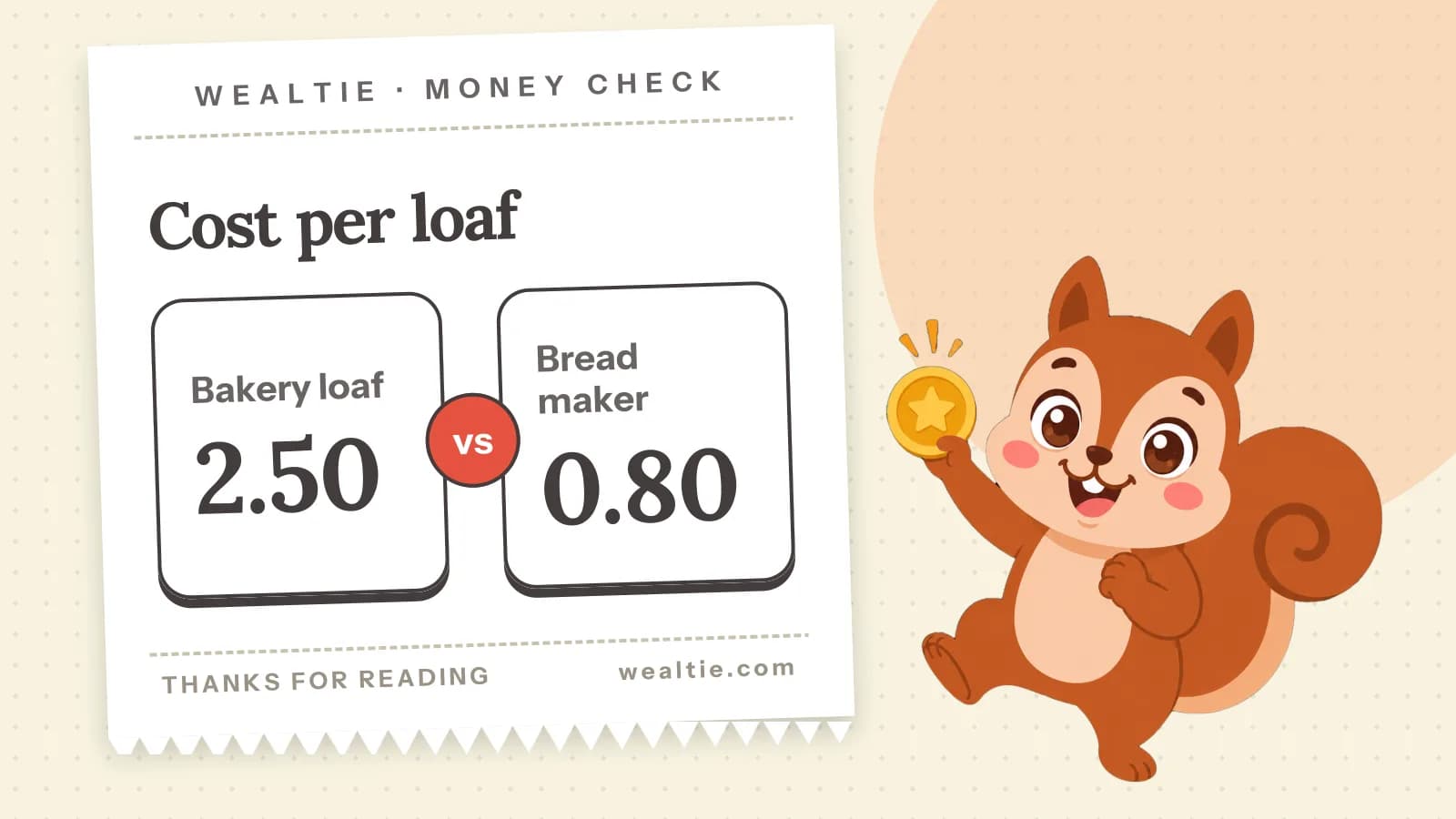
Here's a worked example of the cost per loaf, in round numbers that work in any currency:
| Bread | Cost per loaf |
|---|---|
| Bakery loaf | 2.50 |
| Supermarket loaf | 1.50 |
| Bread maker loaf | 0.80 |
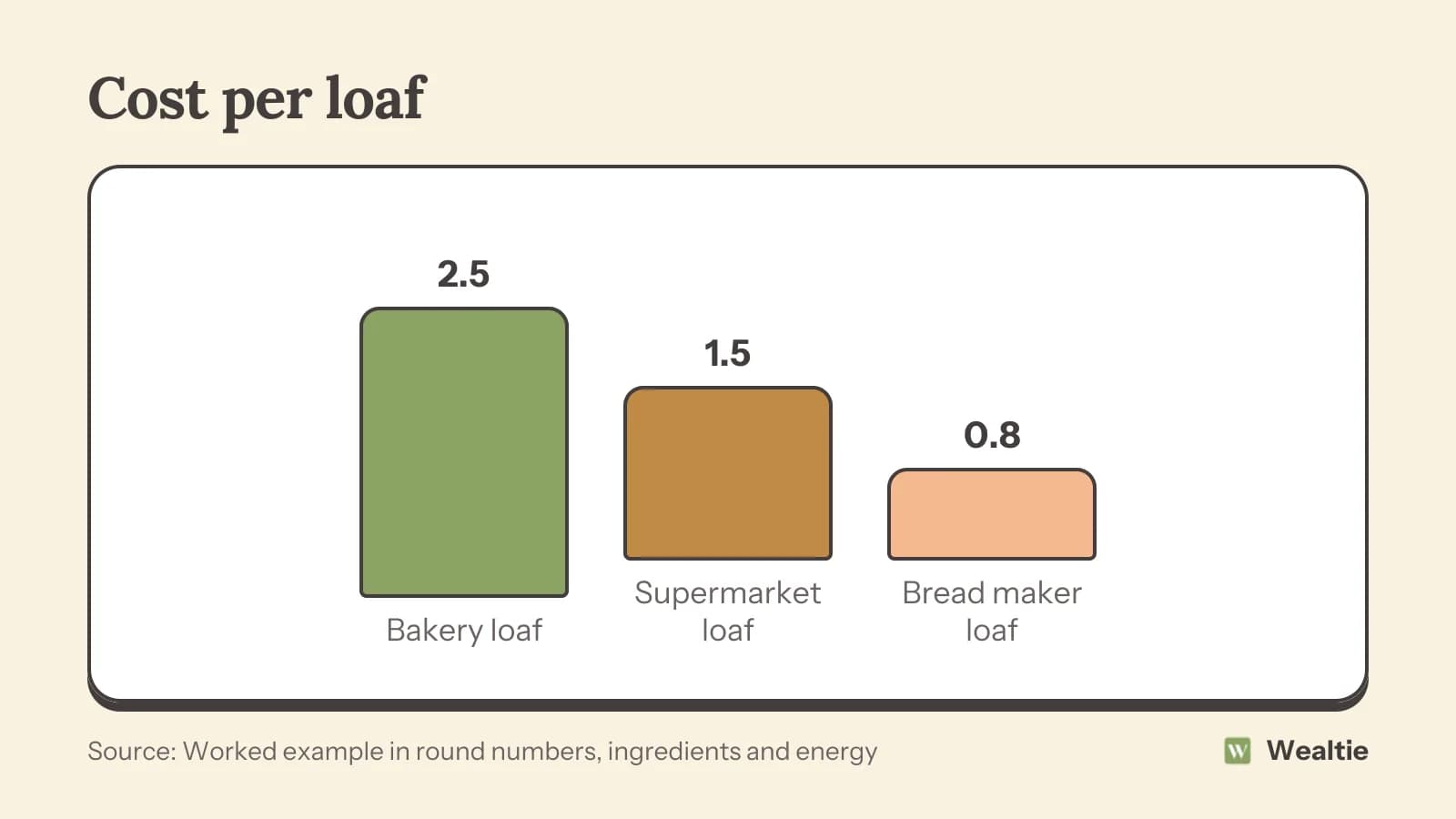
The bread maker figure covers flour, yeast, butter or oil, salt and the electricity to bake it. Making two loaves a week instead of buying supermarket bread saves about 70 a year, so a bread maker costing 80 pays for itself in about a year. Replacing bakery bread saves far more, about 175 a year.
Who gets the most from a bread maker?
Households that eat a lot of bread
Families going through several loaves a week see the biggest savings.
People who buy bakery or speciality bread
If you usually buy expensive loaves, homemade bread saves much more than if you buy the cheapest supermarket bread.
People who want control over ingredients
Bread makers let you choose flours, seeds and how much salt or sugar goes in, and avoid additives.
Who might not find it worth it?
If you eat little bread, buy the cheapest loaves or have limited kitchen space, a bread maker may not save much. It also takes a few hours per loaf, so you need to plan ahead, though timers help. Homemade bread goes stale faster than shop bread, so you may waste some if you don't eat it quickly or freeze it. Slicing a loaf once it's cool and freezing half of it keeps bread fresh for the whole week.
What does a bread maker cost?
Basic models are affordable and make good everyday loaves. More expensive ones add features like extra programmes, a fruit and nut dispenser and different loaf sizes. Second-hand bread makers are easy to find, since many people buy one and stop using it. That's a cheap way to try one. Check that the pan and paddle are in good condition, since these are the parts that wear out, and look up whether replacements are still sold for that model.
How can you get the most from a bread maker?
Buy flour and yeast in bulk to lower the cost per loaf. Use the timer so bread is ready in the morning. Slice and freeze loaves you won't finish in a couple of days. Try the dough setting for rolls and pizza bases, which saves on those too. How to save money on groceries and meal planning on a budget cover fitting homemade bread into your food budget.
Work out the cost per use
A bread maker used twice a week costs very little per loaf over a few years. One used twice a year is a poor buy. Cost per use explains this way of comparing, and is a coffee machine worth it? shows the same thinking for another kitchen gadget.
How do you track food savings in Wealtie?
Keep groceries in their own expense categories and set a monthly budget, so you can see whether homemade bread lowers what you spend on food.
Questions people ask
It can be if you eat a lot of bread and use it often. In a worked example, it pays for itself in about a year.
In a worked example, about 0.80 for ingredients and energy, compared with 1.50 for a supermarket loaf and 2.50 for a bakery loaf.
Usually, especially compared with bakery bread. The saving is smaller against the cheapest supermarket loaves.
Buy flour and yeast in bulk, use the timer and freeze loaves you won't finish quickly.
This article is general information, not financial, tax or legal advice. Your situation is your own; check the numbers that apply to you before you act on them.