Multi-currency & travel: How to avoid roaming charges abroad
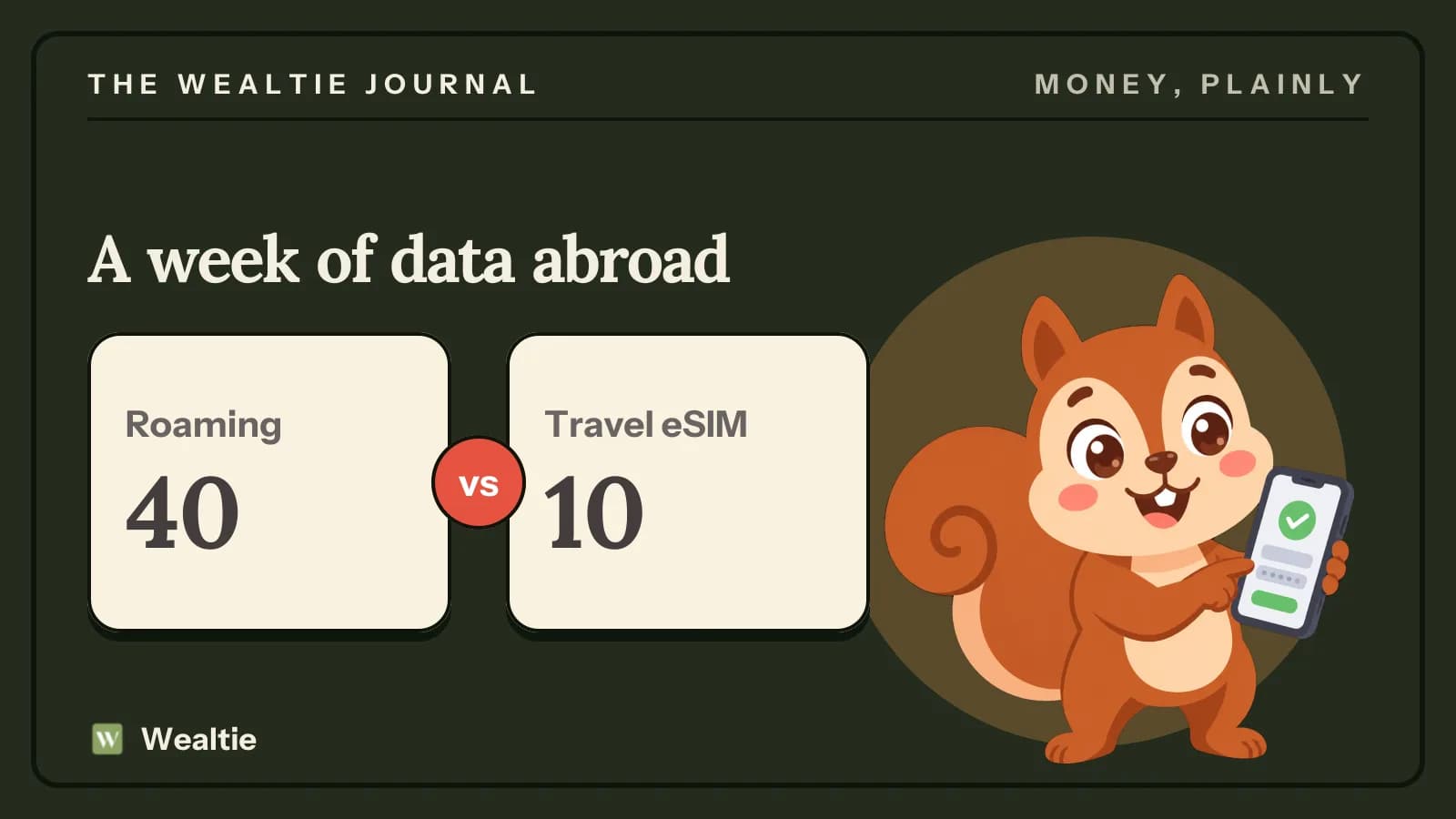
To avoid roaming charges abroad, check what your phone plan includes before you travel, then use a travel add-on, a local or eSIM data plan or Wi-Fi. In a worked example, a week of data abroad costs about 40 on pay-as-you-go roaming, against about 10 with a travel eSIM.
 By Wealtie Team · 3 min read
Key takeaways
- To avoid roaming charges, check your plan before you travel.
- In a worked example, a week of data costs about 40 roaming, against about 10 with a travel eSIM.
- Travel add-ons, eSIMs and local SIMs are usually much cheaper than pay-as-you-go roaming.
- Turn off data roaming and background updates if you're not on a travel plan.
How do you avoid roaming charges abroad?
Check your plan before you go, and choose the cheapest way to get data for your destination. Roaming charges are fees for using your phone's calls, texts and data in another country. Some plans include roaming in certain countries, while others charge high rates, especially for data. Rules can also change, so a plan that included roaming last year may not now. A few minutes of planning can save a nasty bill when you get home. Many travellers only discover the charges when the next bill arrives, when it's too late to change anything.
How much can you save?
Here's a worked example of a week of data abroad, in round numbers that work in any currency:
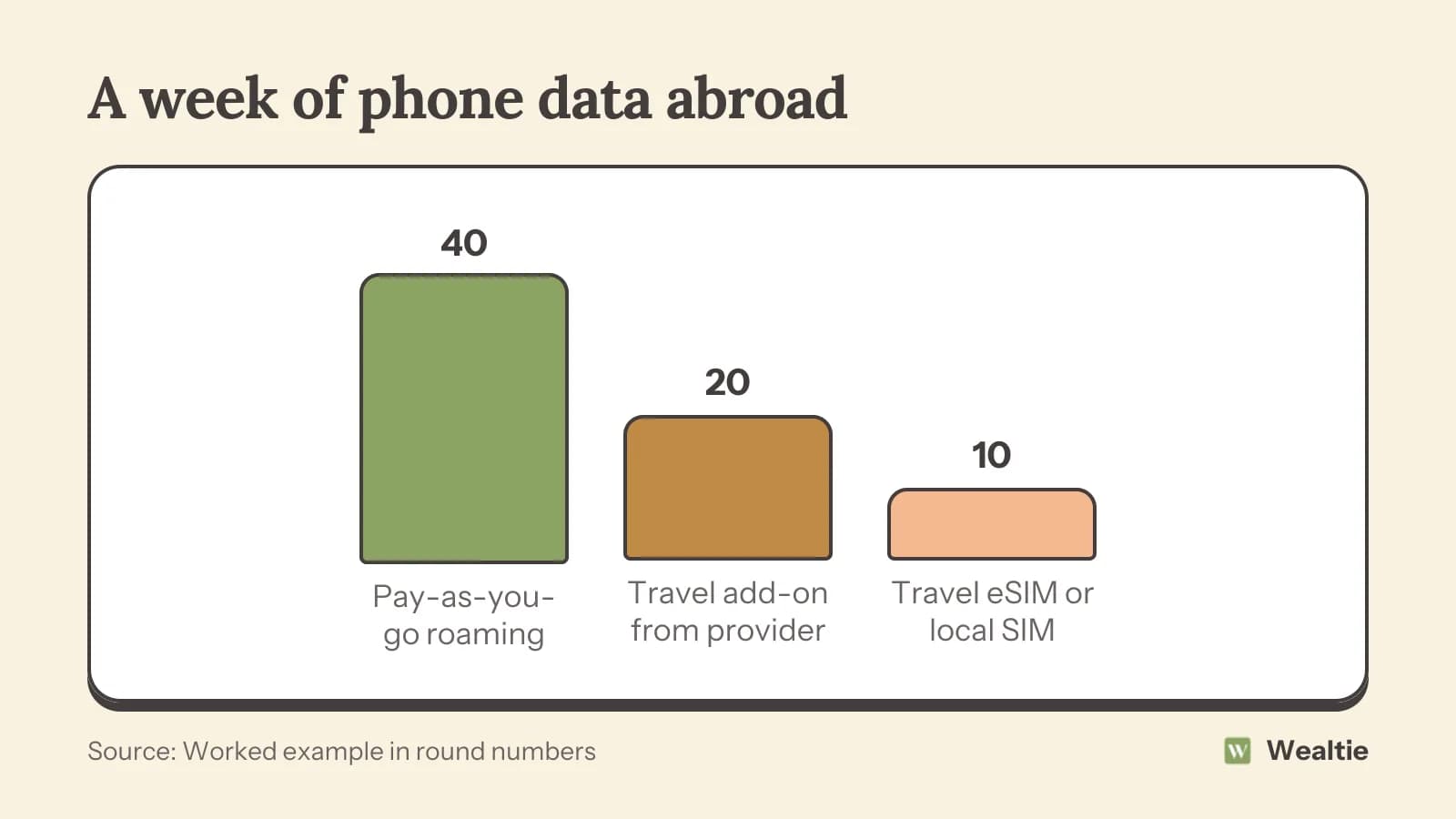
In this example, pay-as-you-go roaming costs about 40 for the week, a travel add-on from your provider about 20, and a travel eSIM or local SIM about 10. Your own costs depend on your provider, your destination and how much data you use. Video streaming and video calls use far more data than messaging and maps.
What should you check before you travel?
Look up your plan's roaming terms for your destination:
- Is roaming included, and in which countries?
- Is there a daily or weekly charge for using your plan abroad?
- What are the rates for data, calls and texts if roaming isn't included?
- Is there a usage cap or fair use limit?
- Does your provider offer travel add-ons or bundles?
Your provider's website or app usually has this information. If not, call or message them before you leave. Ask for the answer in writing, or take a screenshot, in case of a dispute later.
What are the cheapest options?
Travel add-ons
Many providers offer daily or weekly add-ons that let you use your normal allowance abroad for a set fee. They're simple and keep your usual number working.
eSIMs
If your phone supports eSIM, you can buy a data plan for your destination online and install it before you travel. Prices are often low, and you keep your normal SIM active for calls and texts if needed. It's one of the easiest ways to get cheap data. Install and test it before you leave, while you have Wi-Fi, so it's ready when you land.
Local SIM cards
Buying a SIM card on arrival can be cheap, especially for longer stays. Airport shops often charge more than shops in town, so buy a small top-up first if you need data straight away. Your phone needs to accept other networks' SIM cards, and you'll have a local number while using it.
How do you avoid accidental charges?
Turn off data roaming in your phone's settings if you're not using a travel plan. Switch off automatic app updates and backups over mobile data. Download maps, music and entertainment before you go, and use Wi-Fi at your accommodation, cafés and airports. Setting a data limit or alert on your phone helps too. Some providers send a text when you start roaming; read it, since it often lists the charges.
Be careful on cruises and planes
Ships and planes sometimes connect to expensive satellite networks, even near land. Keep your phone in flight mode, or use the onboard Wi-Fi package if you need to be online.
What about calls and messages?
Messaging and calling over Wi-Fi or data through apps usually costs nothing extra beyond the data. Regular calls and texts while roaming can be expensive, so check rates before using them. Letting family know you'll be using messaging apps saves them calling your normal number. Receiving calls abroad can also cost money on some plans, so check that too.
How do you budget for staying connected?
Include data in your trip budget, alongside travel money. How to budget for a trip abroad covers travel money and currency. If you travel often, a phone plan with roaming included might save money overall; how to save money on your phone bill covers choosing a plan. If you're away for a long time, pausing or downgrading your home plan, where your contract allows, can save more.
How do you track trip costs in Wealtie?
Log data plans and other trip costs in your expense categories. If you pay in another currency, an account can keep that currency, with totals converted into your display currency. How to track a trip in Wealtie has a step-by-step guide, and a limit in the budget tracker keeps trip spending on plan.
Questions people ask
Check your plan before you travel, use a travel add-on, eSIM or local SIM, and turn off data roaming if you're not on a plan.
Often. In a worked example, a week of data costs about 10 with a travel eSIM against about 40 roaming.
Some plans include it for certain countries. Check your plan's roaming terms before you travel.
Turn off data roaming, switch off automatic updates over mobile data and use Wi-Fi where you can.
This article is general information, not financial, tax or legal advice. Your situation is your own; check the numbers that apply to you before you act on them.