Budgeting: How to save money on your phone bill, line by line
To save money on your phone bill, check how much data you actually use, move to a plan that matches it, and separate the phone's price from the service once the handset is paid off. US households spent $1,390 on cell phone service in 2025, about $116 a month, by BLS data.
 By Wealtie Team · 3 min read
Key takeaways
- US households spent an average of $1,390 on cell phone service in 2025, about $116 a month, according to the BLS Consumer Expenditure Survey.
- People living alone spent $773 a year; four-person households spent $1,815.
- Most savings come from matching the plan to the data you actually use, which your phone's settings show for the last month or longer.
- Once a phone is paid off, the bill should drop; if it doesn't, the handset cost is still built into the price.
- A SIM-only or prepaid plan on a phone you own often costs much less than a plan that includes a new phone.
How much do people spend on phone bills?
US households spent an average of $1,390 on cell phone service in 2025, about $116 a month, according to the Bureau of Labor Statistics' Consumer Expenditure Survey.
| Household | Cell phone service, per year | Per month |
|---|---|---|
| One person | $773 | $64 |
| All households (average) | $1,390 | $116 |
| Four people | $1,815 | $151 |
Landlines and internet calling added only about $82 a year on average. For most households, the phone bill is the mobile bill.
It's also one of the easiest bills to cut, because most plans are bought once and never checked again. Prices change, data allowances grow, and the plan that made sense three years ago often doesn't now.
How do you save money on your phone bill?
Match the plan to what you use, separate the phone from the service, and check the bill once a year.
- Check your data use. Your phone's settings show mobile data used over recent months. Many people on large plans use a fraction of their allowance, especially with Wi-Fi at home and at work.
- Read the bill line by line. Look for insurance, add-ons, premium services and charges for things you don't use.
- Check whether the handset is paid off. If it is and the bill hasn't dropped, you're still paying for the phone inside the price.
- Compare plans for what you actually use, including prepaid and SIM-only plans from smaller providers that use the same networks.
- Call your provider with the cheapest comparable offer and ask what they can do. If they can't match it, switch.
Why does the bill stay high after the phone is paid off?
Because many plans bundle the handset and the service into one monthly price, and nothing automatically changes when the handset part is paid.
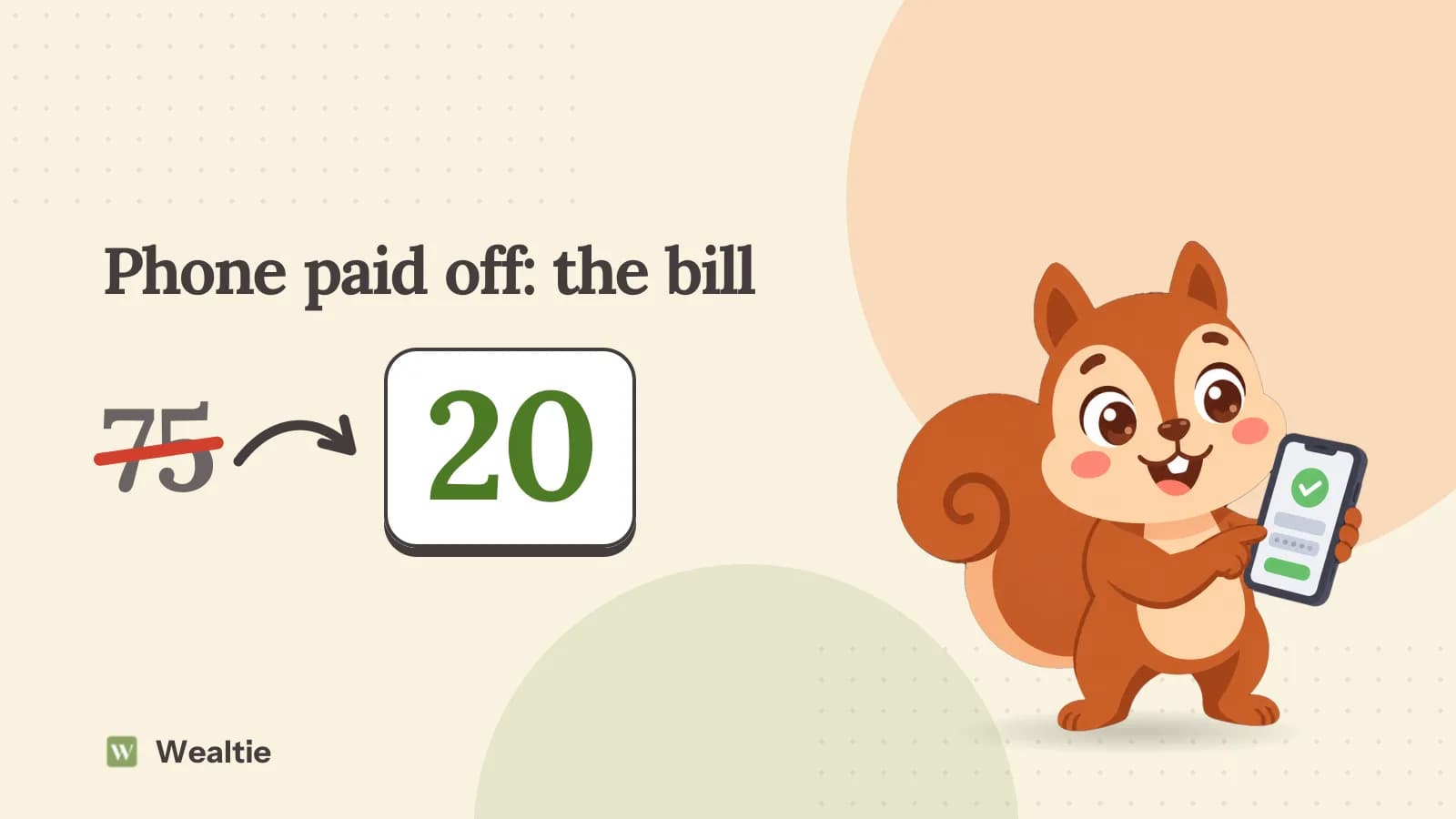
Here's a worked example in round numbers, the same in any currency. A plan costs 75 a month: in effect about 35 for the phone and 40 for the service. Two years later the phone is paid off, but the bill is still 75. Moving to a SIM-only plan with enough data for how you use it might cost 20. That's 55 a month, or 660 a year, for the same phone and very similar service.
Mark the date the handset is paid off in your calendar, and act on it.
Is a cheaper plan worth the trade-offs?
Often, but check three things before switching: coverage where you live and work, whether calls and texts abroad are included if you travel, and whether you can keep your number. Most providers let you move your number when you switch.
Smaller providers often run on the same networks as the big ones at lower prices. Their trade-offs are usually customer service and extras, not the signal. A short contract or a monthly rolling plan lets you test one without being locked in.
How do you save on a family phone plan?
Count the lines you're paying for, and check each line's data use separately.
Family plans can save money per line, but only if each line is used. Old lines for devices nobody uses, or children whose needs have changed, are common. Check whether a teenager on a big plan uses most of it, or whether a smaller allowance on their own line, or a prepaid plan, would cost less. Four-person households averaged $151 a month in 2025, by the BLS figures, so a few changes add up.
Should you buy your next phone outright?
If you can without debt, it usually costs less over time, because you can then pick the cheapest service plan. If you can't, compare the total cost of the contract, phone and service together over its full length, rather than the monthly price. A cheaper phone, or keeping the current one another year, is often the biggest saving of all.
How do you keep the phone bill in check?
Add it to your budget as a fixed bill and look at it once a year, a month before any contract ends.
In Wealtie, set the phone bill as a recurring transaction that logs itself on its due date, so it shows in your monthly budget without being entered each month. The Free plan includes one recurring transaction and Pro has unlimited. A yearly look at your subscriptions and bills, like the one in how to cut subscription costs, catches the phone plan that quietly stopped being a good deal.
Questions people ask
US households spent $1,390 on cell phone service in 2025, about $116 a month, according to the BLS Consumer Expenditure Survey. People living alone spent about $64 a month and four-person households about $151.
Check how much data you use, switch to a plan that matches it, drop extras you don't use, and once your phone is paid off, move to a SIM-only or prepaid plan. Calling your provider with a cheaper competitor's offer often works too.
Usually, if you already own your phone. A plan that includes a new phone spreads the handset's cost through the bill; SIM-only pays for service alone.
If you can afford it without debt, often yes: you can then choose the cheapest service plan. If not, compare the total cost over the contract, not the monthly price.
Check your phone's mobile data usage for the last few months. Many people use far less than their plan includes, especially if they're on Wi-Fi at home and work.
Sources
- Consumer Expenditures in 2025, table 1400: Size of consumer unit · U.S. Bureau of Labor Statistics · checked 6 November 2026
This article is general information, not financial, tax or legal advice. Your situation is your own; check the numbers that apply to you before you act on them.