Budgeting: Alcohol spending: what a drink habit costs a year
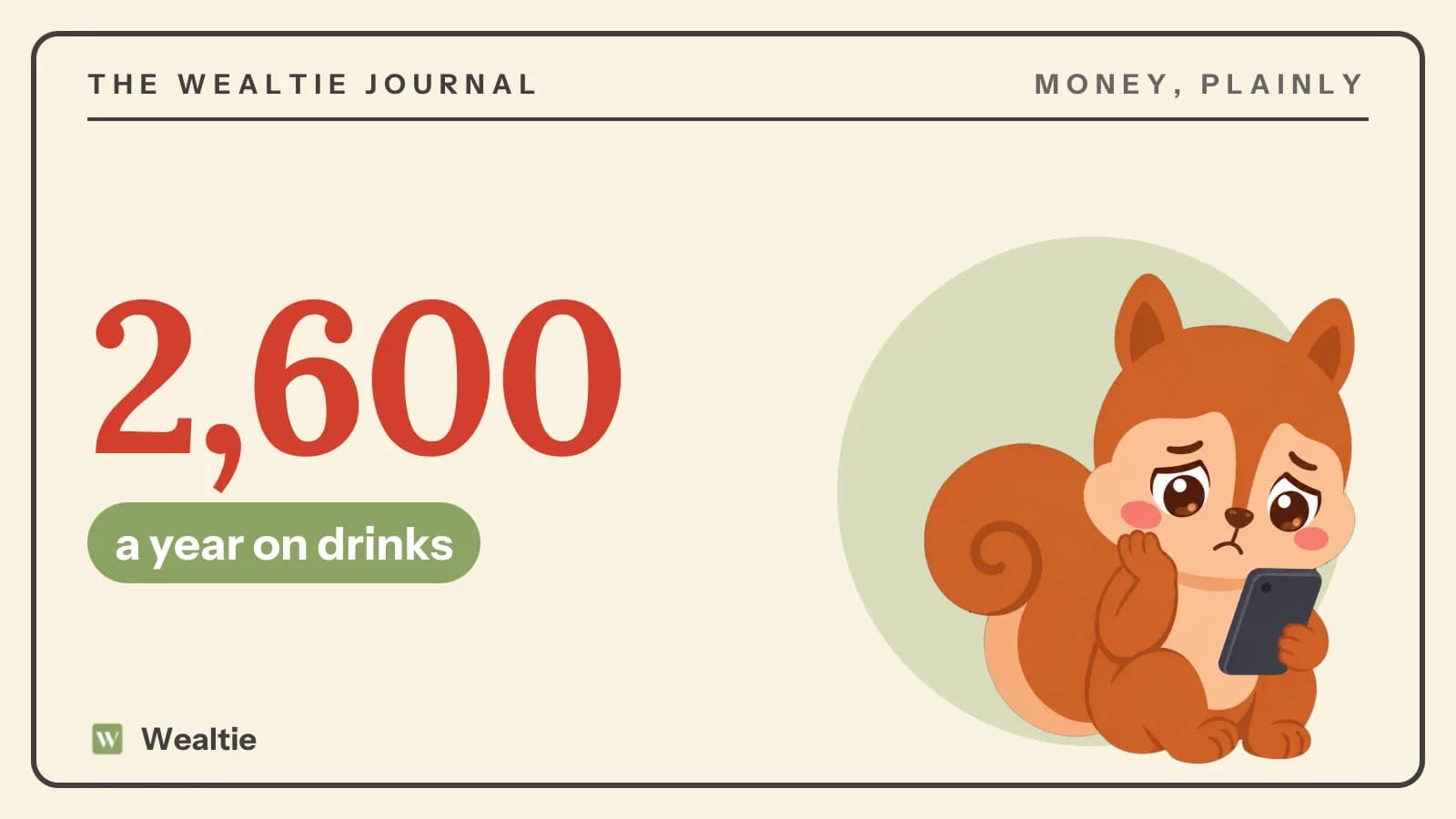
Alcohol spending is easy to underestimate because it's spread across supermarket shops, bars and takeaways. In a worked example, a few drinks at home and one night out a week cost 2,600 a year.
 By Wealtie Team · 3 min read
Key takeaways
- Alcohol spending adds up across shops, bars and events.
- Nights out usually cost far more than drinking at home.
- Tracking drinks for a month shows the real total.
- Alcohol-free days and cheaper swaps cut the cost without giving up socialising.
How much does alcohol spending add up to?
For many people, drinking is part of socialising, relaxing at the end of the week or celebrating. But alcohol spending is easy to underestimate. A bottle of wine goes into the weekly shop, a round at the pub gets bought on Friday, a few beers come with a takeaway, and drinks at a birthday or wedding get added on top. Because it's spread across so many places, the yearly total often surprises people.
Here's a worked example of a typical week, in round numbers that work in any currency:
| Weekly habit | Yearly cost |
|---|---|
| Night out at a bar | 1,560 |
| Wine and beer at home | 780 |
| Drinks with takeaways and events | 260 |
| Total | 2,600 |
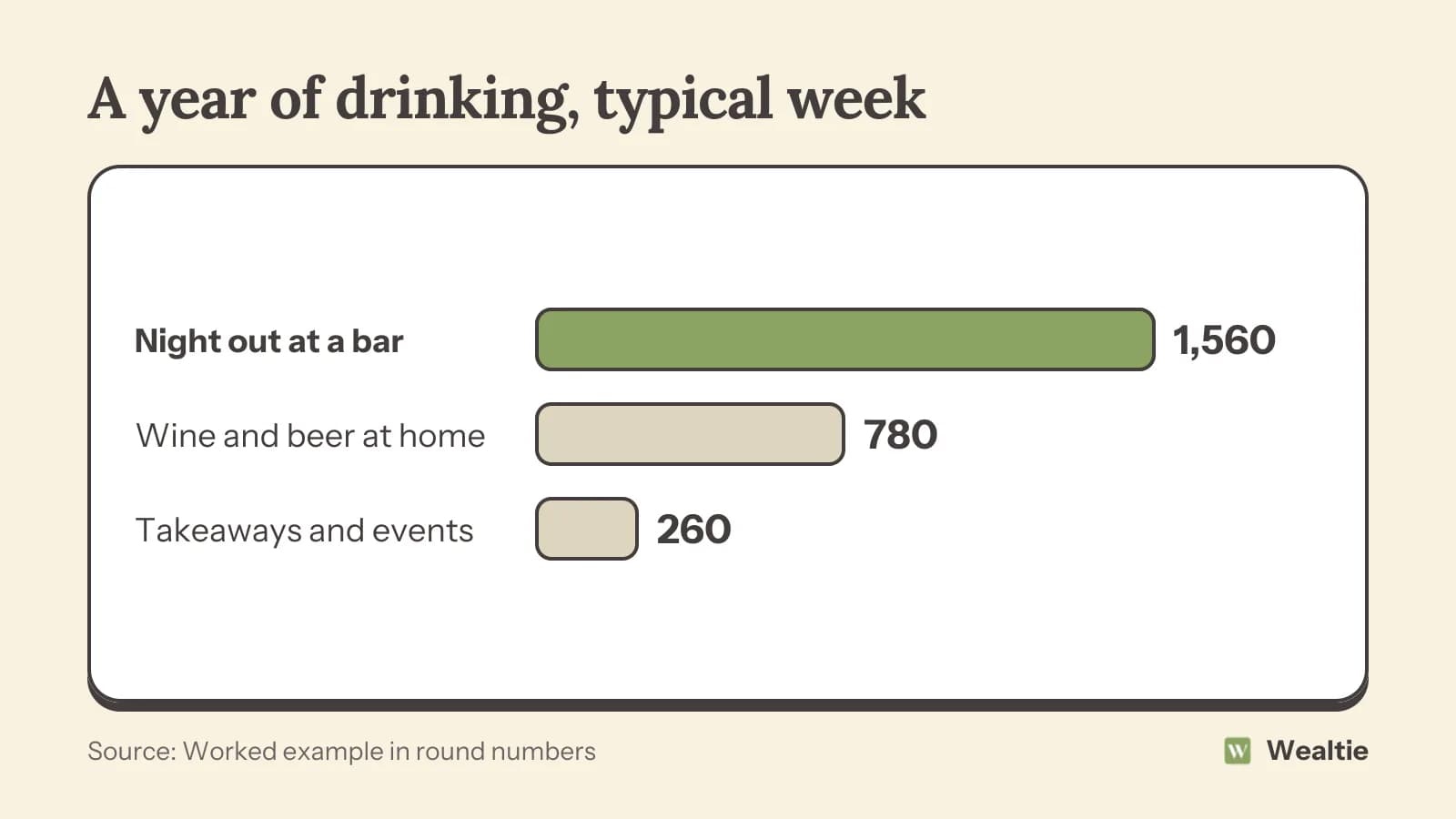
One night out at around 30 a week costs 1,560 a year. Drinking at home at around 15 a week adds 780, and drinks at events and with takeaways add another 260. That's 2,600 a year, enough for a holiday or a solid start on an emergency fund.
Why is alcohol spending easy to miss?
It's split across many purchases
Supermarket receipts, bar tabs and card payments at events all look like separate small costs.
Rounds and social pressure
Buying rounds means you often pay for more drinks than you have, and it can be awkward to opt out.
Spending rises as the night goes on
Later in an evening, it's easier to say yes to another drink, a taxi or late-night food.
It's mixed into the grocery bill
Alcohol bought with food often gets counted as groceries, which hides it.
How do you cut alcohol spending?
Track it for a month
Log every drink you buy, at home and out. Seeing the real total is often enough to change habits.
Have alcohol-free days
Choosing a few days a week without drinking saves money and many people find they feel better too. Dry January savings covers what a month off can save.
Pre-plan nights out
Decide how much you'll spend before you go, take a set amount of cash or move a fixed sum to a separate card, and eat beforehand.
Skip rounds or keep them small
Buying your own drinks, or joining smaller rounds, stops you paying for more than you drink. How to say no to spending with friends has ideas for these conversations.
Swap some drinks
Alternating alcoholic drinks with water or soft drinks, choosing smaller measures or trying alcohol-free options cuts the cost and the amount you drink.
Buy less at home
Not keeping a stock of drinks in the house makes it easier to drink less and spend less. If you do buy, avoid multi-buy offers that lead to drinking more.
What about events and festivals?
Weddings, festivals and holidays often involve more drinking. Planning a drinks budget for these in advance stops them blowing your monthly budget. The music festival budget covers one big example.
What if you're worried about your drinking?
If cutting back feels hard, or drinking is affecting your health, relationships or money, talking to a doctor or a support service can help. Many offer free, confidential advice. Saving money is a good reason to cut back, but your wellbeing matters most.
It can help to look at where most of your alcohol spending goes. For some people, it's big nights out a few times a month. For others, it's a steady habit of wine with dinner or beers at the weekend. Knowing which pattern you have helps you choose the change that will save the most. Cutting one big night out a month might save more than giving up a glass of wine at home, or the other way round.
Socialising doesn't have to revolve around drinks. Suggesting a walk, a film, a game night or a coffee instead of the pub can save money and still give you time with friends. Many people find friends are happy to mix things up, especially if they're trying to save too.
If you're saving for something specific, like a holiday or a deposit, moving the money you'd have spent on drinks into savings each week makes the progress visible. Seeing the pot grow can be more motivating than any rule.
Finally, plan for special occasions rather than cutting them out. Setting aside a little each month for weddings, birthdays and celebrations lets you enjoy them without guilt, while keeping everyday drinking in check.
Keeping receipts from nights out for a few weeks can also reveal hidden costs, like taxis, late-night food and drinks bought for others, which often push the real cost of a night well above the drinks themselves.
How can Wealtie help you see your alcohol spending?
Give drinks their own expense category in Wealtie, separate from groceries and eating out, and log purchases as you make them. Set a monthly budget for it, and you'll see how much is left before your next night out.
Questions people ask
Often more than they expect. In a worked example, a night out each week and drinks at home cost about 2,600 a year.
Track drinks for a month, have alcohol-free days, plan nights out with a set budget, skip big rounds and buy less at home.
Usually, yes. In a worked example, drinks at home cost about 15 a week, compared with 30 for a night out.
It's split across supermarket shops, bars, takeaways and events, so it rarely shows up as one clear total.
This article is general information, not financial, tax or legal advice. Your situation is your own; check the numbers that apply to you before you act on them.