Money as a couple: How to save money on a wedding venue
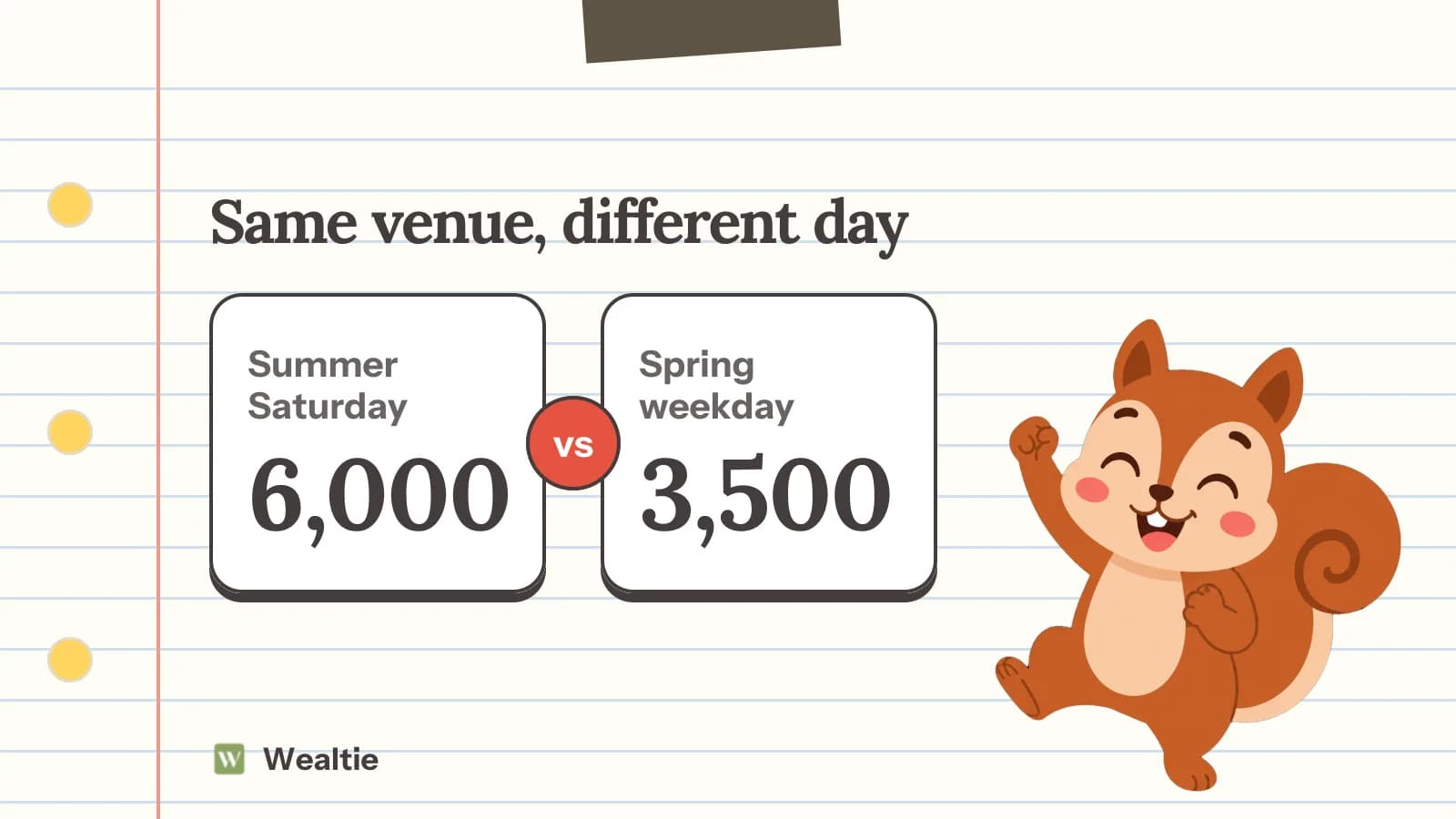
To save money on a wedding venue, be flexible on the day and season, compare what each venue includes and look out for minimum spends and extra fees. In a worked example, the same venue costs 6,000 on a summer Saturday but 3,500 on a weekday in spring.
 By Wealtie Team · 3 min read
Key takeaways
- To save money on a wedding venue, be flexible on the day and season.
- In a worked example, the same venue costs 6,000 on a summer Saturday but 3,500 on a spring weekday.
- Compare what's included, since a cheaper hire fee can come with extra costs.
- Check minimum spends, corkage, service charges and finishing times before signing.
How do you save money on a wedding venue?
Be flexible, compare carefully and read the small print. The venue is often the biggest single cost of a wedding, and it shapes many other costs too, like catering, decorations and travel for guests. Prices vary hugely depending on the day, the season and what's included, so a little flexibility can save thousands. Visiting several venues before deciding helps you see what good value looks like.
Start by agreeing your total wedding budget and how many guests you'll invite. The wedding budget covers how to split the whole day.
How much does the date matter?
A lot. Here's a worked example of the same venue on different dates, in round numbers that work in any currency:
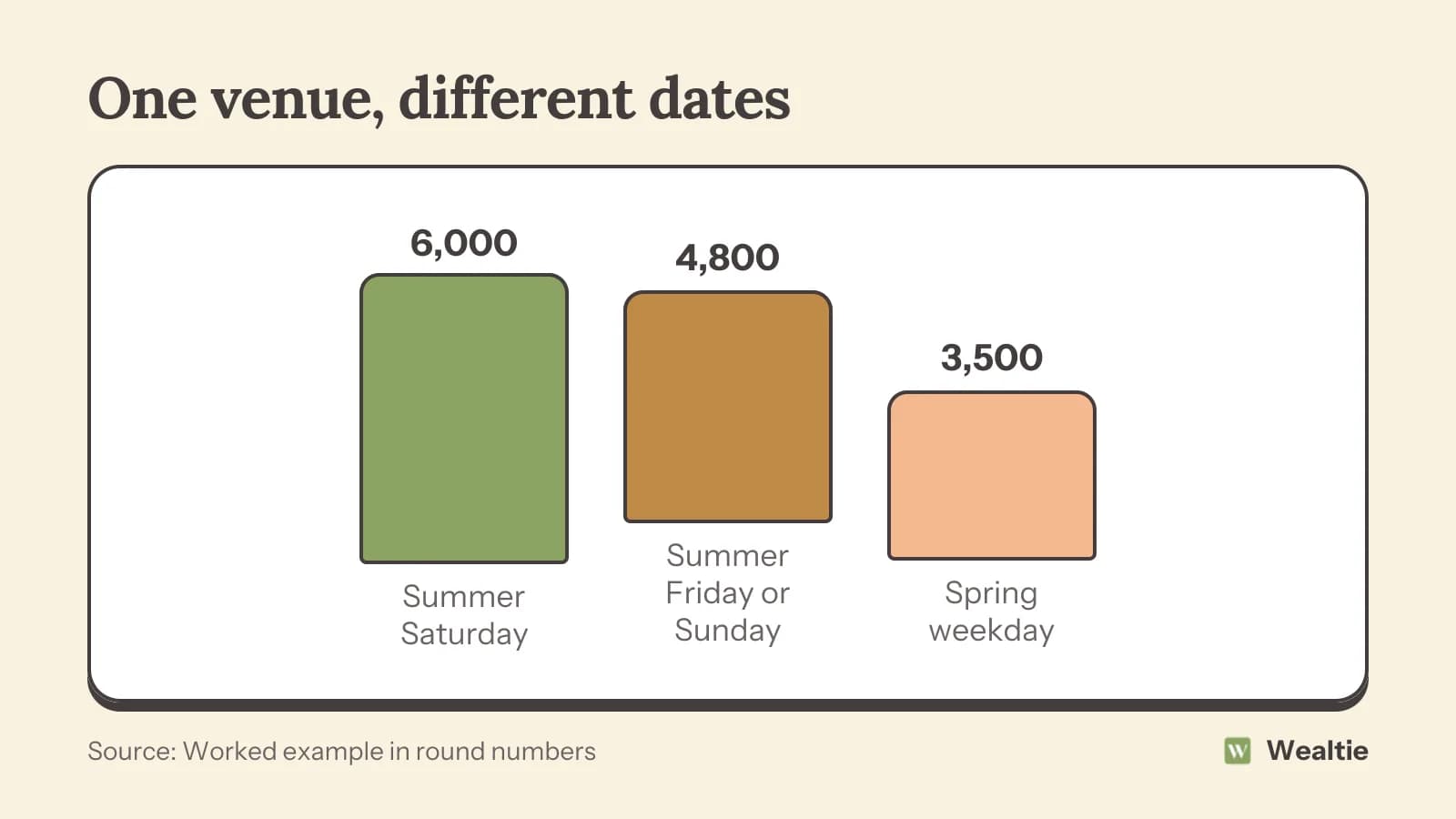
In this example, a summer Saturday costs 6,000, a Friday or Sunday in summer 4,800, and a weekday in spring 3,500. Saturdays in peak season are in highest demand, so they cost the most. Weekdays, Sundays, winter months and the shoulder seasons are often much cheaper.
Consider guests' costs too
A weekday wedding can be harder for some guests to attend, and travel or time off may cost them more. Weigh the saving against what matters most to you and your guests. Telling guests early, so they can book time off, makes a weekday wedding much easier for everyone.
What should you compare between venues?
Look at the total cost, not just the hire fee. Ask each venue:
- What's included: tables, chairs, linen, staff, decorations, sound system
- Whether you must use their caterer, or can bring your own
- Whether there's a minimum spend on food and drink
- Charges for bringing your own drinks, often called corkage
- Service charges and taxes added to the bill
- Finishing time and charges for staying later
- Deposit, payment schedule and cancellation terms
A venue with a higher hire fee that includes catering and staff can be cheaper overall than a cheap venue where everything costs extra.
Minimum spends
Many venues require a minimum spend on food and drink, especially on popular dates. If your guest list is small, you may pay for more than you need. Ask whether the minimum is lower on quieter days. Sometimes the minimum can include the evening buffet or drinks you'd buy anyway.
What are cheaper alternatives?
Traditional wedding venues aren't the only option. Consider:
- Village halls and community centres, which can be very affordable
- Restaurants with private rooms, which often include food and staff
- A family garden or farm, with a marquee
- Public spaces like parks or beaches, where permitted
- Holding the ceremony and reception in the same place, to save on travel and decorations
Each has trade-offs, like extra hire costs for a marquee or toilets, so price the full set-up. Some couples find a mix works, with a short ceremony at a registry office and a relaxed meal elsewhere.
Visit at the right time
Visiting a venue at the same time of day and year as your wedding shows how it looks and feels. It helps you judge whether you'll need extra lighting, heating or decorations, which can add to the cost.
How do you negotiate with a venue?
Ask. Venues often have room to move, especially for less popular dates or bookings made at short notice. You might ask for a lower hire fee, a later finishing time, free upgrades or a lower minimum spend. Getting quotes from several venues gives you something to compare. Late availability, a few months out, can bring big discounts if you're flexible on the date.
How do you pay for the venue?
Venues usually ask for a deposit to secure the date and the rest closer to the wedding. Knowing the schedule helps you plan. Divide what's left by the months until the payment is due and set that aside each month. A sinking fund keeps it separate, and the honeymoon budget covers the trip afterwards.
Visit a shortlist of venues in person before booking, ideally at the same time of day as your wedding. You'll see the light, the space and the details that photos don't show, and you can ask questions about extra costs face to face.
How do you track venue costs in Wealtie?
Add a savings account for the wedding and move money into it as a transfer, which isn't counted as spending. Log the deposit and final payment in an events line in your expense categories. Wealtie's sharing lets you share accounts with a partner; the person who shares needs Pro, and the person invited can be on any plan. A limit in the budget tracker keeps everyday spending on track.
Questions people ask
Choose a weekday, Sunday or off-peak season, compare what's included and check minimum spends and extra fees.
Often a lot. In a worked example, the same venue costs 3,500 on a spring weekday against 6,000 on a summer Saturday.
Minimum spends, corkage, service charges, late finishing fees and items not included in the hire.
Often, especially for quieter dates. Ask about the hire fee, minimum spend or extras.
This article is general information, not financial, tax or legal advice. Your situation is your own; check the numbers that apply to you before you act on them.