Budgeting: How much to spend on a wedding dress, and how to save on it
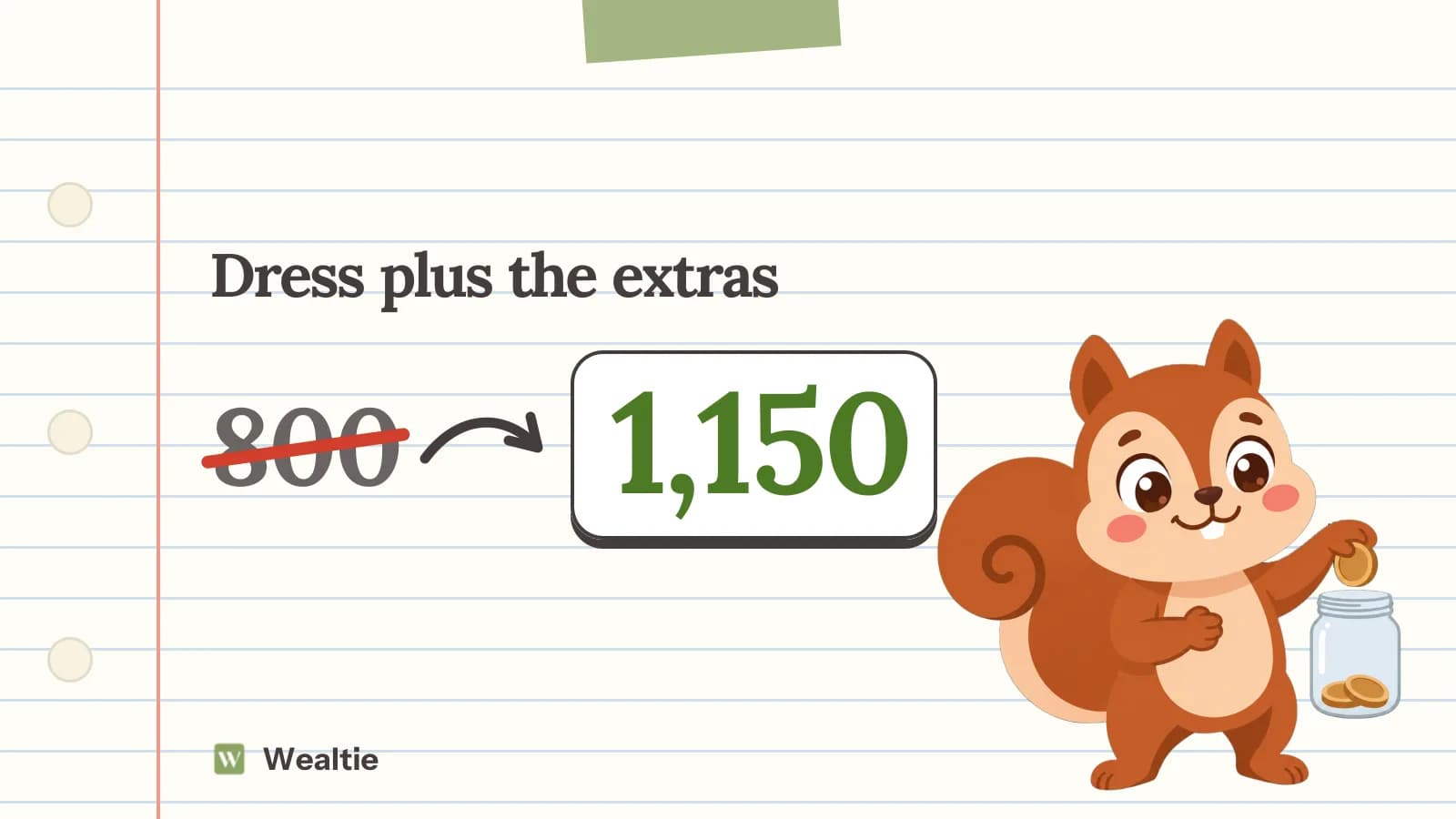
How much to spend on a wedding dress depends on your total wedding budget, and the hidden costs of alterations, accessories and cleaning matter as much as the price tag. In a worked example, a dress of 800 becomes about 1,150 once those extras are added.
 By Wealtie Team · 3 min read
Key takeaways
- How much to spend on a wedding dress should follow from your total wedding budget.
- In a worked example, a dress of 800 becomes about 1,150 with alterations, accessories and a veil.
- Sample sales, second-hand dresses and rental can cut the cost a lot.
- Setting a firm limit before trying dresses on avoids falling for one you can't afford.
How much to spend on a wedding dress
An amount that fits comfortably within your total wedding budget, after the big costs like the venue and food are planned. There's no right figure. Some people spend very little on a dress they love, while others make it one of the larger parts of the day. What matters is that the choice is deliberate, not the result of falling for a dress in a shop.
Decide your total wedding budget first, then give the dress and all its extras a fixed amount within it. The wedding budget covers how to split the whole day.
What is the full cost of a wedding dress?
The price on the label is only part of it. Here's a worked example in round numbers that work in any currency:
| Cost | Amount |
|---|---|
| Dress | 800 |
| Alterations | 200 |
| Shoes and accessories | 100 |
| Veil | 50 |
| Total | 1,150 |
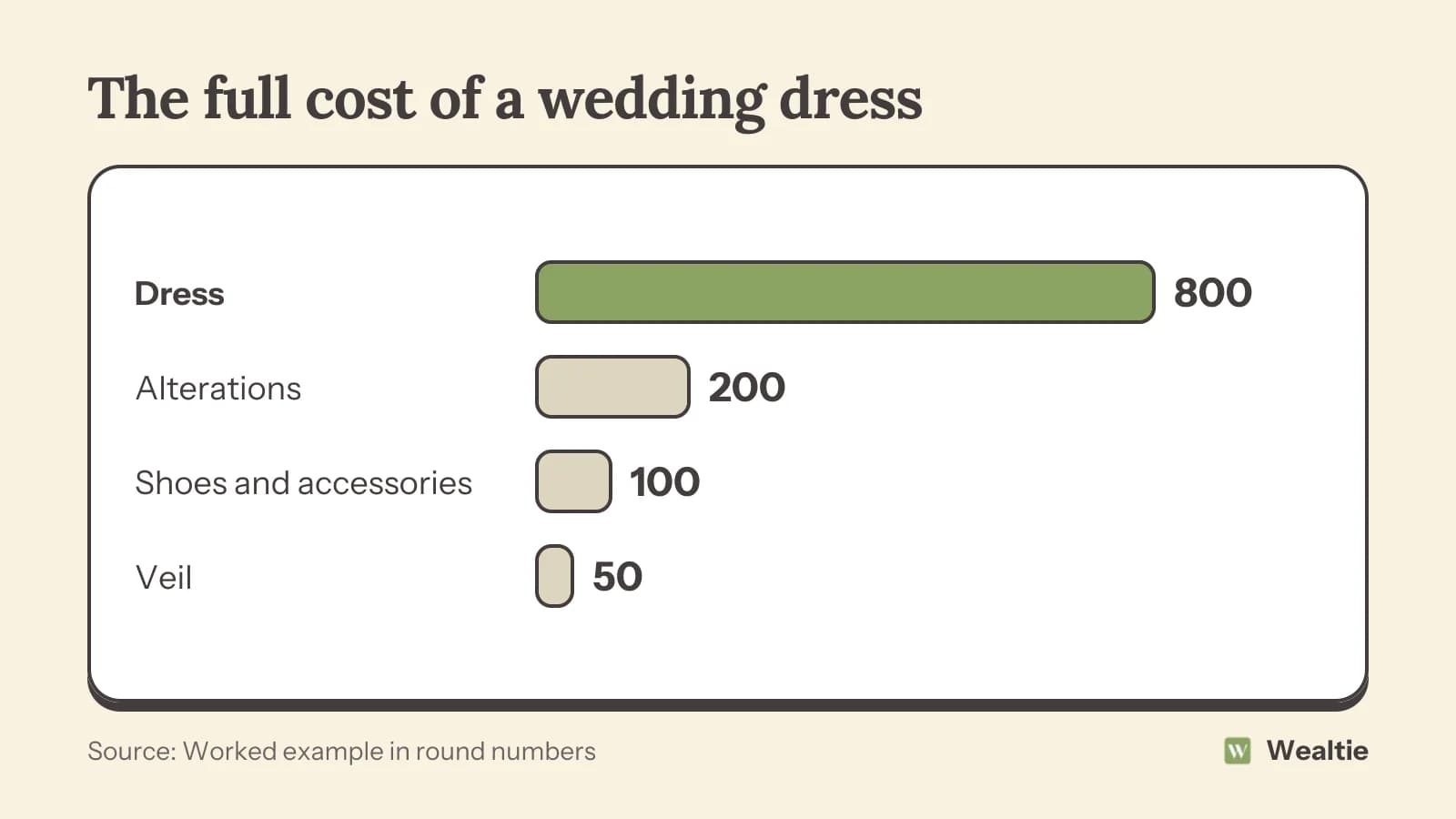
In this example, the extras add 350 to the price of the dress. Some people also pay for a second outfit for the evening, underwear designed for the dress, a hair piece, or cleaning and storage afterwards. Including all of these in your dress budget from the start avoids going over without noticing.
Alterations
Almost every dress needs some alterations, like taking in the waist, shortening the hem or adding a bustle. Costs vary a lot depending on the work and where you live. Ask for an estimate before you buy, especially for dresses that need major changes, and allow time for several fittings.
How do you set a dress budget and stick to it?
Set your limit before your first appointment, and tell the shop. Ask to see only dresses within your range, including alterations. Trying on dresses above your budget, even just for fun, makes it much harder to love the ones you can afford.
Bring one or two people whose opinion you trust, rather than a large group. Fewer voices make it easier to stay focused on what you love within your budget.
Timing your purchase
Shops often need several months to order and deliver a dress, and rushing can mean paying extra. Starting your search early gives you time to compare and wait for sales, without paying for faster delivery. Buying off the rack, where you take home a dress from the shop's stock, can also be quicker and cheaper.
Where can you save on a wedding dress?
There are many ways to find a beautiful dress for less:
- Sample sales, where shops sell dresses used for try-ons at a reduced price
- Second-hand dresses, often worn once and in excellent condition
- Renting, for a designer dress at a fraction of the price
- High-street and online shops, many of which offer wedding collections
- Evening or bridesmaid dresses in white or ivory, which often cost much less
- A family dress, restyled to suit you
A second-hand dress, with alterations to fit you perfectly, can look just as special as a new one. How to buy second-hand has tips on checking quality.
What about suits and other outfits?
Every partner's outfit belongs in the plan. A suit can be bought, rented or made, and the same hidden costs apply: alterations, shoes, accessories and sometimes a second outfit. Renting is common and often much cheaper than buying, especially for formal styles worn once. Buying a suit you'll wear again for other occasions is another good-value choice.
What happens to the dress afterwards?
Plan for it. Cleaning and storing a dress has a cost, and many dresses are never worn again. Some people sell their dress after the wedding, which can recover part of the cost and give another couple a good deal. Others have it altered into something they'll wear again, or keep it as a family piece. Deciding early helps you choose a dress with that plan in mind. If you plan to sell, keep the dress clean, store it in a breathable bag and keep the original labels or receipt, since they help buyers trust the listing.
How do you save for the dress?
Divide your dress budget by the months until the final payment, and set that aside each month. A 1,150 dress budget saved over ten months is 115 a month. Many shops ask for a deposit when you order and the rest at a later fitting, so knowing the payment dates helps you plan. A sinking fund keeps the money separate until it's needed.
How do you track wedding costs in Wealtie?
Add a savings account for the wedding and move money into it each month as a transfer, which isn't counted as spending. Give the dress and outfits their own line in your expense categories, so you can see how the extras add up. A monthly limit in the budget tracker keeps the rest of your spending on track while you save.
Questions people ask
An amount that fits within your total wedding budget, including alterations and accessories. Set the limit before you try dresses on.
Costs vary with the work and location. In a worked example, alterations add about 200 to an 800 dress.
Look at sample sales, second-hand dresses, rental, high-street collections and white or ivory evening dresses.
Selling can recover part of the cost, and many people do. Others restyle it or keep it as a family piece.
This article is general information, not financial, tax or legal advice. Your situation is your own; check the numbers that apply to you before you act on them.