Budgeting: Supporting adult children financially without hurting yourself
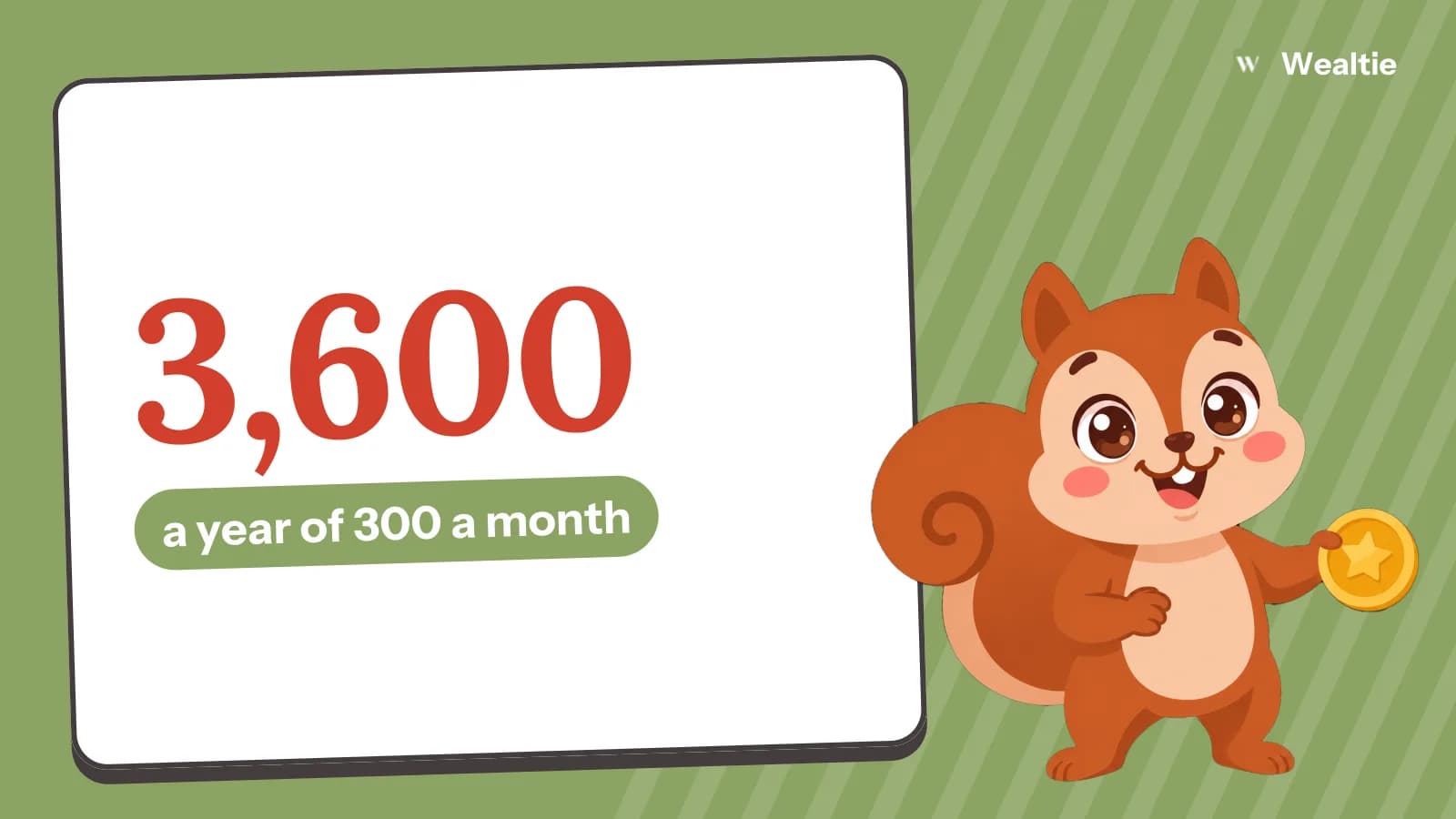
Supporting adult children financially works best with a clear amount, a set time frame and your own savings protected first. In a worked example, helping with 300 a month for a year costs 3,600, which could otherwise go into retirement savings.
 By Wealtie Team · 3 min read
Key takeaways
- Supporting adult children financially works best with a clear amount and end date.
- Protect your emergency fund and retirement savings before giving.
- Decide if money is a gift or a loan, and write it down.
- Help that builds independence is usually better than open-ended support.
Why do parents end up supporting adult children financially?
Many parents help their grown-up children with money, whether that's rent while they find their feet, a deposit for a flat, a car, phone bills or a loan through a hard patch. High housing costs, student debt and early-career wages mean young adults often take longer to become fully independent than their parents did.
Supporting adult children financially can make a big difference to their start in life, and many parents find it rewarding. But it can also strain your own finances, especially if it's open-ended or comes at the cost of your retirement. The key is to help in a way you can afford, with clear expectations on both sides.
How much does ongoing support cost?
Regular help adds up faster than it feels. Here's a worked example of three ways to help over a year, in round numbers that work in any currency:
| Type of help | Cost over a year |
|---|---|
| One-off gift for a deposit | 1,500 |
| Phone and insurance only | 1,200 |
| 300 a month towards rent | 3,600 |
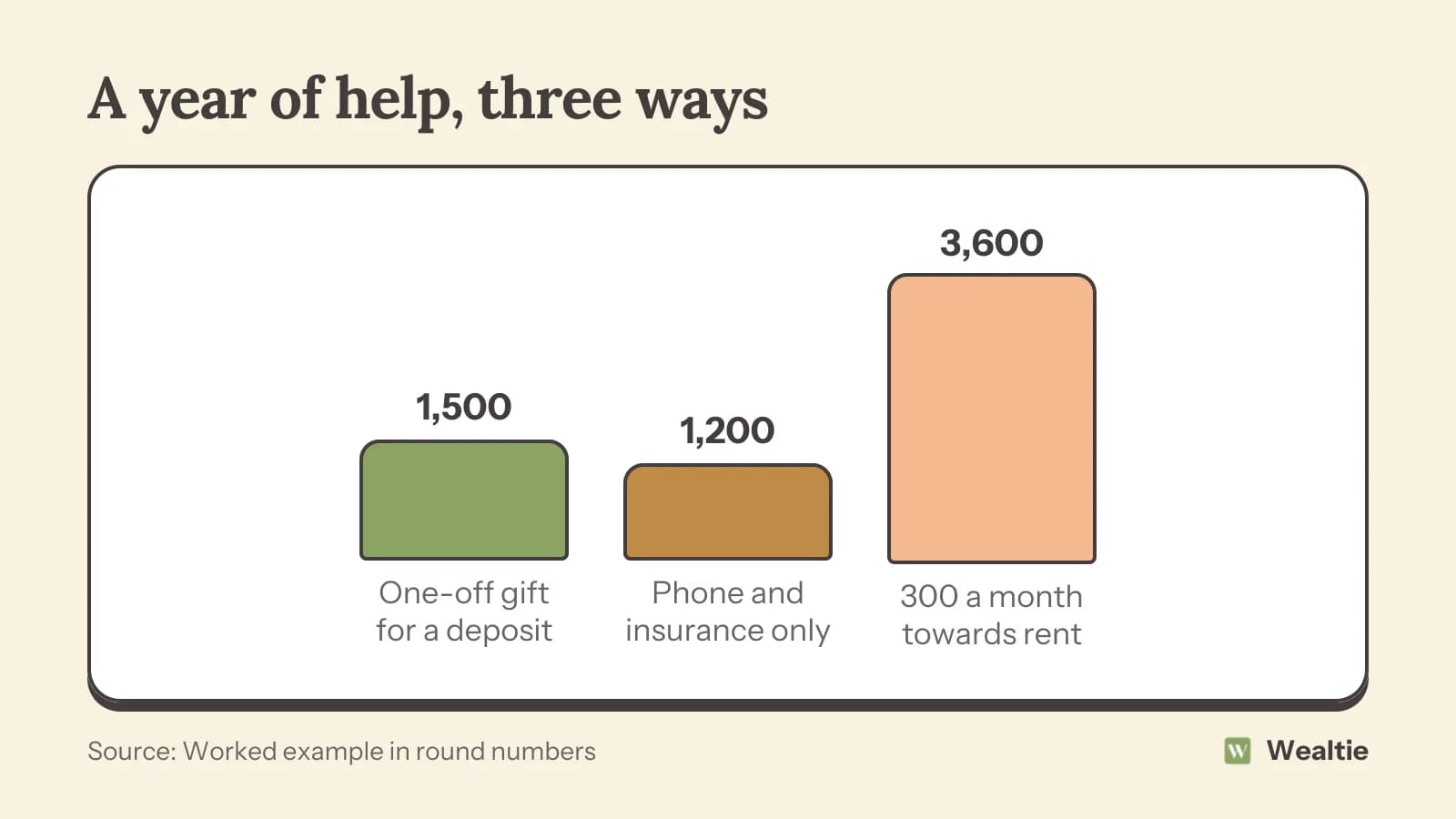
Paying 300 a month towards rent costs 3,600 a year, and more if it carries on for several years. That's money that could otherwise go into your savings or pension, which matters more the closer you are to retirement. A one-off gift with a clear purpose often costs less overall and is easier to plan for.
How do you decide how much to give?
Start with your own finances
Before you help, make sure your own emergency fund, debts and retirement savings are on track. Your children have time to recover from money setbacks, while you may not. How to budget before retirement covers checking you're on track.
Set an amount you can afford
Look at your monthly budget and decide what you can spare without cutting into essentials or savings. Agree that figure with your partner if you have one.
Agree a time frame
Open-ended help can drift on for years. An end date, like six months while they look for work or a year after graduation, gives everyone a clear plan.
Treat siblings fairly
If you have more than one child, think about how help for one compares with the others over time. Fair doesn't always mean equal, but talking about it openly avoids resentment later.
Should it be a gift or a loan?
Gifts
A gift is simpler and avoids awkward chasing. Only give what you can afford not to get back.
Loans
If you lend, agree the amount, repayment plan and what happens if they can't pay, and write it down. Even within families, a simple written agreement prevents misunderstandings. How to lend money to a friend covers the same principles.
Somewhere in between
Some parents ask adult children who live at home to pay a modest rent, then save part of it for them as a deposit fund. How much rent should you pay your parents? covers that from both sides.
How do you help without creating dependence?
Pay for things that build independence
Help with a course, a deposit or a car for a job tends to have a lasting effect, while paying for everyday spending can delay independence.
Share a budget conversation
Sitting down together to look at their income and costs can be more valuable than money. How to talk to kids about money has ideas that still apply to grown children.
Taper support over time
If you're paying a monthly amount, reduce it gradually, like 300 then 200 then 100, so the change isn't a shock.
Say no when you need to
It's fine to say no or to offer less than asked. Being honest about your limits protects the relationship as well as your finances.
What happens to your budget when support ends?
When regular help stops, put the freed-up money straight into savings or your pension before it gets absorbed into everyday spending. The empty nest budget covers rebalancing your finances once children have moved on.
If you're not sure where to start, write down every way you currently help, including small things like phone bills, streaming accounts or car insurance. Many parents are surprised by the total once it's all in one place, and the list makes it easier to decide what to keep, what to taper and what to hand over.
How can Wealtie help you keep it in check?
Add regular support as recurring transactions, so it shows up in your monthly budget and doesn't drift upwards unnoticed. Log one-off help in its own expense categories, and you'll see exactly how much you've given each child over the year.
Questions people ask
Give only what you can afford without cutting into your emergency fund, essentials or retirement savings, and agree an amount and end date.
A gift is simpler if you can afford not to get it back. If you lend, write down the amount and repayment plan.
No. Help can make a big difference, as long as it's affordable, has clear limits and encourages independence rather than dependence.
Agree an end date in advance and taper support gradually, so they have time to adjust their own budget.
This article is general information, not financial, tax or legal advice. Your situation is your own; check the numbers that apply to you before you act on them.