Saving: How to save money on cinema trips
To save money on cinema trips, go on cheaper days, look at memberships if you go often and skip expensive snacks. In a worked example, a family trip costs about 60 at peak with snacks, but around 25 on a cheaper day with snacks from home.
 By Wealtie Team · 3 min read

Key takeaways
- To save money on cinema trips, go on cheaper days and times.
- In a worked example, a family trip falls from about 60 to 25.
- Memberships pay off only if you go often.
- Snacks are often the biggest extra cost; bring your own where allowed.
How do you save money on cinema trips?
Choose the right time, the right ticket and skip the expensive extras. Cinema chains often have very different prices for the same film depending on the day, the time and how you book. A trip to the cinema is a classic treat, but tickets, snacks and drinks can add up quickly, especially for a family. Most of the cost comes from when you go and what you buy once you're there. Planning a trip in advance, rather than deciding on the day, gives you time to find the cheapest option. A few simple changes can cut the cost a lot.
How much can you save?
Here's a worked example of a family of four, in round numbers that work in any currency:
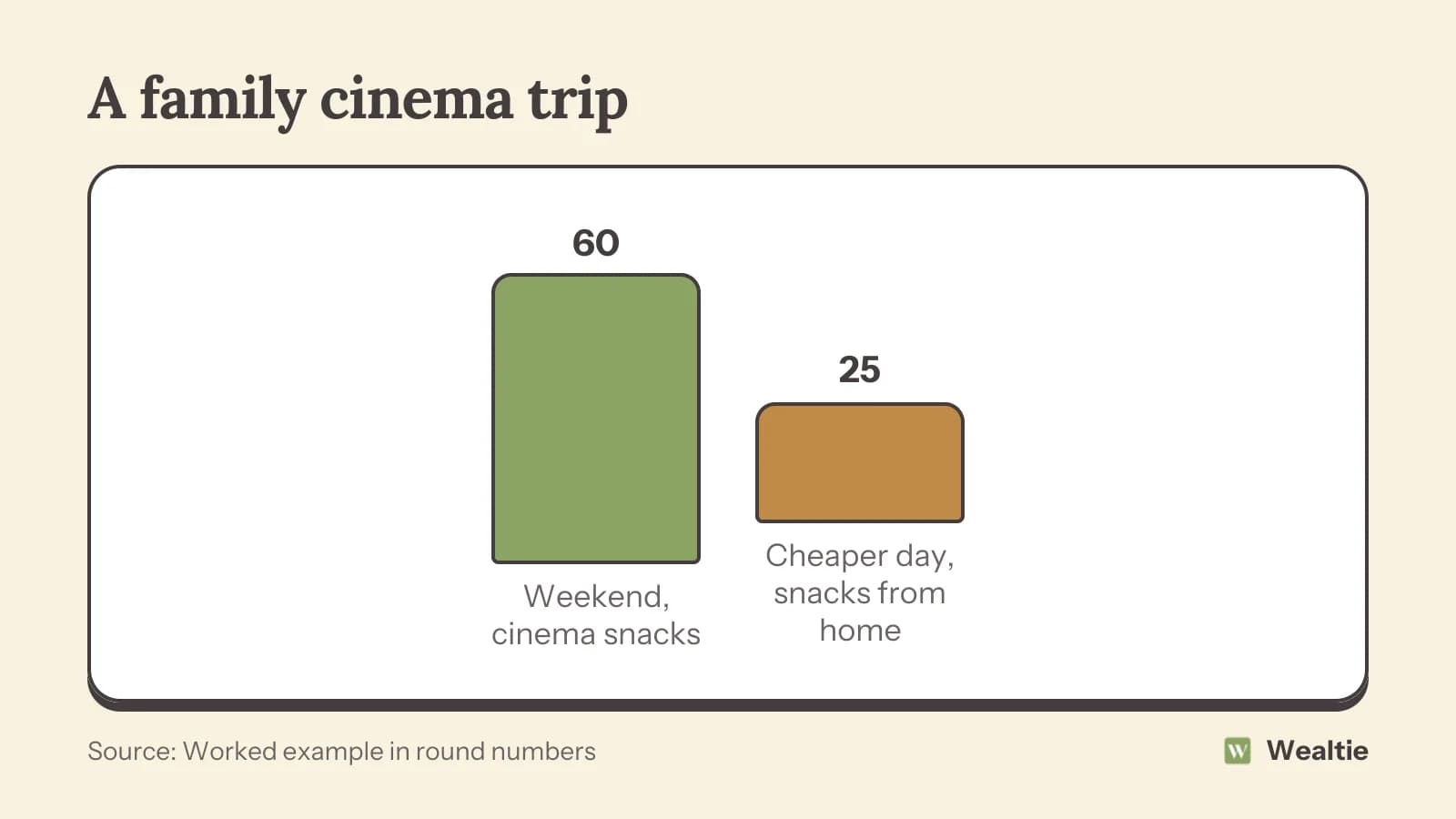
In this example, a weekend trip with cinema snacks costs about 60. Going on a cheaper weekday and bringing snacks from home, where allowed, brings it down to about 25. Your own savings depend on local prices and what you usually buy. Over a year of regular trips, the difference can add up to a significant amount.
When are cinema tickets cheapest?
Many cinemas have cheaper days, often early in the week, and cheaper times, like mornings or early afternoons. Weekend evenings are usually the most expensive. Some offer reduced prices for students, older people, families or children's screenings at weekends. Checking the cinema's website for offers before you book can save a lot. Smaller independent cinemas are sometimes cheaper than big chains, and often show a good mix of films.
Book online
Booking online often costs less than buying at the door, and some cinemas offer discounts for booking through their app. Check whether booking fees apply, since they can cancel out small savings. Some bank accounts, phone plans or loyalty schemes include cinema offers, so check yours.
Are cinema memberships worth it?
Only if you go often. Many cinemas offer monthly memberships with unlimited films or discounted tickets. In a worked example, a membership at 18 a month pays off if you see more than two films a month. If you go once every few months, pay as you go. Check the minimum contract length before signing up, and remember to cancel if you stop going regularly. How to cut subscription costs has a simple review method.
How do you save on snacks?
Snacks and drinks can cost as much as the tickets. Bringing your own from home, where the cinema allows it, saves a lot. If not, share a large popcorn rather than buying individual ones, choose water over fizzy drinks and eat a meal before you go so you're not hungry. A small treat bought on the way, rather than at the counter, often costs far less.
Is streaming cheaper than the cinema?
Usually, for regular viewing. A streaming subscription costs less per film than cinema tickets, especially for families. But the cinema offers a big screen, new releases and an occasion. Many people keep the cinema for the films they most want to see on a big screen and watch others at home. How to save money on entertainment covers balancing the two, and cut the cord covers reducing TV costs.
Make a film night at home
A film night at home, with popcorn and blankets, can feel special for a fraction of the cost. Choosing a film together and turning off the lights makes it an event. Rotating who picks the film keeps it fun for everyone.
Children's and community screenings
Many cinemas run cheap screenings for children at weekends or in school holidays, and some community centres and libraries show films for free or a small fee. Outdoor cinema events in summer can also be good value, especially if you bring your own picnic.
What about premium screens?
Premium formats, like larger screens or reclining seats, cost more. Save them for films where they make a real difference, and choose standard screenings for everything else. Seats closer to the front or sides are sometimes cheaper too.
How do you track cinema spending in Wealtie?
Give entertainment its own line in your expense categories, so you can see what films and outings cost each month. If you have a membership, set it up as a recurring transaction with the bill tracker, and check whether you're going often enough to make it worth it.
Questions people ask
Go on cheaper days and times, book online, look for discounts and bring snacks from home where allowed.
Often early in the week and at morning or afternoon screenings.
Only if you go often. In a worked example, an 18 a month membership pays off after about two films a month.
Usually, for regular viewing, but the cinema offers new releases and a big-screen experience.
This article is general information, not financial, tax or legal advice. Your situation is your own; check the numbers that apply to you before you act on them.