Budgeting: Is a rewards credit card worth it? Only if you clear it every month
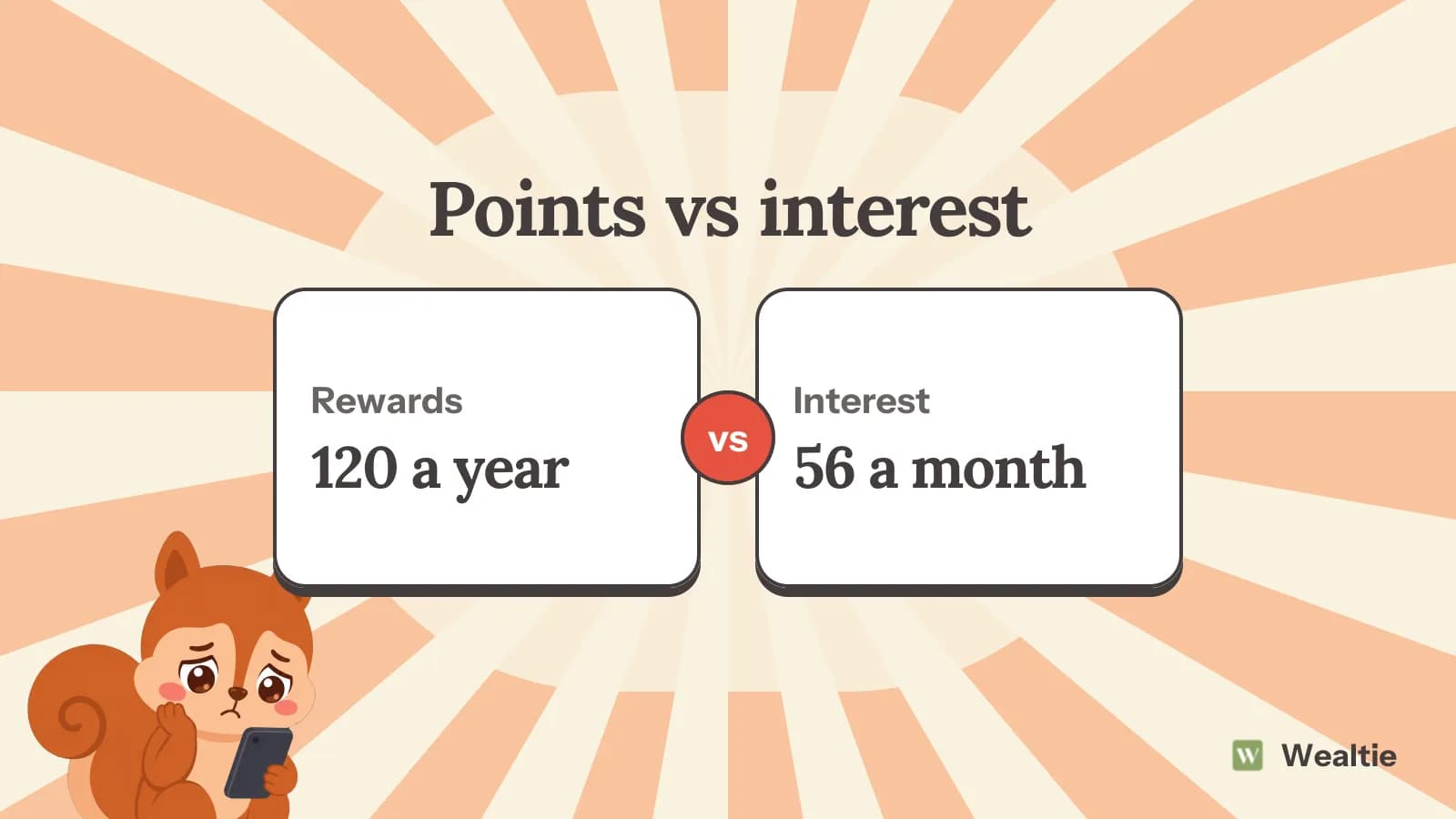
Is a rewards credit card worth it? Only if you pay the full balance every month and don't spend more to earn points: In a worked example, rewards worth 120 a year are wiped out by a single month of interest on a carried balance.
 By Wealtie Team · 3 min read
Key takeaways
- Rewards cards pay off only if you clear the balance in full every month.
- In a worked example, rewards worth 120 a year compare with about 56 of interest in one month on a 3,000 balance at 22.36% a year.
- Annual fees can cancel out the rewards if you don't spend enough on the card.
- Spending more to earn points usually costs more than the points are worth.
Is a rewards credit card worth it?
Only if you pay the full balance every month. Rewards, like cashback, points or air miles, are usually small compared with the interest a card charges on a balance you carry. If you clear the card every month and use it for spending you'd do anyway, the rewards are a bonus. If you don't, they cost you.
How do rewards compare with interest?
Here's a worked example. Someone spends 12,000 a year on a card that gives one unit back for every 100 spent. That's 120 a year in rewards.
Now say they carry a balance of 3,000 for one month. In the Federal Reserve's G.19 data, the rate on credit card accounts assessed interest at commercial banks was 22.36% in the third quarter of 2026 (preliminary). At that rate, a month's interest on 3,000 is about 56.
| Line | Amount |
|---|---|
| Rewards earned in a year | 120 |
| Interest on 3,000 for one month | 56 |
| Interest on 3,000 for three months | about 168 |
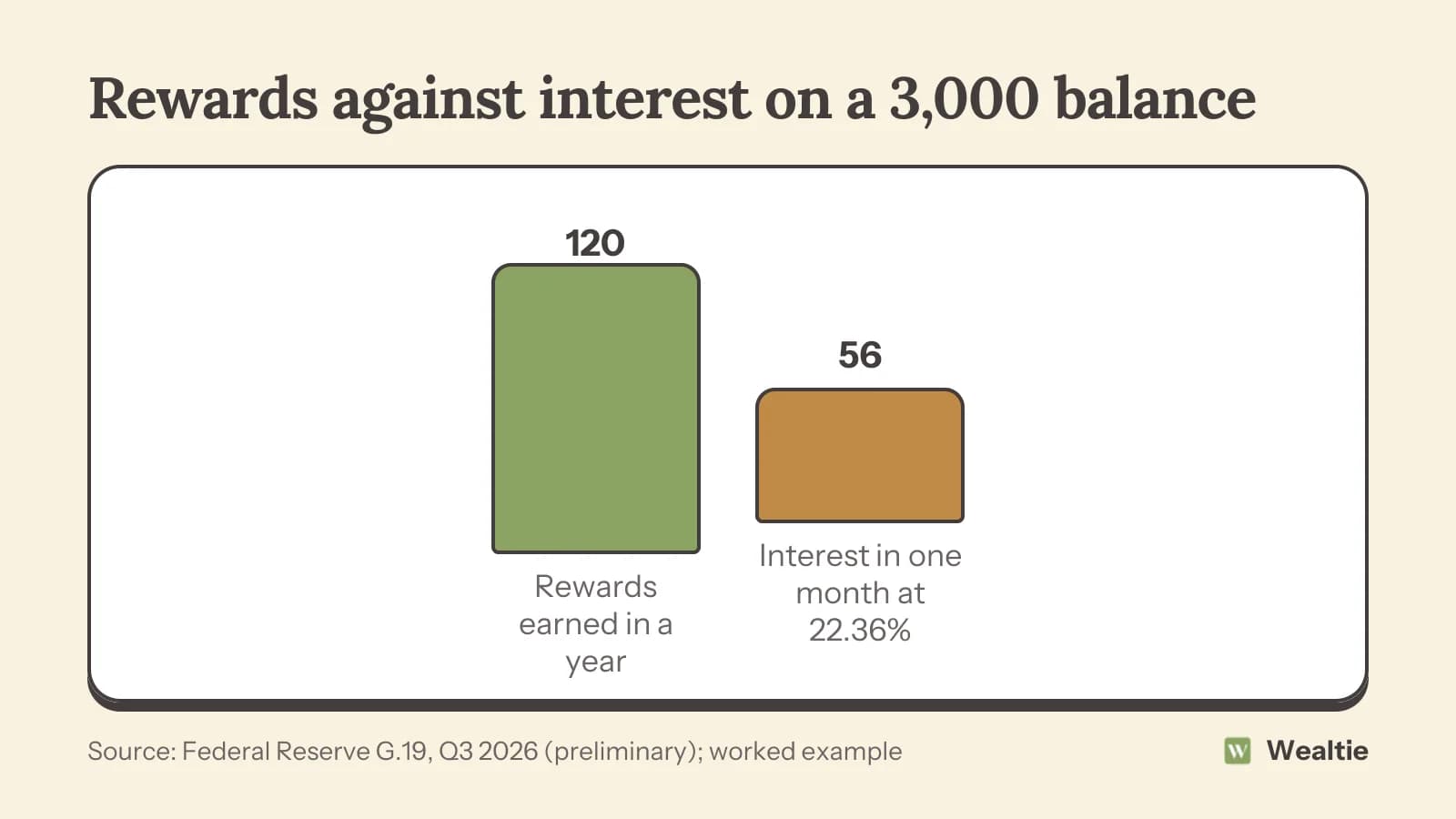
Carry a balance for a few months, and the year's rewards are gone. Even a small balance of 500 costs about 9 a month at that rate, which is most of a month's rewards for many people. That's why the full-balance habit matters more than which card you choose. Should you pay your credit card in full goes into the cost.
What about annual fees?
Some rewards cards charge a yearly fee, and the rewards need to beat it. If a card charges 95 a year and you earn 120 in rewards, you're 25 ahead. If you earn 60, you're 35 behind and a free card would have been better.
Work out what you'd earn based on what you spend now, not what you'd like to spend. Then subtract the fee. Some cards waive the fee in the first year, so set a reminder to review the card before the second year starts.
Does a rewards card make you spend more?
It can. Points and cashback can make spending feel like earning, and some people buy more to reach a bonus. Spending 500 to earn 5 back is a bad trade if you wouldn't otherwise have spent the 500. Sign-up bonuses that need you to spend a set amount in the first months can push you into spending you hadn't planned.
Use the card for planned spending only, like groceries, bills and fuel, and keep the same budget you'd have with a debit card. If you notice your spending creeping up, switch back to debit for a while.
How do you use a rewards card well?
A few habits make it work:
- Set up a full-balance automatic payment, so you never pay interest
- Use it only for spending that's already in your budget
- Log each purchase as you make it, so you know what's coming on the statement
- Redeem rewards regularly, since some expire
- Don't apply for several cards to chase sign-up bonuses, since each application can affect your credit record
Check the card's foreign transaction fee before using it abroad, since it can cancel out rewards on travel spending. Treat each purchase as if the money's left your account already. The card's just a way of paying.
Which kind of reward is best?
The one you'll use. Cashback is simple and flexible. Points and air miles can be worth more if you use them well, but they're harder to value and can lose value if the scheme changes. Look at how points can be redeemed and what each one's worth in practice, since a large number of points can be worth little. If you're not sure, cashback is the safe choice.
Who shouldn't get a rewards card?
Anyone who carries a balance or has missed a payment recently. If that's you, focus on clearing the card first. The debt snowball or avalanche helps you choose an order. A rewards card can wait until you've cleared the balance in full for a few months in a row. With a short credit history, a simple card used lightly and paid in full builds a record first.
How do you stay on top of a credit card in Wealtie?
Log each card purchase as you make it, so it counts against your monthly limit in the budget tracker straight away, weeks before the statement arrives. Budget Health warns you mid-month if spending's running ahead, and the expense tracker page covers logging. Log redeemed cashback as income.
Questions people ask
Only if you pay the full balance every month and don't spend more to earn rewards. Interest on a carried balance quickly cancels out a year's rewards.
Cashback is simpler and more flexible. Points can be worth more if you use them well, but they're harder to value.
Only if the rewards you'd earn on your normal spending clearly beat the fee. Otherwise a free card is better.
They can, because points make spending feel like earning. Use the card only for spending already in your budget.
Sources
- Consumer Credit G.19, Terms of Credit · Board of Governors of the Federal Reserve System · checked 9 November 2026
This article is general information, not financial, tax or legal advice. Your situation is your own; check the numbers that apply to you before you act on them.



