Budgeting: How to plan a Ramadan budget for food, guests and giving
A Ramadan budget covers suhoor and iftar food, hosting or attending iftars, charitable giving and early Eid preparations. In a worked example, a household plans about 650 for the month, and setting each part aside in advance keeps the focus on the month itself.
 By Wealtie Team · 4 min read
Key takeaways
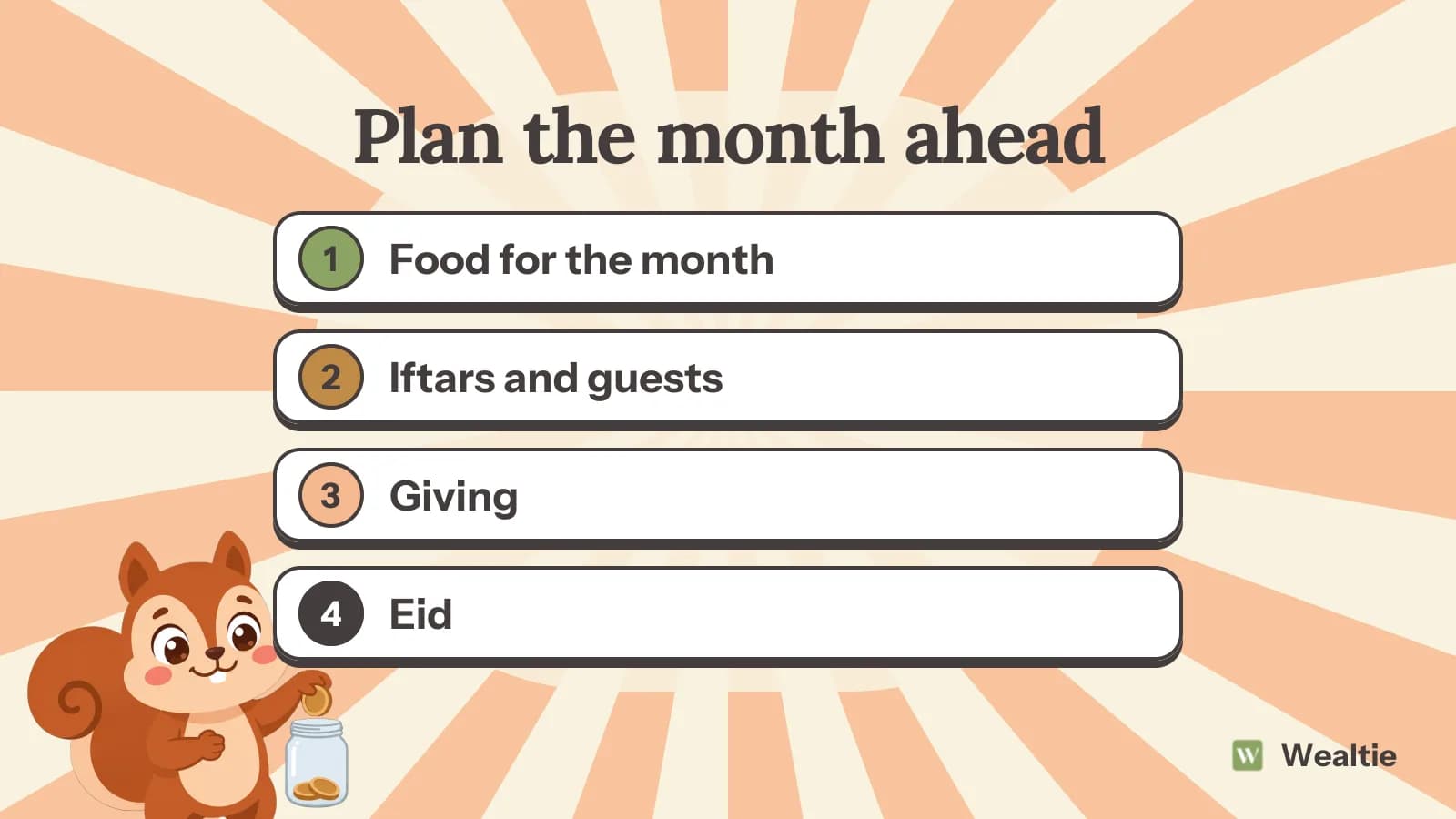
- A Ramadan budget covers daily food, hosting iftars, charitable giving and Eid preparations.
- In a worked example, a household plans about 650 for the month.
- Planning meals and shopping in bulk for staples can keep food costs steady through the month.
- Setting aside money for giving and Eid in advance avoids a squeeze at the end of the month.
How do you plan a Ramadan budget?
Think about the whole month at once, rather than day by day. Ramadan changes how and when a household eats, often brings more guests and gatherings, and is a time of increased giving. It's also followed by Eid. Planning the money side before the month starts means you can focus on the meaning of Ramadan rather than on the bank balance.
Every household's Ramadan is different, so adapt the plan to your family, your community and your traditions.
What does Ramadan cost?
Here's a worked example for a household for the month, in round numbers that work in any currency:
| Cost | Amount |
|---|---|
| Suhoor and iftar food | 350 |
| Hosting iftars for family and friends | 120 |
| Charitable giving | 130 |
| Early Eid preparations | 50 |
| Total | 650 |
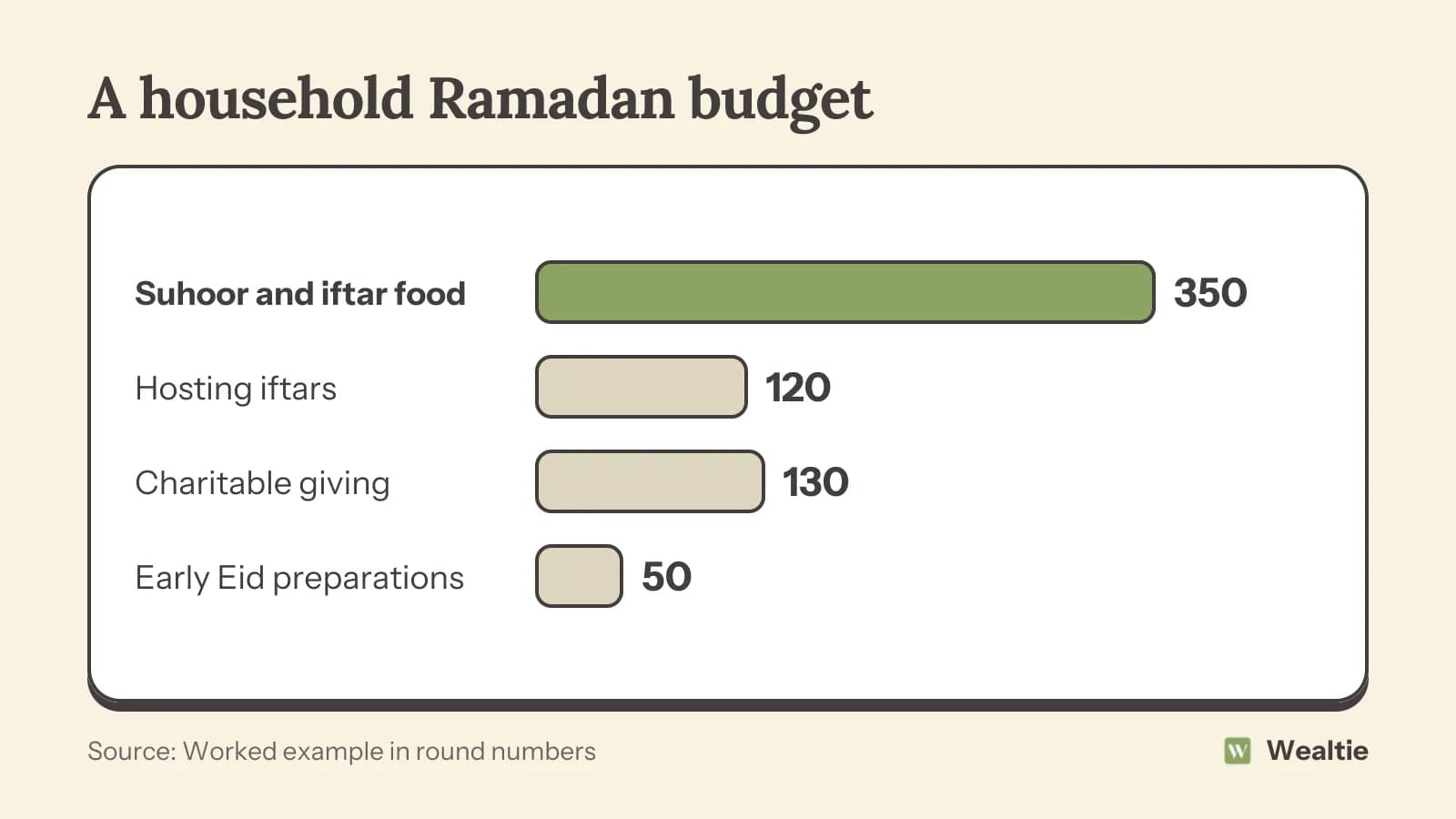
Your figures will be different. Some households spend less on food during Ramadan, since there are fewer meals, while others spend more because of larger iftars and guests. Looking at last year's spending, if you have it, gives you a realistic starting point.
How do you keep food costs steady?
Plan meals for the week, and shop for staples in bulk before the month begins. Dates, rice, lentils, flour, oil and spices keep well and are often cheaper in larger amounts. Planning suhoor and iftar meals ahead stops last-minute shopping when you're tired and hungry, which is when it's easiest to overspend.
Cook in larger batches and use leftovers for suhoor the next morning. Soups, stews and rice dishes stretch well and freeze for later in the month. Meal planning on a budget has a weekly method that works well here.
Watching the small daily extras
Small purchases on the way home, like sweets, drinks or a last-minute dessert for iftar, can add up over thirty days. Deciding in advance which treats are part of the plan, and buying them with the weekly shop, keeps these extras from quietly growing into one of the biggest lines of the month.
How do you host iftars without overspending?
Share the hosting and keep it simple. A potluck iftar, where each family brings a dish, spreads the cost and the work. Rotating the hosting between families means each household hosts once or twice rather than every week. A few dishes made well go further than a long table of many.
Community iftars at a local mosque or community centre are another way to share the month with others, often at little or no cost. How to host dinner on a budget has more ideas for feeding a group.
How do you plan charitable giving?
Decide your giving in advance and set it aside, so it's protected from the rest of the month's spending. For obligatory giving, follow the guidance of your community or scholars on how much and when. For voluntary giving, choose an amount that fits your budget and keep it in a separate pot.
Giving earlier in the month, or setting up regular donations, can spread the amount. Check that the charities you give to are registered and reputable, and give through their official channels rather than in response to unexpected messages.
Keeping a record of what you give
Write down each donation as you make it. A record helps you see whether you've given what you planned, and in some countries donations to registered charities can bring tax relief, so receipts may be useful later. It also stops you giving twice to the same appeal by accident, which is easy when many requests arrive in the same weeks.
How do you prepare for Eid?
Start setting money aside during Ramadan, or before it, so Eid doesn't land on a stretched budget. Clothes, gifts, a celebration meal and money for children can add up quickly, and they all fall due in the same few days at the end of the month.
A simple way to handle it is to add Eid to your Ramadan plan as its own line. Decide a total, divide it by the weeks of Ramadan, and move that amount aside each week. Buying clothes and gifts early in the month, before the last-minute rush, also tends to be cheaper and calmer. A sinking fund works well for costs like this that you know are coming.
What about the cost of time and energy?
Ramadan can change work and sleep patterns, and tiredness makes convenience food and takeaways more tempting. Having simple meals ready in the freezer for busy days helps. If your work hours change during the month, check whether your pay is affected and plan for it.
How do you track Ramadan spending in Wealtie?
Give Ramadan its own line in your expense categories, or track food, giving and hosting separately, so you can see what the month costs. Add a separate account for giving and Eid savings, and move money into it as a transfer, which isn't counted as spending. A monthly limit in the budget tracker, with Budget Health, warns you mid-month if spending's running ahead.
Questions people ask
A worked example comes to about 650 for the month, covering food, hosting, giving and early Eid preparations. Your own figure will follow your household and traditions.
Plan meals weekly, buy staples in bulk before the month, cook in batches, share the hosting of iftars and set giving aside in advance.
Decide the amount in advance and keep it in a separate pot. Follow your community's guidance for obligatory giving.
Before or during Ramadan, so Eid costs don't land on a stretched budget at the end of the month.
This article is general information, not financial, tax or legal advice. Your situation is your own; check the numbers that apply to you before you act on them.