Budgeting: Physiotherapy cost: how to budget for treatment
Physiotherapy cost depends on how many sessions you need, and a typical course of private treatment runs to several sessions. In a worked example, an assessment plus five follow-ups costs 360.
 By Wealtie Team · 3 min read
Key takeaways
- Physiotherapy cost depends on the number of sessions and where you go.
- The first assessment usually costs more than follow-up sessions.
- Doing your home exercises can mean fewer paid sessions.
- Check insurance, workplace schemes and public options before paying privately.
How much does physiotherapy cost?
Physiotherapy helps people recover from injuries, surgery and long-term pain through hands-on treatment, exercises and advice. Depending on where you live, it may be available through a public health system, covered by insurance or paid for privately. Physiotherapy cost for private treatment depends on the clinic, the physiotherapist's experience, where you live and how many sessions you need.
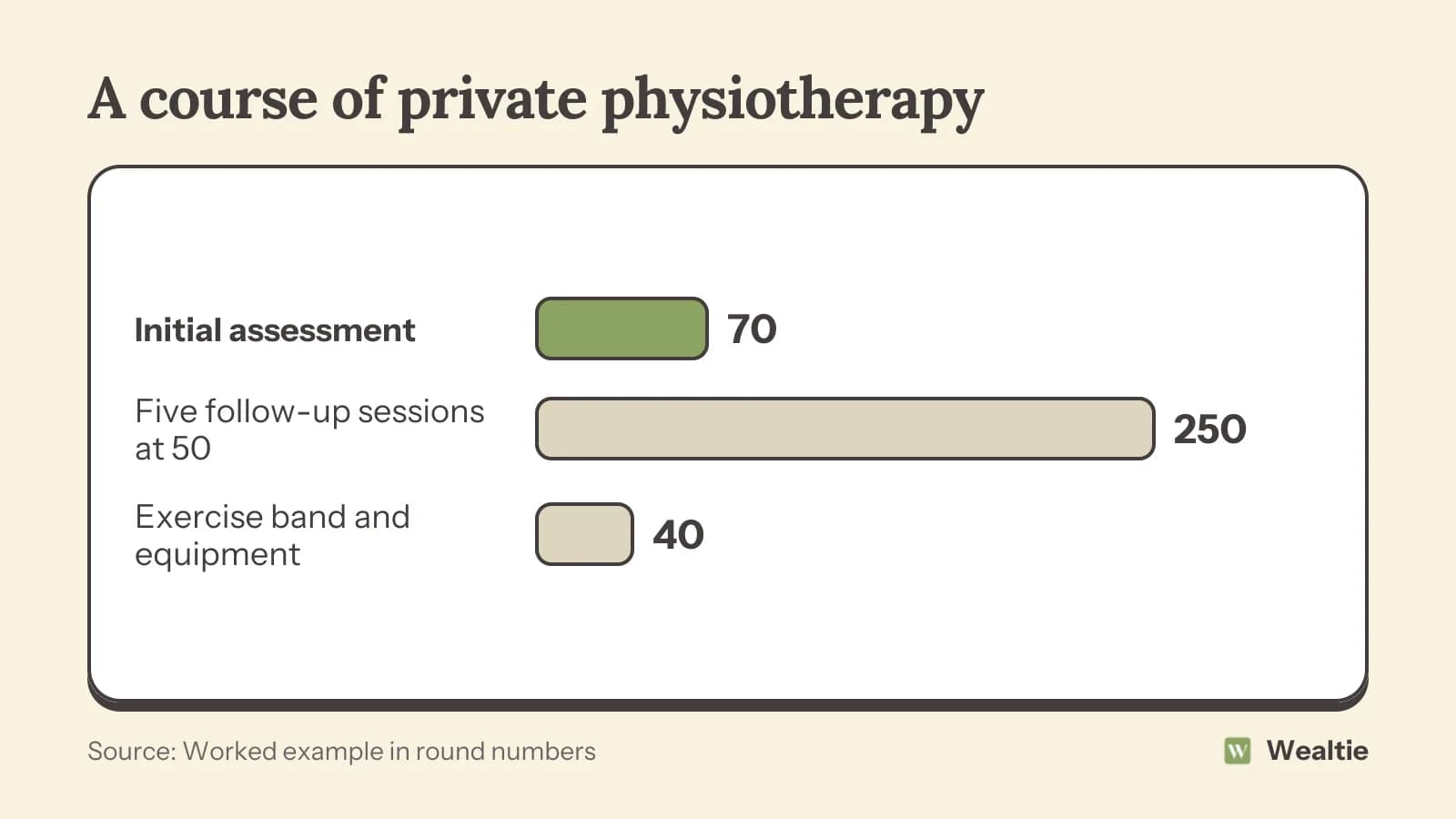
Most courses start with a longer assessment, followed by shorter follow-up sessions. Here's a worked example of a short course of private physiotherapy, in round numbers that work in any currency:
| Item | Cost |
|---|---|
| Initial assessment | 70 |
| Five follow-up sessions at 50 | 250 |
| Exercise band and equipment | 40 |
| Total | 360 |
Some problems clear up in two or three sessions, while others need treatment over several months. Ask your physiotherapist after the assessment how many sessions they expect you'll need, so you can plan the cost.
What affects how much you pay?
The number of sessions
The biggest factor is how long treatment lasts. A clear plan from the start helps you budget, and it's fair to ask what progress you should expect by when.
The type of physiotherapy
Specialist areas, like sports injuries, pelvic health or neurological rehabilitation, can cost more than general physiotherapy.
Where you're treated
Clinics in big cities usually charge more. Home visits cost more than clinic appointments because of travel time.
Session length
Some clinics offer shorter or longer sessions at different prices. Check the length when comparing.
Can you get physiotherapy for less?
Public health services
In many countries, physiotherapy is available through public health services, often with a referral from a doctor. Waiting times can be long, but the cost is low or free.
Health insurance
Many health insurance policies cover a set number of physiotherapy sessions a year, sometimes with an excess. Is health insurance worth it? covers what policies usually include.
Workplace schemes
Some employers offer free or discounted physiotherapy through occupational health or employee benefits. Ask your HR team.
Student and training clinics
University physiotherapy programmes sometimes run clinics where supervised students treat patients at lower prices.
Group classes
Some clinics run group exercise classes for common problems like back pain. They cost less per session than one-to-one treatment.
How do you get the most from each session?
Do your exercises at home
Most of the recovery happens between sessions. Doing the exercises your physiotherapist gives you can mean fewer paid sessions and a faster recovery. Setting a daily reminder helps.
Ask questions
Make sure you understand what each exercise is for and how to do it correctly. Ask for written or video instructions to follow at home.
Space sessions out as you improve
As you recover, you may only need a session every two or three weeks to check progress and update exercises.
Buy only the equipment you need
A resistance band or foam roller is often enough. Ask before buying more expensive equipment.
How do you budget for physiotherapy?
Plan for the full course
Multiply the session price by the number of sessions you expect, add the assessment, and that's your budget. Setting it aside in one go stops treatment feeling like a surprise each week.
Plan for time off
Some injuries mean time off work as well as treatment costs. How to budget for time off sick covers managing reduced income.
Keep a health fund
A small amount saved each month for health costs, like physiotherapy, dental work and prescriptions, means you can book treatment when you need it. How to budget for medical bills covers setting one up.
Know when to seek urgent care
For serious injuries, sudden severe pain or loss of movement, get medical help straight away rather than waiting for a physiotherapy appointment.
When choosing a clinic, check that the physiotherapist is registered with the professional body where you live, and read recent reviews. Ask how long sessions last, whether they include hands-on treatment as well as exercises and how they'll measure your progress. A good physiotherapist will be happy to explain the plan and will aim to get you managing on your own as soon as it's safe, which also keeps the total cost down.
Keep a simple note of your progress, like how far you can walk or how much pain you feel each week. It helps you and your physiotherapist see what's working, and it makes it easier to decide when you're ready to cut back on paid sessions.
How can Wealtie help with treatment costs?
Log each session in a health expense category and set a budget for the course of treatment. You'll see how much you've spent and how much is left, and keep a record that's useful if you claim from insurance.
Questions people ask
Costs vary by clinic and location. In a worked example, an assessment, five follow-ups and some equipment came to 360.
The number depends on the problem. Some improve in two or three sessions, while others take months. Ask after your assessment.
Many policies cover a set number of sessions a year, sometimes with an excess. Check your policy before booking.
Do your home exercises, space sessions out as you improve, check public services and workplace schemes and consider group classes.
This article is general information, not financial, tax or legal advice. Your situation is your own; check the numbers that apply to you before you act on them.