Budgeting: The ostrich effect: why we avoid looking at our money
The ostrich effect is the habit of avoiding money information you think will be bad news, like not opening bills or checking your balance. It makes problems grow, and short, regular check-ins are the easiest way out.
 By Wealtie Team · 3 min read
Key takeaways
- The ostrich effect is avoiding money information you fear will be bad.
- Ignoring bills and balances lets problems and fees grow.
- The worry of not knowing is often worse than the numbers themselves.
- A short, regular weekly check-in makes facing money easier.
What is the ostrich effect?
The ostrich effect is named after the old myth that ostriches bury their heads in the sand when scared. With money, it means avoiding information you suspect will be unpleasant. You leave bills unopened, skip checking your balance after a big weekend, or ignore emails from a lender. Not knowing feels safer, at least for a while.
It's very common, and it isn't laziness. Avoiding bad news is a natural way to protect your mood. The trouble is that money problems rarely go away when ignored. They usually grow.
Why do people avoid looking at their money?
Fear of bad news
If you suspect your account is overdrawn or a bill is higher than expected, looking means feeling that worry right now. Not looking puts it off.
Shame
Many people feel embarrassed about debt or overspending. Checking feels like facing a judgement, even if nobody else will see.
Feeling overwhelmed
When several bills and debts pile up, it can be hard to know where to start, so it feels easier not to start at all.
Hoping it will fix itself
Payday is coming, so maybe it'll be fine. Sometimes it is. Often, the gap is still there next month, with fees added.
What does the ostrich effect cost?
Here's a worked example of an overdraft that's ignored for six months, in round numbers that work in any currency:
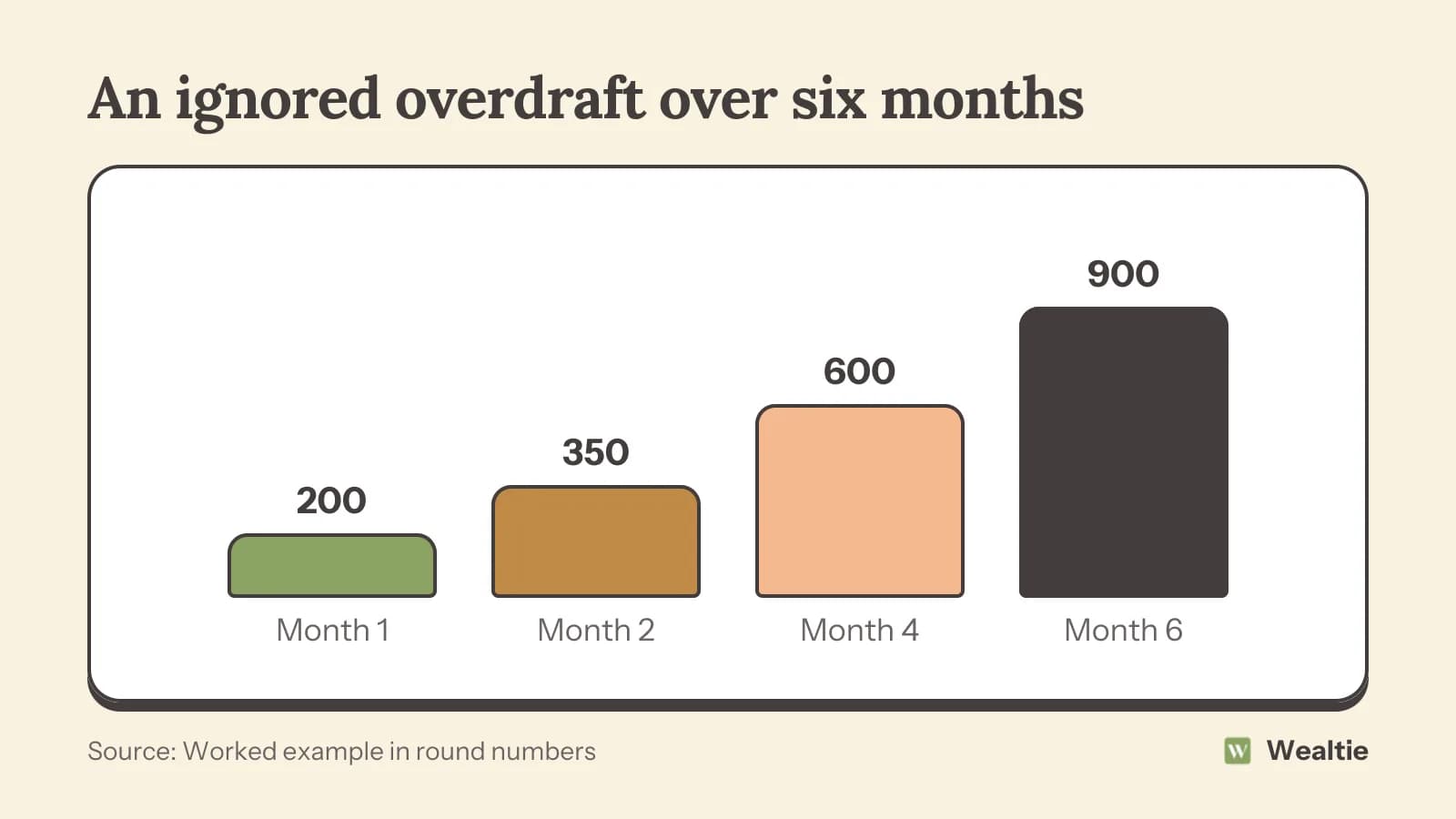
It starts at 200 and grows to 900 as small overspends and fees build up unseen. If the person had looked in the first month, they could have cut back early and cleared it within a few weeks. Ignored bills can also lead to late fees, missed payments on your credit record and, in the worst cases, debt collection.
There's a cost to your peace of mind too. Not knowing creates a constant low-level worry that's often worse than the real numbers.
How do you stop avoiding your money?
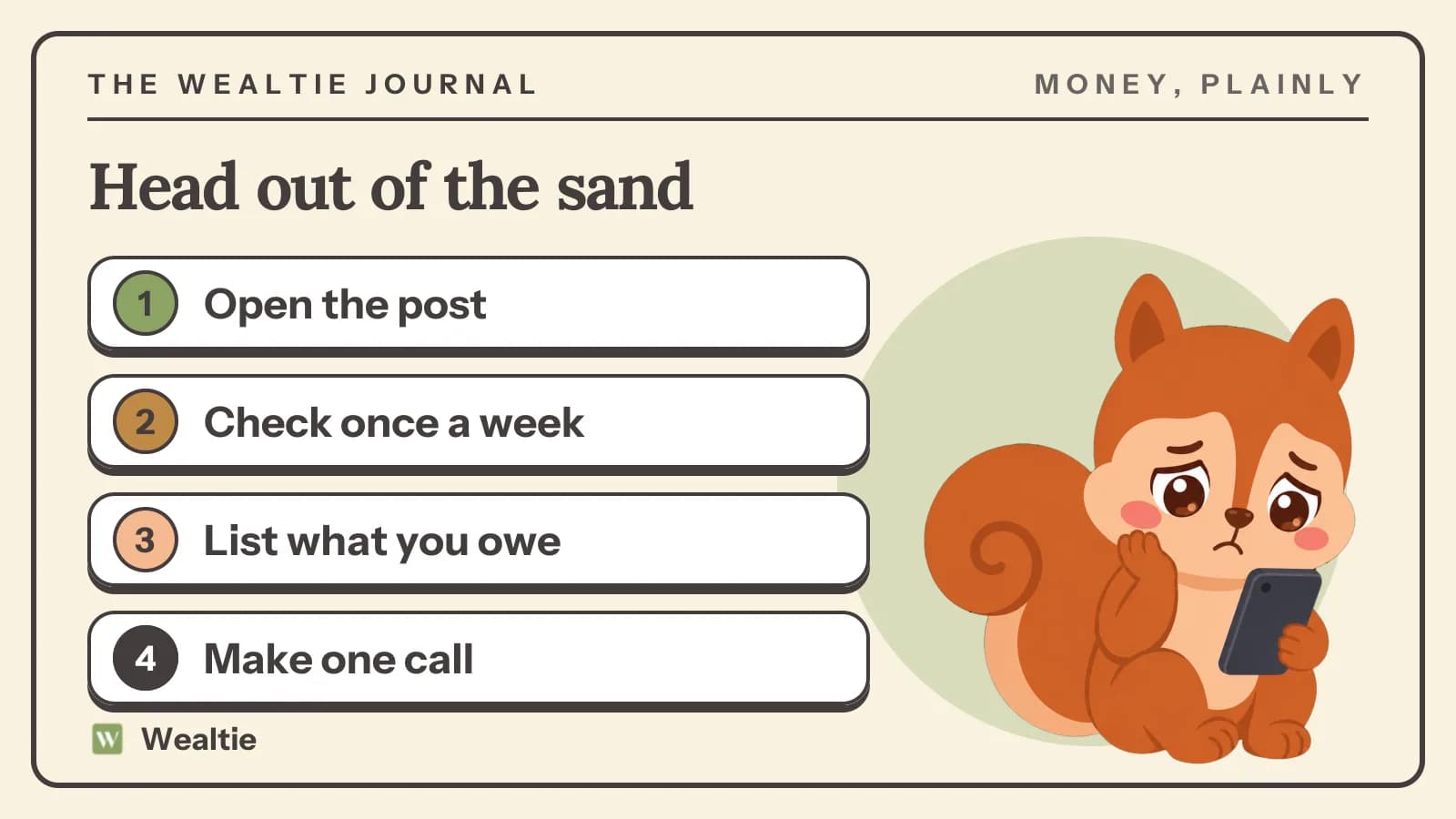
Start with a weekly check
Pick a time each week, like Sunday evening with a cup of tea, and spend ten minutes looking at your balance and recent spending. Short and regular is far less scary than a big review once a year. After a few weeks, it becomes routine.
Open everything at once
Gather unopened letters and unread emails and go through them in one sitting. Sort them into three piles: to pay, to deal with and to file. Most of the worry is about the unknown, and once it's known, it's usually manageable.
List what you owe
Write down every debt and bill with its amount and due date. Seeing it all in one place turns a cloud of worry into a list you can work through. How to read a bank statement helps if statements feel confusing.
Make one call
If a bill or debt is more than you can manage, contact the lender or provider. Many have options for people who are struggling, but they can only help if they know. Free debt advice services can help you plan the call.
Be kind to yourself
You don't need to fix everything at once. Looking is the hardest step, and you've done it. Money anxiety covers more ways to ease the worry.
How do you keep your head out of the sand?
Make checking easy. A quick weekly look at where you stand, with bills on fixed dates and spending in a few categories, means there's rarely bad news waiting. If you're in an overdraft, how to get out of your overdraft covers a plan to clear it.
Reward yourself for checking
Since checking can feel unpleasant at first, pair it with something you enjoy, like a favourite drink or a short walk afterwards. Over time, the habit stops feeling like a chore.
Share the job
If you live with a partner, check together. Sharing the task halves the weight, and it's harder to avoid a check-in someone else is expecting. Even telling a friend you're starting a weekly money check can help you stick to it, because you'll want to say it's going well when they ask.
Starting small makes the first step easier. You don't have to look at everything at once. Open one letter, check one account or list one debt, then stop. Each small step makes the next one less frightening.
How does Wealtie make checking less scary?
Log spending in expense categories and set a monthly budget, so a weekly check shows what's left in a few seconds. Add bills as recurring transactions, so they log themselves on their date and nothing arrives as a surprise.
Questions people ask
The ostrich effect is avoiding money information you fear will be bad, like not opening bills or not checking your balance.
Usually out of fear of bad news, shame or feeling overwhelmed. It's very common and isn't a personal failing.
Start with a short weekly check, open all your post at once, list what you owe and contact lenders if you're struggling.
Ignored bills and balances can grow with fees and overspending. In a worked example, an overdraft grows from 200 to 900 in six months.
This article is general information, not financial, tax or legal advice. Your situation is your own; check the numbers that apply to you before you act on them.