Budgeting: New driveway cost: materials and budget compared
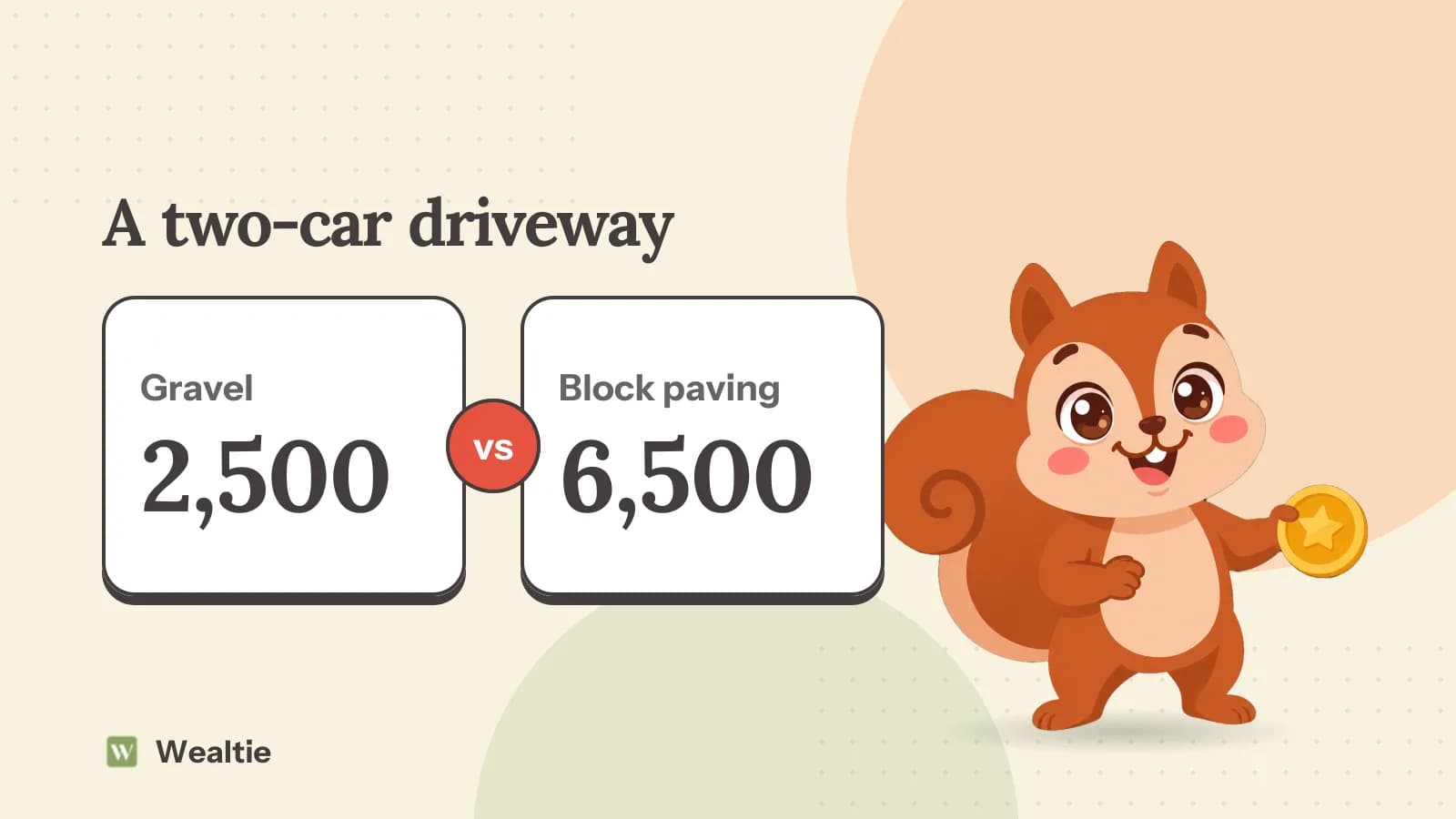
New driveway cost depends mostly on the material and the size, with gravel the cheapest and block paving or resin the most expensive. In a worked example, a two-car driveway costs 2,500 in gravel and 6,500 in block paving.
 By Wealtie Team · 3 min read
Key takeaways
- New driveway cost depends mostly on the material, size and groundwork.
- Gravel is the cheapest option, while block paving and resin cost the most.
- Drainage rules may affect which surface you can use.
- Cheaper materials can need more upkeep, so compare long-term costs.
How much does a new driveway cost?
A new driveway can make parking easier, improve how your home looks from the street and replace a cracked or uneven surface. New driveway cost depends mostly on the material you choose, the size of the area and how much groundwork is needed before the surface goes down. Removing an old driveway, adding drainage or getting permission for a dropped kerb all add to the price.
Here's a worked example for a driveway big enough for two cars, in round numbers that work in any currency:
| Material | Cost |
|---|---|
| Gravel | 2,500 |
| Tarmac | 4,500 |
| Resin-bound | 6,000 |
| Block paving | 6,500 |
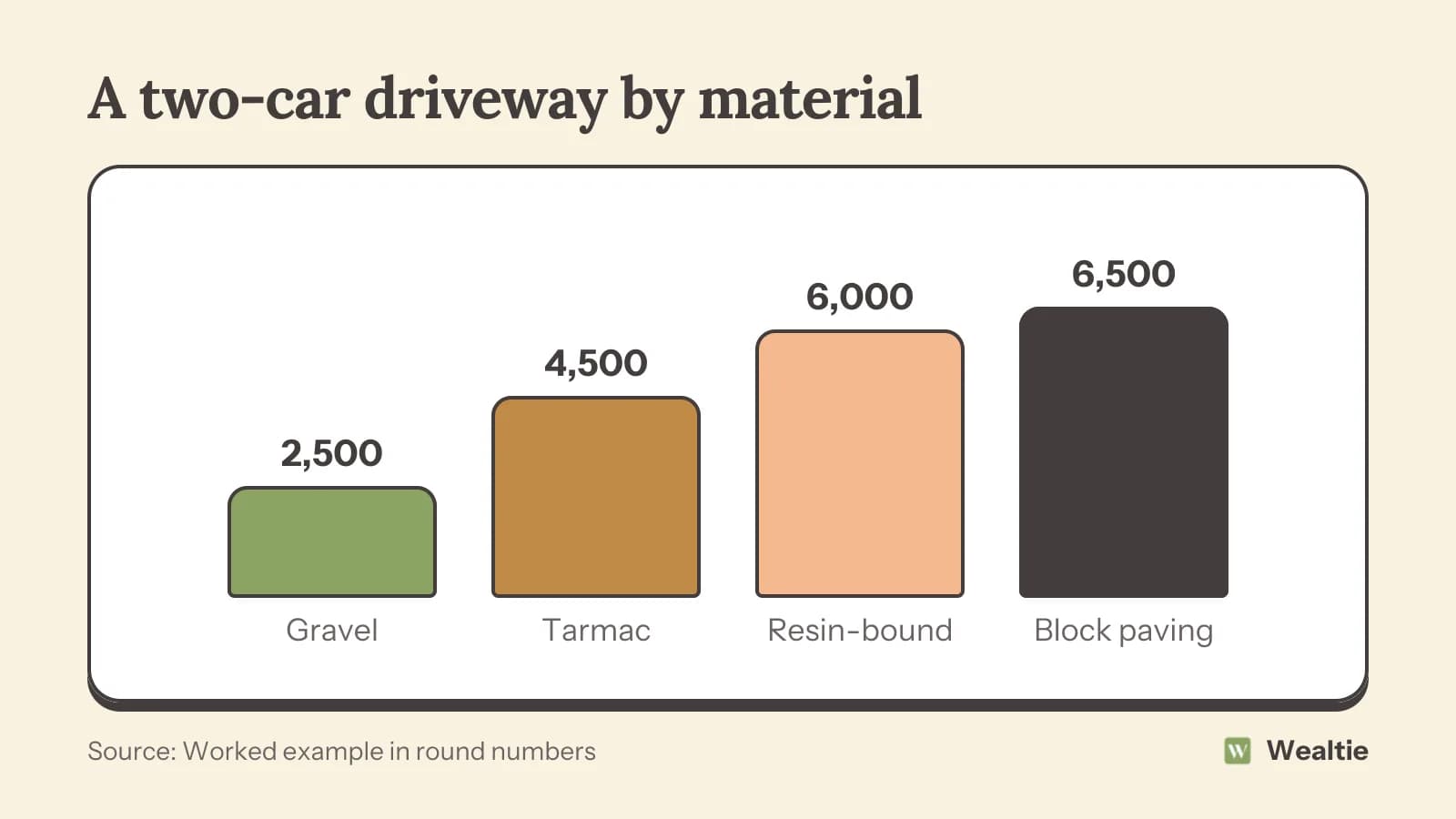
These prices include a new base and laying the surface, but not removing an old driveway, which might add around 800, or creating a new dropped kerb, which might add 1,200 including any permission fees. Prices vary a lot by area and installer, so get several local quotes.
How do the materials compare?
Gravel
Gravel is the cheapest and quickest to lay, and it drains well. It can spread onto paths and lawns, needs topping up every few years and isn't ideal for pushchairs or wheelchairs. It's also noisy underfoot, which some people like for security.
Tarmac
Tarmac is hard-wearing and mid-priced. It can soften in very hot weather and look plain, but it's practical and easy to maintain. Drainage needs planning, as it's usually not permeable.
Resin-bound
A resin-bound surface is smooth, attractive and often permeable, letting water drain through. It costs more and needs a skilled installer, since poor laying can lead to cracks.
Block paving
Block paving looks smart and individual blocks can be replaced if damaged. It's usually the most expensive option and can grow weeds between the blocks without regular care.
What affects the price?
Size and shape
Bigger areas cost more, and curves or awkward shapes add labour.
Groundwork
Digging out, levelling and laying a proper base is a large part of the cost. Sloping ground or poor soil adds more.
Removing the old surface
Breaking up and taking away an old driveway costs extra, including skip or waste fees.
Drainage
In some areas, rules require driveways to drain into the ground rather than the street, which may mean a permeable surface or extra drainage. Check local rules before choosing a material.
Extras
Edging, lighting, gates and an electric car charging point can all be added. Electric car running costs covers whether home charging makes sense.
What does a driveway cost to maintain?
Cheaper materials aren't always cheaper over time. Gravel needs raking and topping up, block paving needs weeding and occasional re-sanding, and tarmac may need resealing after some years. Resin needs little care if laid well. A small yearly amount set aside for upkeep keeps a driveway in good shape. How to plan a home maintenance budget covers saving for this kind of cost.
Is a new driveway worth it?
It can save on parking
If you currently pay for street parking or a permit, off-street parking can save money every year. How to save money on parking covers other ways to cut that cost.
It can improve kerb appeal
A tidy driveway can make a home more appealing to buyers, though it rarely adds as much value as it costs.
It can reduce insurance
Some car insurers offer lower prices for cars parked off-street overnight. Check with your insurer.
How do you choose an installer?
Get several written quotes
Ask what's included, like groundwork, base depth, edging and waste removal, so you compare like for like.
Check past work
Ask to see driveways they've laid a few years ago, not just new ones. That shows how well their work lasts.
Avoid doorstep offers
Be wary of traders who knock offering cheap driveways with leftover materials. Quality and guarantees matter for a job that should last decades.
Pay in stages
Agree a small deposit and pay the rest once the work is finished to your satisfaction.
Think about timing as well. Driveway installers are often busiest in spring and summer, and some offer better prices or quicker start dates in quieter months, as long as the weather allows the work. Booking early in the year also gives you time to get permissions sorted before the work starts.
Finally, think about how you'll use the space in ten years. A wider area for a second car, a charging point or a path to the side gate is much cheaper to include now than to add later, and it saves digging up a new surface.
How can Wealtie help you budget for it?
Set a budget for the driveway and log the deposit and final payment in a home expense category. Adding a small monthly amount for upkeep to your budget means future maintenance doesn't come as a surprise.
Questions people ask
Costs vary by material and size. In a worked example, a two-car driveway cost 2,500 in gravel and 6,500 in block paving.
Gravel is usually the cheapest driveway material. It's quick to lay and drains well, but needs topping up over time.
You may need permission for a dropped kerb or a surface that doesn't drain. Rules vary by area, so check with your local authority first.
Block paving, tarmac and resin can all last many years if laid well. Quality of installation matters as much as the material.
This article is general information, not financial, tax or legal advice. Your situation is your own; check the numbers that apply to you before you act on them.