Budgeting: How to stop feeling ashamed about money
Feeling ashamed about money often means believing your finances say something bad about you, and it can stop people looking at their accounts or asking for help. You can ease it by facing the numbers in small steps and separating your worth from your balance.
 By Wealtie Team · 3 min read
Key takeaways
- Feeling ashamed about money is common, and it often keeps people from looking at their finances.
- Your bank balance isn't a measure of your worth.
- Facing the numbers in small steps makes them less frightening.
- Talking to someone, or a free advice service, can lift a lot of the weight.
Why do people feel ashamed about money?
Because money is tied up with how we see ourselves. Debt, overspending, low savings or not understanding finances can feel like personal failures, even when they come from low pay, illness, a relationship ending or never being taught. Many people feel ashamed about money at some point, and almost all of them believe they're the only one.
The feeling is real, but it isn't a fair judgement. Your finances are a situation, not a measure of your worth, and situations can change.
How does money shame keep people stuck?
Shame makes people avoid. They stop opening bank apps, leave letters unopened, skip conversations with partners and put off asking for help. Avoiding the numbers can feel safer in the moment, but it usually makes problems bigger: missed payments add fees, debts grow and opportunities to fix things early slip away.
Breaking the avoidance, even in a small way, is often the turning point. Many people find that the reality, once they look, is less frightening than what they'd imagined.
How do you start looking at your finances?
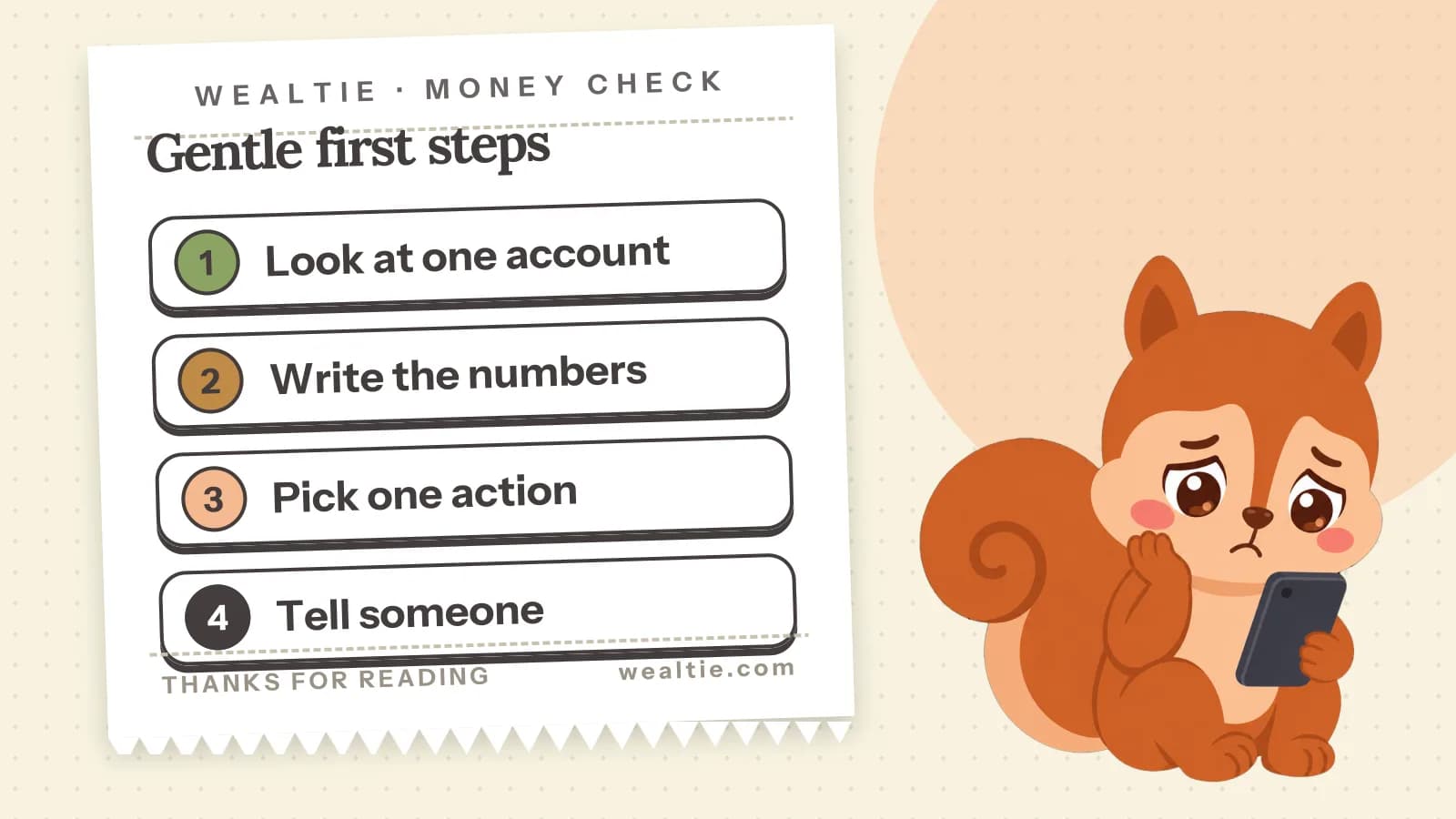
Take very small steps. Here's a worked example of a gentle four-week start:
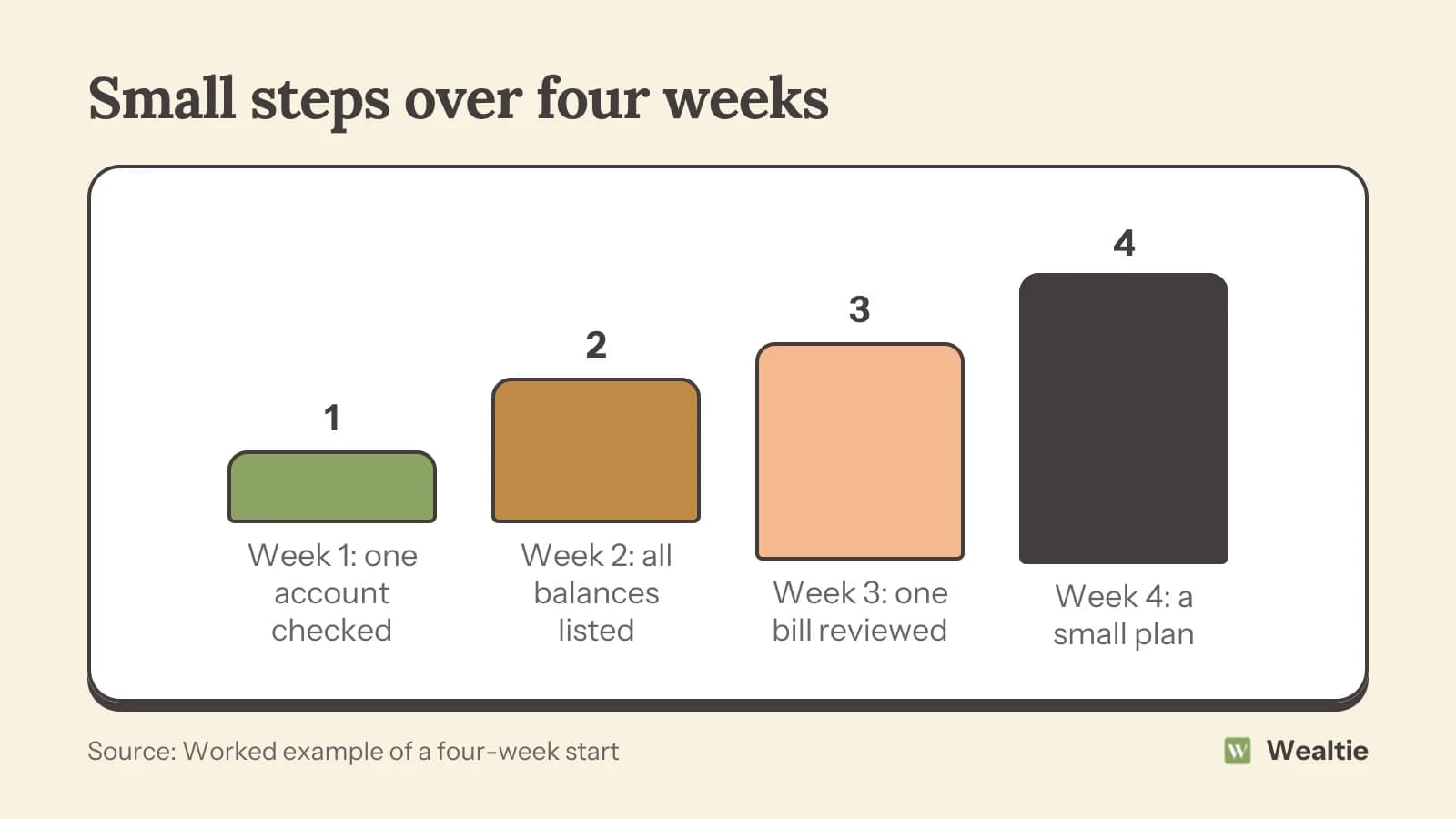
In week one, you check a single account. In week two, you list your balances and debts on one page. In week three, you look at one bill to see whether it could be cheaper. In week four, you write a small plan for the next month. Each step is manageable, and each one makes the next easier.
Write it down
Seeing everything on one page, rather than as a vague cloud of worry, often makes it feel smaller. It turns a feeling into a list you can work on. How to track your spending has simple ways to start. Choosing a calm time, like a weekend morning with a cup of tea, makes the first look easier.
How do you separate your worth from your money?
Notice the stories you tell yourself, like "I'm useless with money" or "I always mess this up". Try replacing them with facts: "I have three debts and I'm making a plan." Facts point to actions; labels keep you stuck. It also helps to remember the reasons behind your situation, which are often outside your control. Low pay, rising prices and life events affect almost everyone at some point.
Should you tell someone?
Often, yes. Telling a trusted friend, partner or family member can lift a huge weight, and most people respond with more kindness than you expect. If your finances feel out of control, free debt advice services can help confidentially and without judgement. They've heard every situation before, and their job is to help, not to judge.
When it affects your mental health
If money worries are affecting your sleep, mood or daily life, talk to your doctor or a mental health service. How to deal with money anxiety has practical steps, and how to afford therapy covers lower-cost support.
Shame and couples
In relationships, money shame can lead to hiding purchases or debts. Choosing a calm moment to share the full picture, and agreeing to talk without blame, often brings relief to both partners. Many couples find that money becomes easier once nothing is hidden.
How do you build confidence with money?
Through small wins. Paying a bill on time, saving a small amount, or understanding one part of your finances all build confidence. Celebrate them. Over time, the habit of facing your money replaces the habit of avoiding it. Keeping a short list of wins, however small, gives you something to look back on during harder weeks.
Be kind to yourself about the past
Everyone makes money mistakes. What matters is what you do next. Spending energy on regret leaves less for change. A fresh start can begin on any day, including today.
What helps keep shame from coming back?
Regular, short check-ins with your money, like ten minutes each week, stop problems building up unseen. Having a simple plan, even a rough one, means surprises are less likely. And talking about money more openly, with a partner or friends, makes it feel ordinary rather than secret. You may find others are relieved to talk about it too.
How can Wealtie help?
Logging spending in your expense categories gives you a clear, judgement-free picture of where money goes. A limit in the budget tracker, with Budget Health, shows how the month is going in a calm, simple way, so checking in becomes routine rather than something to dread.
Questions people ask
Because money is tied to how we see ourselves. Debt or low savings can feel like personal failures, even when they come from circumstances.
Take very small steps, like checking one account, then listing your balances on one page.
Often, yes. A trusted person or a free debt advice service can help without judgement.
Very. Many people feel it at some point, and most believe they're the only one.
This article is general information, not financial, tax or legal advice. Your situation is your own; check the numbers that apply to you before you act on them.