Budgeting: Mental accounting: why we treat some money differently
Mental accounting is the habit of treating money differently depending on where it came from or what it's for, even though every unit is worth the same. It can lead to waste, but it's also the idea behind budget categories.
 By Wealtie Team · 3 min read
Key takeaways
- Mental accounting means treating money differently depending on its source or purpose.
- It leads people to splash windfalls and to save while paying more interest on debt.
- Remember that all money is the same money when making big decisions.
- Used on purpose, mental accounting is what makes budget categories work.
What is mental accounting?
Mental accounting is the way people sort money into separate mental pots and treat each pot differently. A tax refund feels like bonus money, so it gets spent on treats. Salary feels like serious money, so it gets budgeted carefully. Cash found in an old coat feels free. In reality, every unit of money is worth the same, whatever its source. A 100 refund buys exactly what 100 of salary buys.
The idea comes from behavioural economics, and it explains a lot of everyday money choices that don't quite add up.
What are some mental accounting examples?
Spending windfalls freely
A bonus, gift or tax refund often feels like money you didn't earn, so it's easier to spend on something you wouldn't normally buy. If the same amount had come in your salary, you might have saved it. What to do with a bonus covers using one well.
Saving while carrying expensive debt
Many people keep savings in one pot while paying interest on a credit card in another. Because the pots feel separate, it doesn't feel like a problem. But paying interest on debt usually costs far more than savings earn.
Treating cash and cards differently
Spending cash feels like money leaving your hand. Tapping a card feels lighter. Many people spend more on cards for this reason, even though it's the same money.
Holiday money
Money set aside for a holiday often gets spent freely once you're away, because it was "holiday money" all along. Prices that would feel high at home seem fine on a trip.
What does mental accounting cost?
Here's a worked example, in round numbers that work in any currency. Someone has 1,000 in savings earning about 30 a year in interest, and 1,000 on a credit card costing about 200 a year.
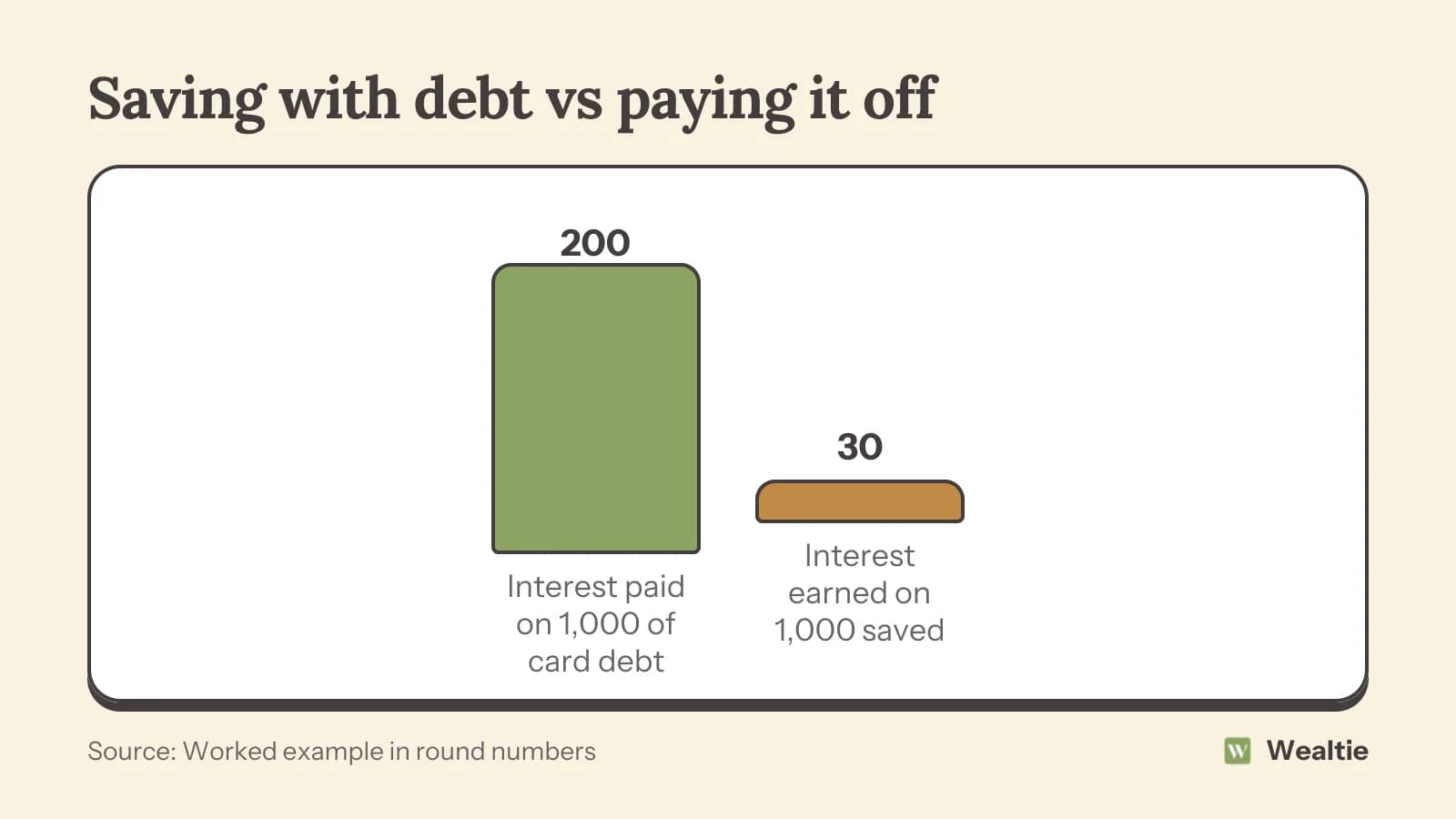
By keeping the pots separate, they lose about 170 a year. Using the savings to clear the card, then rebuilding savings with the money that was going on interest, would leave them better off. Keep a small emergency buffer, of course. Pay off debt or save covers how to balance the two.
How do you avoid mental accounting mistakes?
Treat all money the same for big decisions
When a windfall arrives, ask what you'd do if the same amount had come in your salary. If you'd save it or pay off debt, do that with the windfall too, or at least with most of it.
Look at the whole picture
Add up all your savings and all your debts in one place. Seeing them side by side makes it clear when one pot is costing you more than another earns. It also shows your real net worth, which is often lower than the savings balance alone suggests.
Set a rule for windfalls
A simple rule helps, like saving most of any windfall and spending a small part on something you enjoy. You get a treat without losing the whole amount to impulse.
Can mental accounting help you budget?
Yes. Used on purpose, mental accounting is what makes budgeting work. Budget categories are mental pots: money for rent, money for food, money for fun. Once money has a job, you're less likely to spend it on something else.
Name your pots
A savings pot called "holiday" or "new car" is harder to raid than one called "savings". Naming money for a goal makes spending it on something else feel wrong. A sinking fund uses this for costs you know are coming.
Give every unit a job
Envelope budgeting takes this further, giving every unit of income a category until nothing is left unassigned. It works because people respect the labels they give their money. Even a rough version, with a handful of categories, gives most of the benefit. The point isn't precision but making sure each unit of money has somewhere it's meant to go before payday spending begins.
Watch the limits of the pots
The trick is to use pots for planning, while still seeing the whole picture. If the holiday pot is full and the emergency fund is empty, it might be time to move money between them.
How do you use mental accounting in Wealtie?
Give your money jobs with expense categories and set a monthly budget for each, so every pot has a limit. Wealtie also shows your accounts and net worth in one place, which helps you see the whole picture when separate pots might hide a problem.
Questions people ask
Mental accounting is treating money differently depending on where it came from or what it's for, even though all money is worth the same.
Spending a tax refund on treats while budgeting salary carefully, or keeping savings while paying interest on a credit card.
Treat all money the same for big decisions, look at all savings and debts together and set a rule for windfalls.
No. Budget categories and named savings pots use mental accounting on purpose to help you stick to a plan.
This article is general information, not financial, tax or legal advice. Your situation is your own; check the numbers that apply to you before you act on them.