Budgeting: How to plan a Lunar New Year budget for red envelopes, food and travel
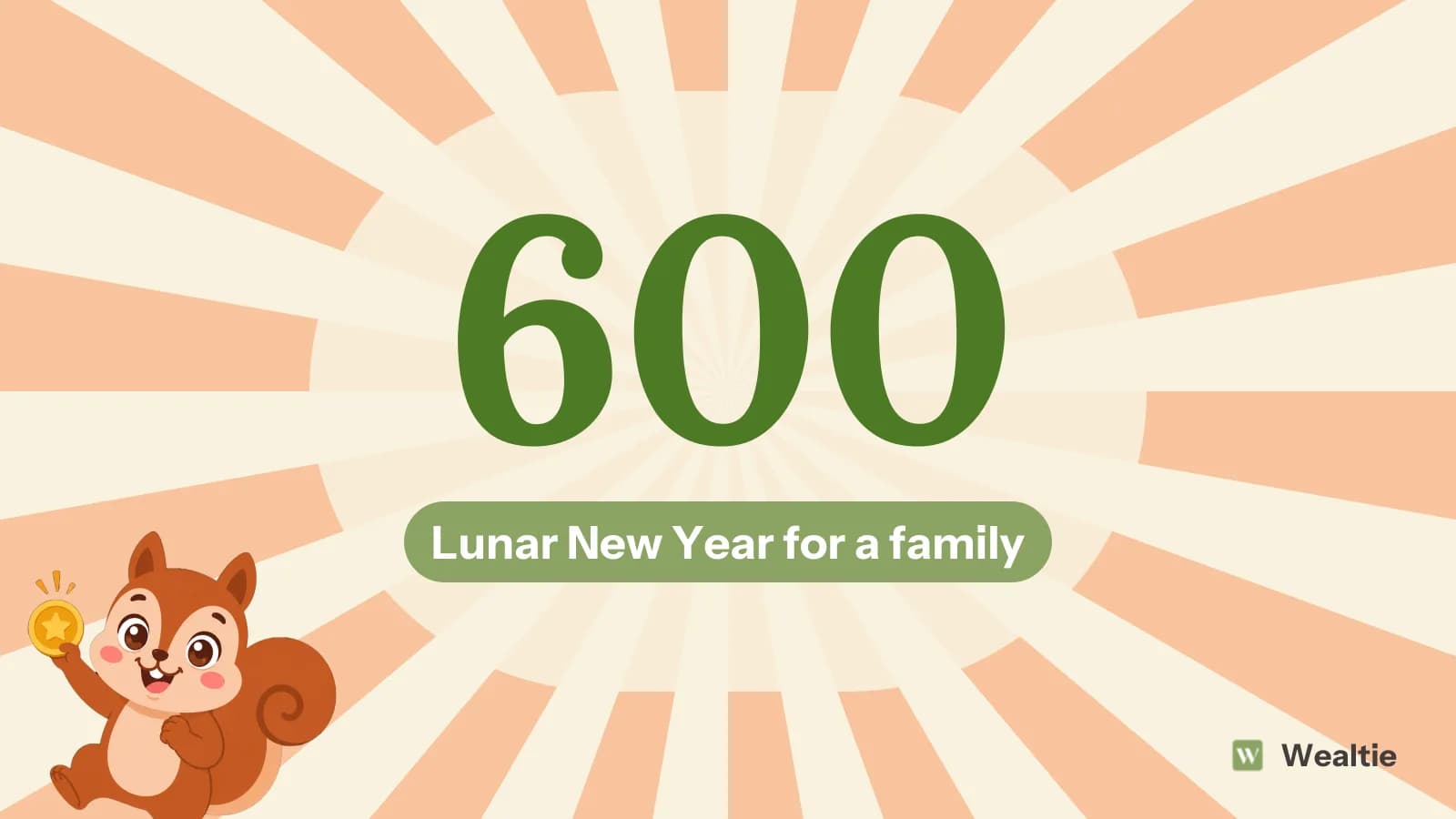
A Lunar New Year budget covers red envelopes, the reunion dinner, new clothes, decorations and travel to see family. In a worked example, the festival costs a family about 600, and agreeing red envelope amounts in advance keeps giving generous but manageable.
 By Wealtie Team · 3 min read
Key takeaways
- A Lunar New Year budget covers red envelopes, the reunion dinner, clothes, decorations and travel.
- In a worked example, the festival costs a family about 600.
- Deciding red envelope amounts and a list of recipients in advance keeps giving manageable.
- Booking travel early matters, since journeys home around the festival are busy and expensive.
How do you plan a Lunar New Year budget?
List the parts of the festival your family celebrates, decide the amounts in advance, and save in the months before. Lunar New Year is a time for family reunions, food, gifts of money in red envelopes, new clothes and fresh starts. It can also be one of the most expensive times of the year, especially with travel home. Planning ahead keeps the focus on family and good fortune rather than on the bill.
Customs vary between countries, regions and families, so adapt the plan to your traditions.
What does Lunar New Year cost?
Here's a worked example for a family, in round numbers that work in any currency:
| Cost | Amount |
|---|---|
| Red envelopes | 200 |
| Reunion dinner and festive food | 150 |
| Travel home | 150 |
| New clothes and decorations | 100 |
| Total | 600 |
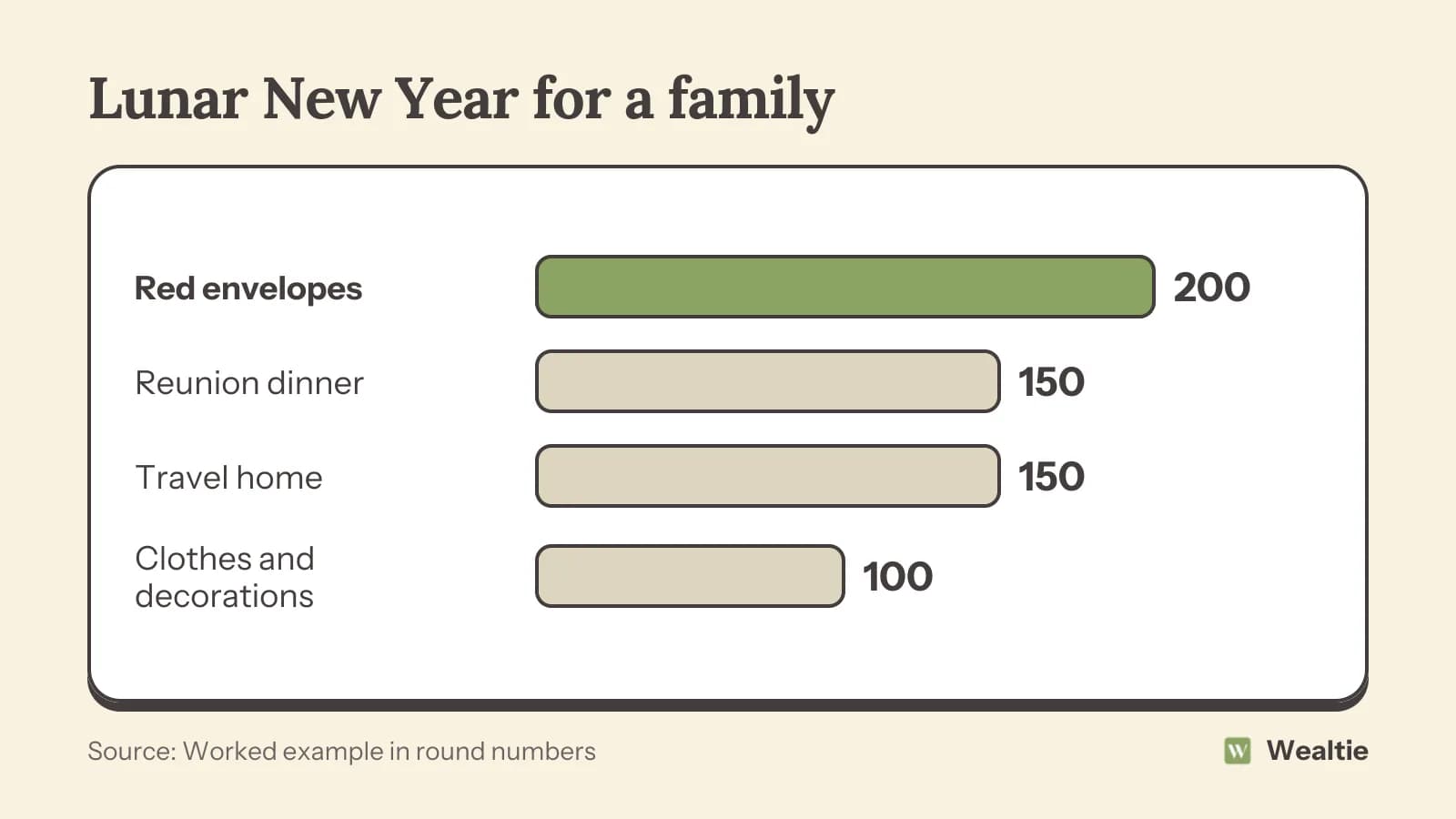
Your figures depend on how many red envelopes you give, whether you host the reunion dinner and how far you travel.
How do you budget for red envelopes?
Make a list and decide amounts in advance. Red envelopes are given to children, unmarried relatives, elders and sometimes colleagues or staff, depending on your family's customs. The total can grow quickly, so list who you'll give to and the amount for each, based on your relationship and what you can afford. Many families follow traditions about lucky and unlucky amounts, so keep those in mind.
Get crisp new notes from the bank well before the festival, since they can be in short supply close to the date. Agreeing amounts with siblings can help keep things fair across the family.
Digital red envelopes
In some places, red envelopes are now often sent through payment apps. They're convenient, but it's easy to lose track when sending many small amounts from your phone. Keep the same list and budget for digital envelopes as for paper ones, and check the total once the festival's over.
How do you keep the reunion dinner affordable?
Share the cooking. The reunion dinner is often the centrepiece, and it can be large. Having each family bring a dish spreads the cost and the work. Plan the menu, buy ingredients ahead where they keep, and shop from a list. Rotating who hosts each year means one household doesn't carry the cost every time.
How to host dinner on a budget has ideas for feeding a big group.
How do you save on travel home?
Book as early as you can. Travel around Lunar New Year is among the busiest of the year in many places, and prices rise quickly. Travelling a day or two either side of the peak can save a lot, if your work allows it. If you're travelling internationally, compare routes and dates, and watch for card fees abroad. How to save money on flights covers the details.
If travel home isn't possible this year, a video call during the reunion dinner and gifts sent by post can keep you connected for much less.
What about new clothes and decorations?
Shop early, and reuse what you can. Decorations like lanterns and couplets can often be stored and used again, with a few new pieces each year. New clothes are a tradition for many, but one outfit each, worn again for other occasions, keeps the cost down. Many families also clean the home before the new year, so if you need cleaning supplies or small repairs, add them to the plan rather than letting them appear as surprise costs.
How do you save for the festival?
Start several months before. Divide your total by the months until the festival and set that aside each month. A 600 festival saved over six months is 100 a month. Keeping it in a separate pot means the money's there when the envelopes and tickets need paying for. A sinking fund is a simple way to save for costs like this that come round every year.
Why a simpler celebration still works
Lunar New Year is about family, gratitude and hope for the year ahead. Sharing a meal, visiting relatives and spending time together are at its heart. A thoughtful red envelope, whatever the amount, carries the good wishes that matter most.
How do you track festival spending in Wealtie?
Add a savings account for the festival and move money into it each month as a transfer, which isn't counted as spending. Log red envelopes, food and travel in your expense categories, so you can see what the festival costs. If you're travelling to another country, each account can keep its own currency, with totals converted into your display currency. A monthly limit in the budget tracker keeps the rest of the month on track after the festival.
Questions people ask
A worked example comes to about 600, covering red envelopes, the reunion dinner, travel and clothes. Your own figure will follow your family and traditions.
An amount that suits your relationship and fits your budget, decided in advance. Many families also follow traditions about lucky amounts.
List red envelope recipients and amounts in advance, share the reunion dinner, book travel early and reuse decorations.
As early as possible, since travel around the festival is very busy and prices rise quickly.
This article is general information, not financial, tax or legal advice. Your situation is your own; check the numbers that apply to you before you act on them.