Budgeting: Living at home during university: how much can you save?
Living at home during university can save a lot on rent and bills, though travel costs and contributions to your family reduce the saving. In a worked example, a commuter student saves about 450 a month compared with living in student accommodation.
 By Wealtie Team · 3 min read

Key takeaways
- Living at home during university can save a lot on rent and bills.
- In a worked example, a commuter student saves about 450 a month.
- Travel costs and contributions to your family reduce the saving.
- Make the most of campus life to avoid missing out socially.
How much can you save by living at home during university?
Often a lot. Rent is usually the biggest cost for students, often taking most of a loan, and living at home with family removes most of it. Even after paying for travel and contributing to household costs, many commuter students spend far less than those in halls or shared houses. Living at home during university isn't for everyone, but for many it's one of the biggest ways to graduate with less debt. It can also be a good option if you're close to family or have responsibilities at home.
How do the costs compare?
Here's a worked example of monthly costs, in round numbers that work in any currency:
| Student halls | Living at home | |
|---|---|---|
| Rent and bills, or family contribution | 650 | 150 |
| Food | 150 | 80 |
| Travel to campus | 0 | 120 |
| Total | 800 | 350 |
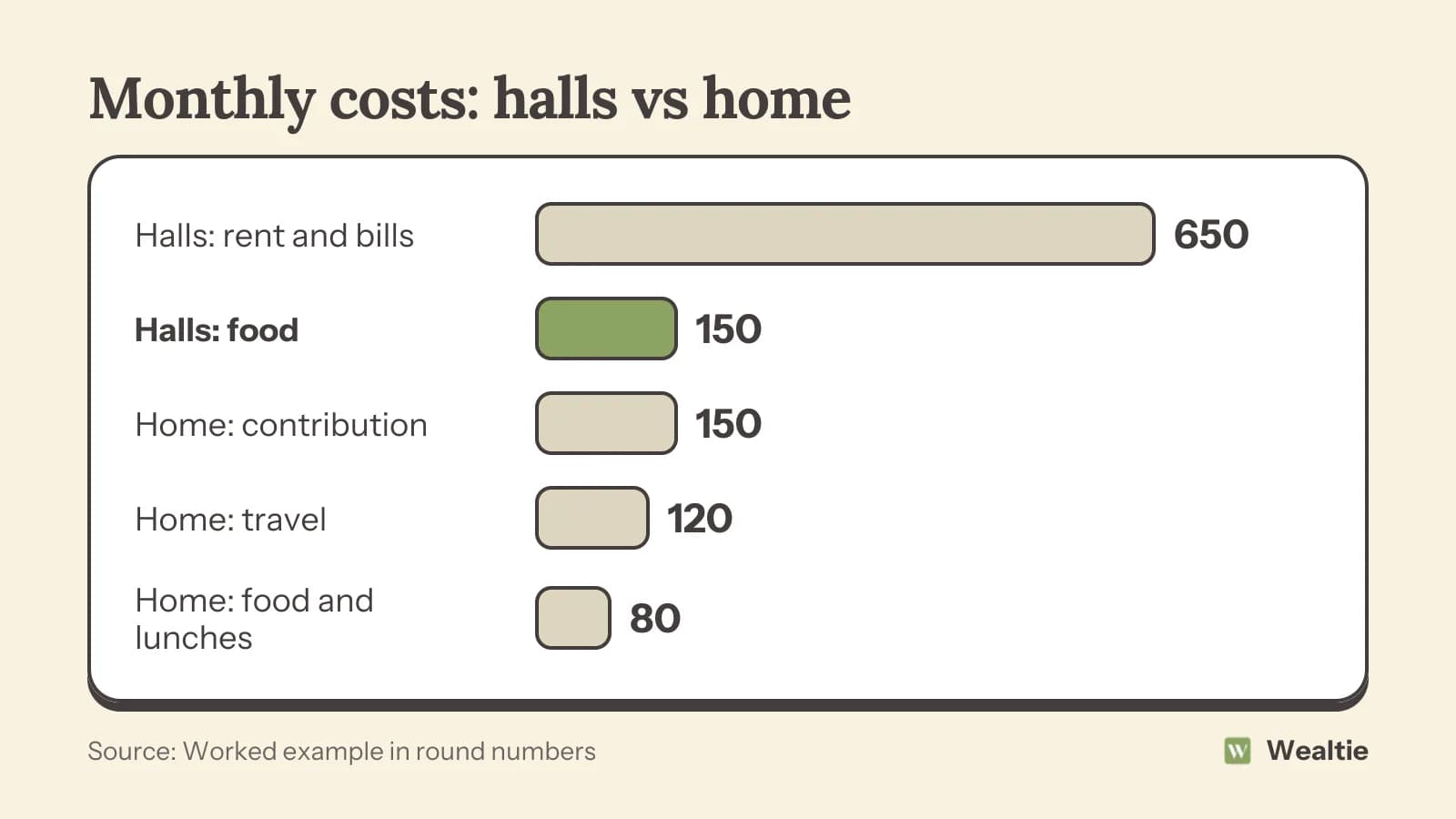
In this example, living at home saves about 450 a month. Over a three-year course, that adds up to a large sum, which could mean borrowing much less or graduating with savings. Your own figures depend on local rents, how far you travel and what you agree with your family.
What are the extra costs of living at home?
Travel
Commuting is the main extra cost. Look for student travel discounts, season tickets and railcards. How to save money on train tickets and how to cut commuting costs have tips. A timetable that groups lectures into fewer days can cut travel costs. Cycling or sharing lifts with other commuter students are other options worth considering.
Food on campus
Buying lunch and coffee on campus every day adds up. Bringing food from home saves a lot. A reusable bottle and a flask for hot drinks cut costs further.
Make use of campus facilities
Libraries, study spaces, gyms and student union events are part of what your fees pay for. Using them on the days you're on campus helps you feel part of university life and can save money on things like gym memberships or printing at home.
Should you pay your family rent?
Many families agree a contribution towards food and bills, which is fair and good practice for budgeting. The amount depends on your family's situation and your income. How much rent to pay your parents covers how families decide. Agree it early, so everyone knows what to expect. Helping around the house, like cooking a few meals a week, can be part of the arrangement too.
Getting there on time
Early lectures and late finishes can mean peak-time travel, which often costs more. Checking whether off-peak tickets would work on some days, or whether a weekly or monthly pass is cheaper, can make a noticeable difference over a term. Leaving a little earlier can sometimes mean cheaper fares and a less crowded journey.
Does living at home affect student funding?
In some places, student loans or grants for living costs are lower for students living at home, since costs are expected to be lower. Check what you're entitled to, and plan your budget around the actual amount. Some universities offer bursaries or travel grants for commuter students, so ask the student support team. The college student budget covers planning on a student income.
How do you avoid missing out?
Commuter students sometimes feel less connected to campus life. Joining societies, staying on campus for some evening events and making friends on your course help. Budgeting for occasional late nights, like a late train or a night on a friend's sofa, lets you join in without worrying. Many universities have commuter student groups, which are a good way to meet people in the same situation.
Plan your study space
Make sure you have a quiet place to study at home, or use the library on campus. Agreeing study times with family helps, especially around exams.
What should you do with the savings?
Use them on purpose. Some students borrow less, others save for a deposit, a car or travel after graduating. Putting the difference into savings each month, rather than spending it, makes the choice pay off. Some students move out in their final year, using savings from earlier years to cover the extra rent. University accommodation costs shows what you're saving compared with moving out.
How do you track a commuter student budget in Wealtie?
Log travel, food and your family contribution in your expense categories, so you can see your real monthly costs. A limit in the budget tracker helps you keep spending steady and see how much you're saving.
Questions people ask
In a worked example, about 450 a month compared with student halls.
Mainly travel to campus and buying food on campus.
Many families agree a contribution towards food and bills. Agree it early.
In some places, living-cost funding is lower for students living at home. Check your entitlement.
This article is general information, not financial, tax or legal advice. Your situation is your own; check the numbers that apply to you before you act on them.