Budgeting: Is life insurance worth it? How to decide
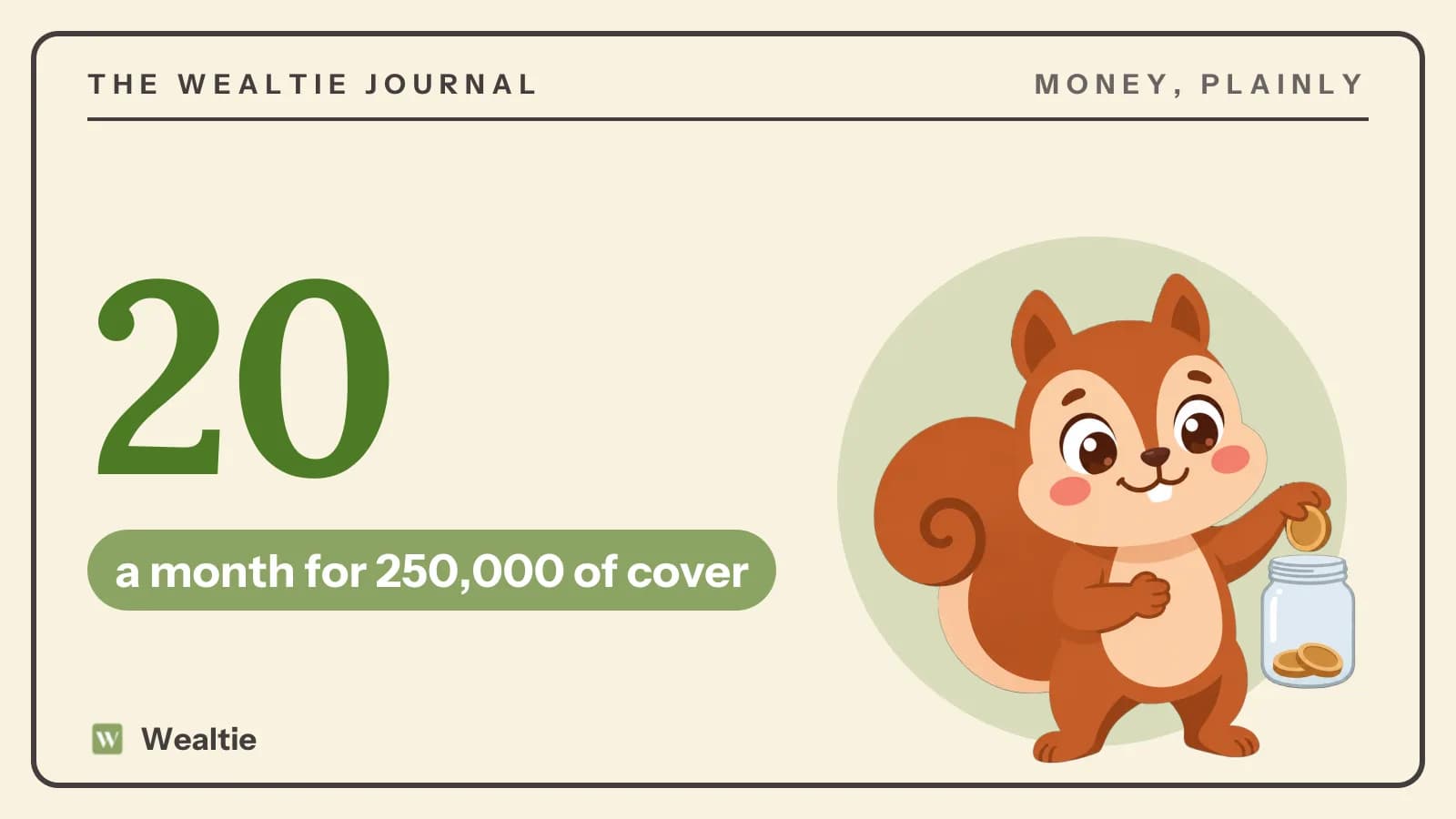
Is life insurance worth it? It is if someone depends on your income or shares your debts, and in a worked example, a parent with a 150,000 mortgage gets 250,000 of term cover for about 20 a month.
 By Wealtie Team · 3 min read
Key takeaways
- Life insurance is worth it when others rely on your income or share your debts.
- Term cover is usually the cheapest way to protect a family for a set period.
- Add up debts, income needs and future costs to work out how much cover you need.
- Single people with no dependants and no shared debts may not need it.
Is life insurance worth it?
Life insurance pays out a sum of money if you die while the policy is active. Whether it's worth it depends on who would be affected financially if you weren't here. If a partner, children or anyone else depends on your income, or would be left with a mortgage or debts you share, life insurance can protect them. If nobody relies on you financially, it may not be needed.
The question to ask is simple: if I died tomorrow, would anyone struggle to pay the bills? If the answer is yes, life insurance is usually worth considering. It's one of the cheaper forms of protection for younger, healthy people, and it can make a huge difference to a family at the worst possible time.
Who usually needs life insurance?
Parents
Children depend on their parents' income for years. Cover can help pay for housing, childcare, education and everyday costs.
Couples with a mortgage
If your partner couldn't afford the mortgage on one income, cover that clears or reduces it can let them stay in the home.
Stay-at-home parents
Even without an income, a stay-at-home parent provides childcare and running the home, which would cost money to replace. The stay-at-home parent budget covers that role's value.
People with shared debts
If you've borrowed jointly or someone guaranteed your loan, they could be left with the debt.
Who may not need it
Single people with no dependants and no shared debts often don't need life insurance. Their savings, or a small policy for funeral costs, may be enough.
How much cover do you need?
Add up what your family would need if your income stopped. Here's a worked example for a parent with a mortgage and two young children, in round numbers that work in any currency:
| Need | Amount |
|---|---|
| Mortgage to clear | 150,000 |
| Income support for the family | 80,000 |
| Childcare and education help | 15,000 |
| Funeral and final costs | 5,000 |
| Total | 250,000 |
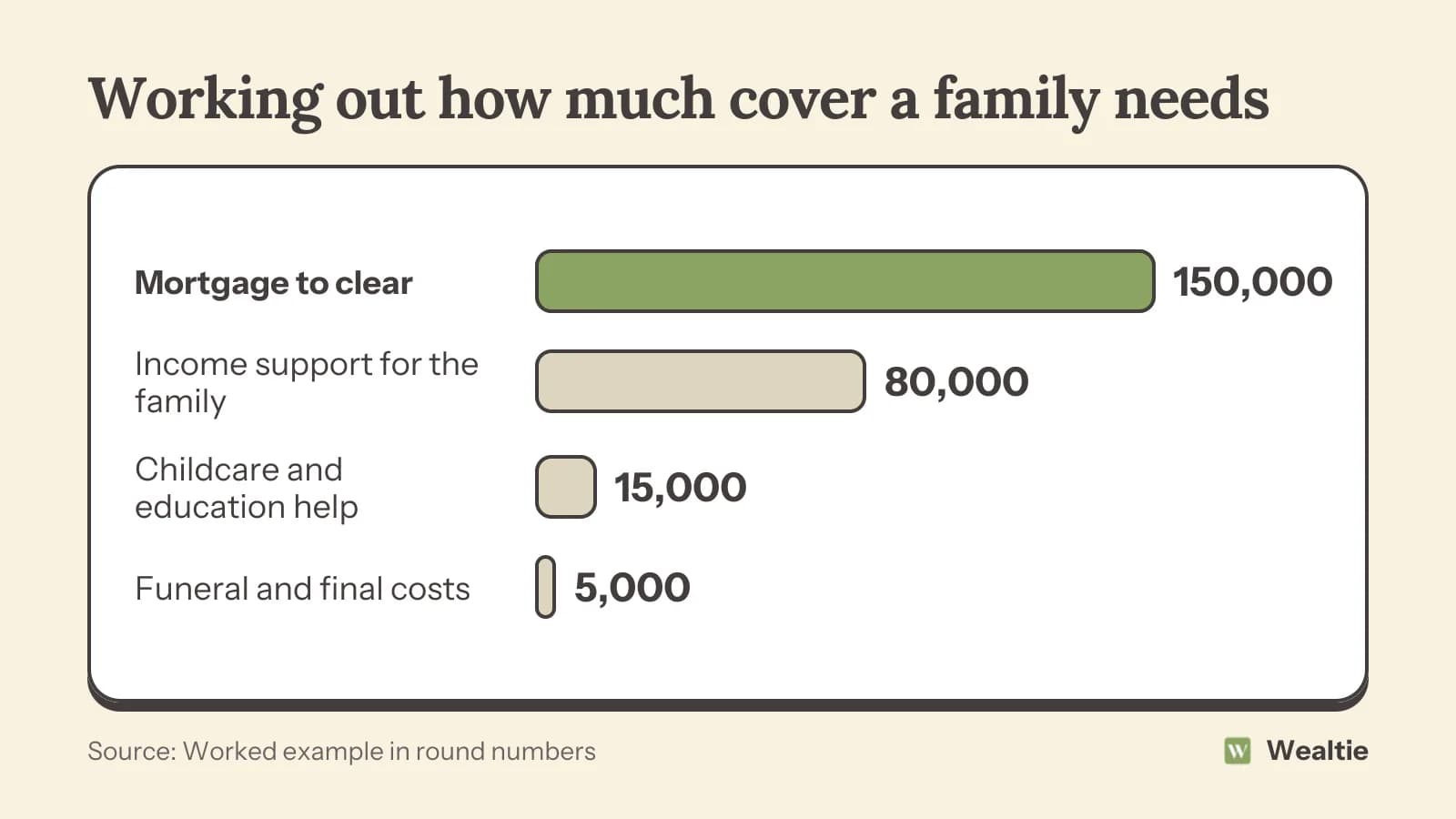
Subtract any savings or workplace death-in-service benefit you already have, since those reduce how much extra cover you need. If your employer pays two or three times your salary on death, that may cover a good part of the total.
What types of life insurance are there?
Term life insurance
Term cover pays out only if you die within a set period, like 20 or 25 years, often chosen to match a mortgage or until children are grown. It's usually the cheapest type. In this example, 250,000 of term cover might cost around 20 a month for a healthy non-smoker in their thirties, though prices vary a lot with age, health and lifestyle.
Decreasing term
The payout shrinks over time, often in line with a repayment mortgage. It costs less than level cover.
Whole-of-life
This pays out whenever you die, so it's much more expensive. It's sometimes used for estate planning or to cover funeral costs, but many families don't need it.
How do you keep the cost down?
Buy younger and healthier
Premiums are usually lower when you're young and healthy, and they're often fixed for the whole term.
Compare quotes
Prices vary between insurers for the same cover. Comparison sites and brokers can help.
Choose the right term and amount
Cover for the years your family depends on you, not longer, and for the amount they'd need, not more.
Don't double up
Check what your employer already provides before buying more.
Be honest on the application
Leaving out health details can mean a claim is refused. Answering fully protects the payout your family would rely on.
What else should you sort out?
Life insurance works best alongside a will, so your money and children's care go where you want. The cost of writing a will covers getting one done. In some countries, putting a policy in trust can speed up payouts and may have tax benefits, so ask an adviser if your situation is complex. Which insurance do you need? covers other types of protection worth considering.
Review your cover whenever your life changes. A new baby, a bigger mortgage, a pay rise or children leaving home can all change how much your family would need. Many people take out a policy and forget about it for decades, but a quick check every few years makes sure you're not paying for too much cover, or relying on too little.
How can Wealtie help you plan for premiums?
Add your life insurance premium as a recurring transaction, so it's always part of your monthly budget. Logging it in an insurance expense category alongside your other policies shows what protection costs you each year, which makes it easier to review when your circumstances change.
Questions people ask
Life insurance is worth it if anyone depends on your income or would be left with shared debts if you died. Otherwise, you may not need it.
Add up debts like your mortgage, the income your family would need and future costs, then subtract savings and any workplace cover.
Term life insurance is usually the cheapest. It pays out only if you die within a set period, like 20 or 25 years.
Often not. Single people with no dependants and no shared debts may only need enough savings to cover funeral costs.
This article is general information, not financial, tax or legal advice. Your situation is your own; check the numbers that apply to you before you act on them.