Budgeting: Kids' music lessons cost: a first-year budget
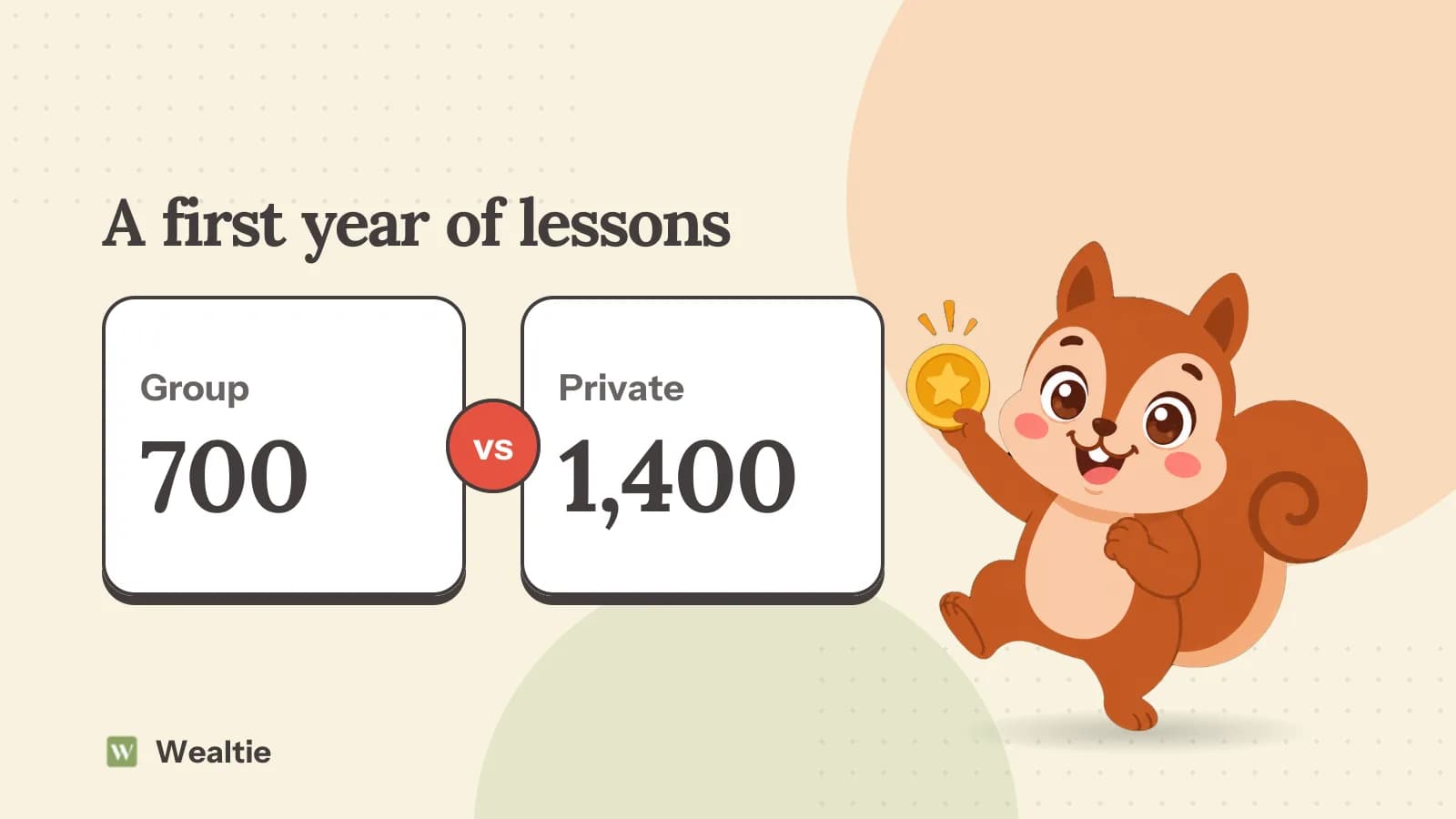
Kids' music lessons cost more than the weekly fee once you add an instrument, books and exams. In a worked example, a first year of private piano lessons comes to 1,400, while group lessons come to 700.
 By Wealtie Team · 3 min read
Key takeaways
- Kids' music lessons cost the weekly fee plus an instrument, books and exams.
- Group lessons cost about half as much as private lessons.
- Renting or buying second-hand avoids paying for an instrument a child may drop.
- School and community schemes are often the cheapest way to start.
How much do kids' music lessons cost?
Learning an instrument can bring a child years of enjoyment, but kids' music lessons cost more than the price of a weekly lesson. You'll also need an instrument, books, accessories and possibly exam fees. Knowing the full first-year cost before you start helps you choose the right type of lessons and avoid a big spend on an instrument that's abandoned after a term.
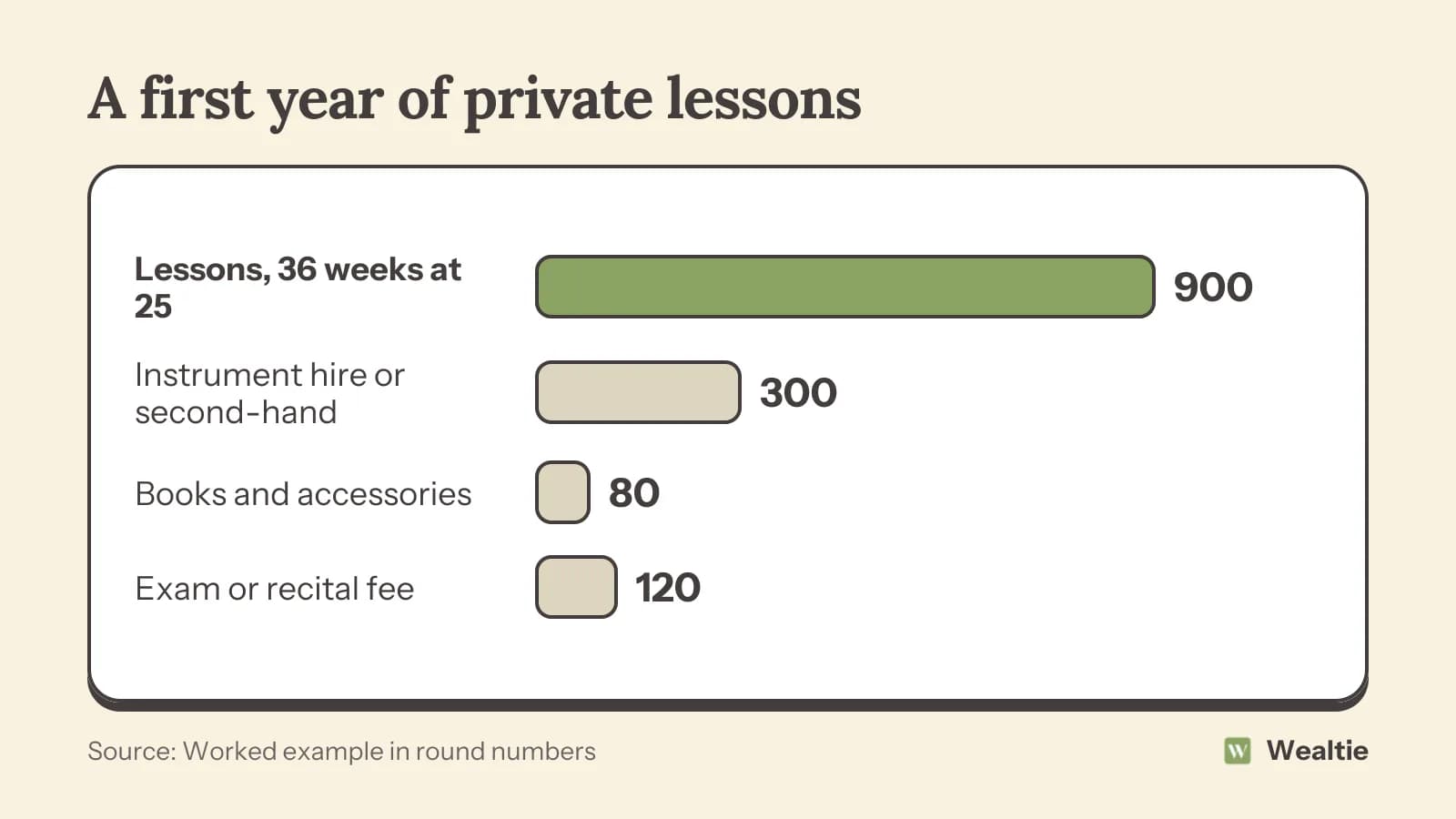
Here's a worked example for a first year of private lessons, in round numbers that work in any currency:
| Item | Cost |
|---|---|
| Lessons, 36 weeks at 25 | 900 |
| Instrument hire or second-hand | 300 |
| Books and accessories | 80 |
| Exam or recital fee | 120 |
| Total | 1,400 |
Group lessons at around 10 a week would bring the lesson cost down to 360. Add the instrument and fewer books, and the first year comes to about 700. Lesson prices vary by teacher, location and lesson length, so ask a few teachers locally before deciding.
Should you choose private or group lessons?
Private lessons
One-to-one lessons move at your child's pace and give them the teacher's full attention. They suit children who are keen and practise regularly, and they cost the most.
Group lessons
Small groups cost much less per child and can be more fun for younger children, who enjoy learning with friends. Progress may be slower, but they're a good way to find out whether a child enjoys an instrument before paying for private lessons.
School lessons
Many schools offer lessons during the school day, sometimes with subsidised fees or free instrument loans. These are often the cheapest way to start.
Online lessons
Video lessons can cost less than in-person ones and save travel time. They work better for older children who can concentrate on a screen.
How do you keep instrument costs down?
Rent first
Many music shops and schools rent instruments by the month or term, often with the option to put rental payments towards buying. It's a low-risk way to start.
Buy second-hand
Pianos, keyboards, guitars, violins and brass instruments are widely available second-hand. Ask the teacher to check one before you buy, since repairs can be expensive.
Start with a smaller or cheaper version
A keyboard can stand in for a piano for the first year or two, and smaller instruments suit younger children. Upgrade once your child is committed.
Borrow from family and friends
Instruments often sit unused in cupboards and lofts. Ask around before buying.
What other costs come up?
Exams
Graded exams are optional but popular. Each one has a fee, and some children take an exam every year or so.
Books and accessories
Music books, strings, reeds, a stand, a case and a tuner add up. Buying second-hand books helps.
Concerts, bands and orchestras
Joining a local band, orchestra or choir can be cheap or free, but there may be membership fees, uniform or trips.
Travel
If lessons aren't at school, the cost of getting there each week adds up over a year.
How do you budget for music lessons?
Agree a trial period
Commit to a term or a few months before buying an instrument outright. If your child is still keen after that, it's a safer time to invest.
Spread the cost
Divide the yearly total into monthly amounts. A 1,400 first year works out at about 120 a month. Some teachers let you pay monthly or per term to match.
Think in cost per use
An instrument that's played every day is good value even if it costs a lot. One that sits in a corner isn't. Cost per use helps put the price in perspective.
Look at all activities together
Music often sits alongside sport, swimming and clubs. How to save money on kids' activities covers keeping the whole list affordable.
Practice matters more than the type of lesson. A child who practises for a short time most days usually progresses faster than one who has expensive lessons but rarely plays at home. Agreeing a simple routine, like ten or fifteen minutes after school, helps your child get more from every lesson you pay for, and makes it easier to tell whether they're enjoying the instrument enough to carry on next year.
If your child wants to stop, try to find out why before deciding. Sometimes a different teacher, instrument or style of music brings the enjoyment back. If they still want to stop after a fair try, selling or returning the instrument promptly recovers some of the cost.
How can Wealtie help with lesson costs?
Add weekly or monthly lesson fees as recurring transactions, so they're always in your budget. Log the instrument, books and exams in their own expense categories, and set a yearly budget for each child's activities to see what each one costs.
Questions people ask
Costs vary. In a worked example, a first year of private lessons with an instrument, books and an exam came to about 1,400.
Yes. Group lessons usually cost much less per child than private lessons. In a worked example, the first year cost about 700.
Renting is usually better at first. Many shops let rental payments count towards buying if your child sticks with it.
Start with school or group lessons, rent or buy a second-hand instrument, buy used books and agree a trial period before investing.
This article is general information, not financial, tax or legal advice. Your situation is your own; check the numbers that apply to you before you act on them.