Budgeting: How much should you spend on a mattress? Think cost per night
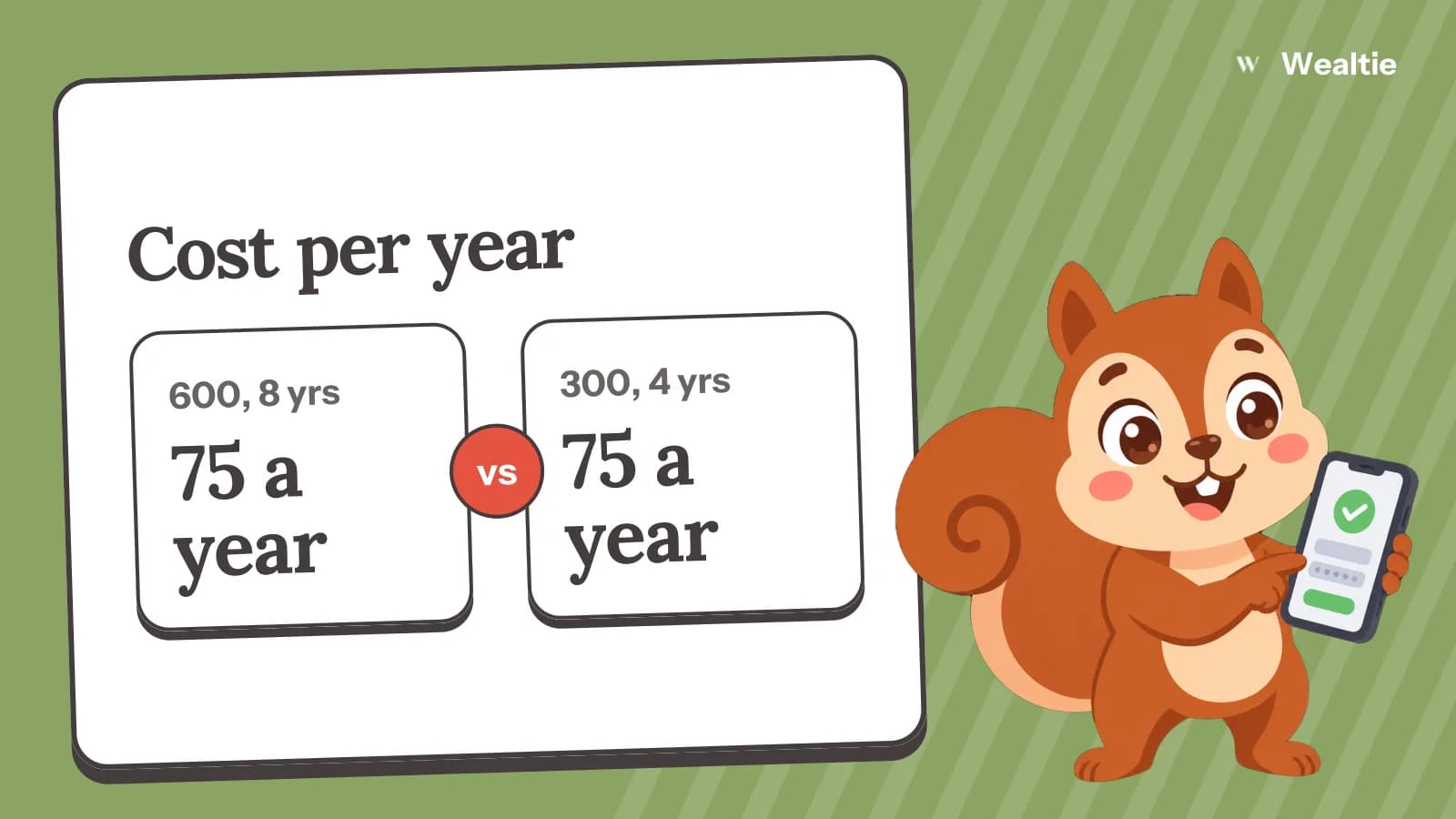
How much should I spend on a mattress? It's easier to judge as cost per year: A 600 mattress that lasts eight years costs 75 a year, and a 300 one replaced after four costs the same, so comfort and durability matter more than the price tag.
 By Wealtie Team · 3 min read
Key takeaways
- Judge a mattress by cost per year or per night over its life, not just the price.
- In a worked example, a 600 mattress lasting eight years and a 300 one lasting four both cost 75 a year.
- Higher prices often pay for branding, so compare materials, trial periods and warranties instead.
- Long trial periods and sales can help you find the right one without overpaying.
How much should I spend on a mattress?
Enough to get one that's comfortable and lasts, and no more. A mattress is used every night for years, so it's worth thinking about the cost over its whole life. A cheap one that sags quickly can cost as much per year as a good one, and a very expensive one doesn't always last longer or feel better.
How does cost per year help?
It shows the real price of comfort. Here's a worked example in round numbers that work in any currency:
| Mattress | Lasts | Cost per year |
|---|---|---|
| 300 | 4 years | 75 |
| 600 | 8 years | 75 |
| 1,200 | 8 years | 150 |
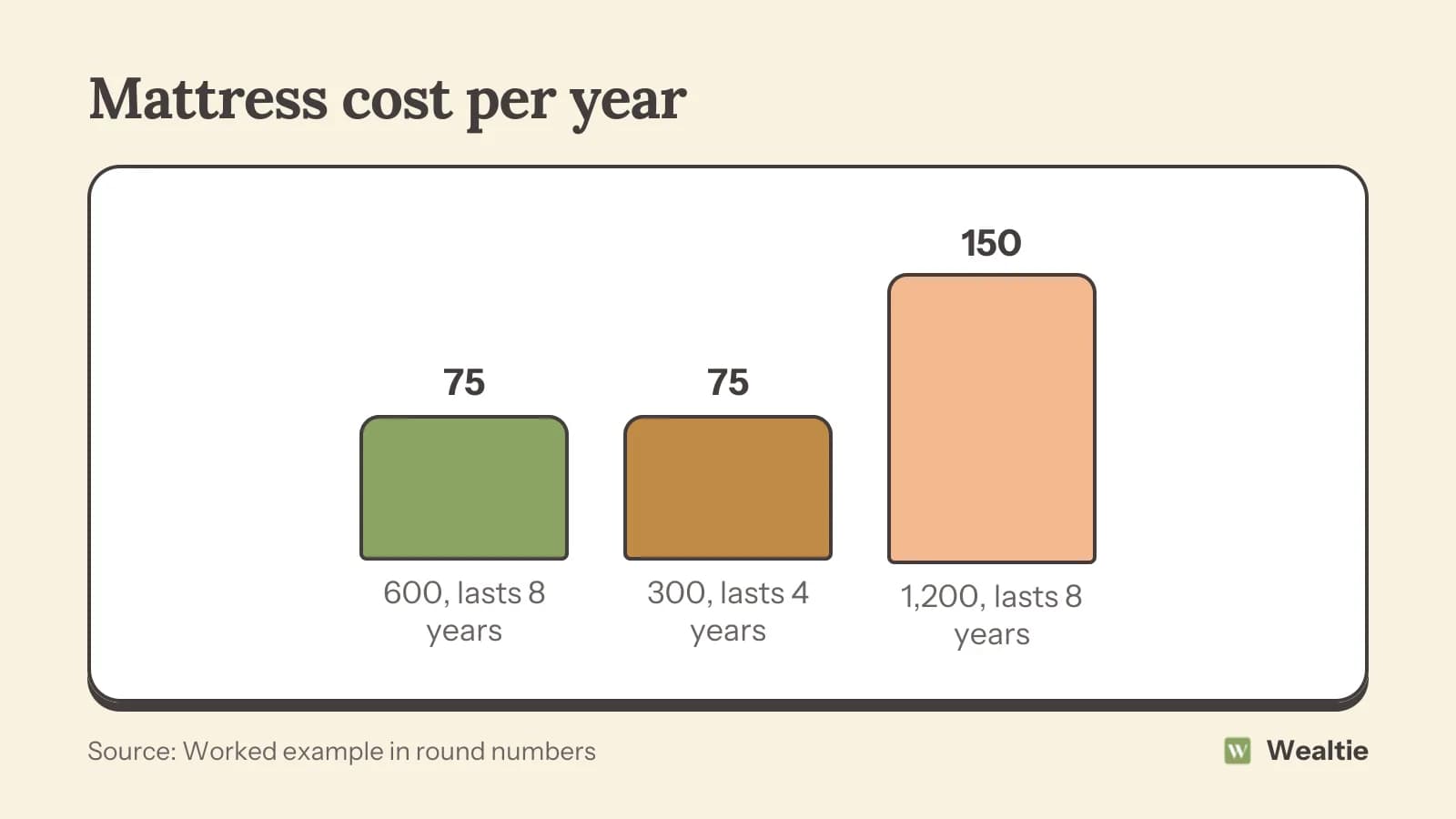
The 300 and 600 mattresses cost the same per year, but the 600 one means one purchase instead of two. The 1,200 mattress costs twice as much per year, so it needs to be noticeably better to be worth it. Cost per use explains the method.
What affects the price?
Materials, size, brand and where you buy it. Some of that is real quality, like the type of springs or foam and how well it's made. Some of it is marketing and branding. Two mattresses with similar materials can be priced very differently.
Compare what's inside, the trial period, the warranty and reviews from people who've slept on it for a while, not just the brand or the advertising. Reviews written after several months tell you more than first impressions.
When is the best time to buy?
When you need one, or during sales you'd shop in anyway. Mattresses go on sale often, so a "sale price" is common, and the full price is sometimes rarely charged. A price alert, or comparing several shops, shows you what's normal.
If your current mattress is still comfortable, there's no need to replace it on a schedule. Replace it when it's sagging, lumpy or affecting your sleep. Waking up stiff, or sleeping better in other beds, are common signs it's time.
How do you compare mattresses fairly?
Look at the same size, the materials, the trial length, the warranty and the delivery and returns costs. A cheaper mattress with a long trial and free returns can be better value than a pricier one with no trial. Write the key details for two or three options side by side, and the decision often makes itself. Old-mattress removal is sometimes extra, so add it to the price if you need it.
How do trial periods help?
Many sellers offer a trial period, where you can return the mattress if it doesn't suit you. That's valuable, since it's hard to judge a mattress in a few minutes in a shop. Keep the receipt and any packaging requirements in mind. Read the terms: some charge for collection, require you to keep it for a minimum time, or only accept returns in certain conditions.
Should you buy a second-hand mattress?
Usually not, for hygiene and support reasons. A mattress topper can be a cheaper way to make an older mattress more comfortable for a while, if the base is still in good shape. Buying second-hand covers what's better bought new.
How do you make a mattress last longer?
Rotate it regularly if the maker recommends it, use a protector, and make sure the bed base supports it properly. A good base can matter as much as the mattress, so check yours before blaming the mattress. Airing the room and keeping a protector on also helps it stay fresh for longer, which matters if you're aiming for eight years or more. If a mattress develops a fault within the warranty, contact the seller, since many cover sagging beyond a certain depth.
What size and type should you choose?
The right size for the bed and room, and a firmness that suits how you sleep. Bigger sizes cost more, so measure the room and the bed frame first. Firmness is personal, and a mattress that's too firm or too soft is a poor buy at any price, which is why a trial period matters. Couples with different preferences might look at mattresses with two firmness zones, or a topper on one side. Ask for a sample or try similar models in a shop before buying online, then compare the online price.
How do you save for a mattress in Wealtie?
If it's a big purchase, add a savings account for it and move a monthly amount in as a transfer, so your net worth tracker shows it growing. Log the purchase in your Home category in expense categories when you buy.
Questions people ask
Enough for one that's comfortable and lasts. Think in cost per year: a 600 mattress lasting eight years costs 75 a year.
Only if they're noticeably better or last longer. Higher prices often include branding, so compare materials, trials and warranties.
When you need one, or during sales you'd use anyway. Mattresses go on sale often, so compare prices across shops.
Usually not, for hygiene and support reasons. A topper can make an older mattress more comfortable for a while.
This article is general information, not financial, tax or legal advice. Your situation is your own; check the numbers that apply to you before you act on them.