Budgeting: Garden shed cost: buying, building and the base
Garden shed cost depends on the size and material, and the base and assembly can add almost as much as a small shed. In a worked example, an 8 by 6 timber shed costs 650 all in, including a 150 base.
 By Wealtie Team · 3 min read

Key takeaways
- Garden shed cost includes the shed, a solid base and assembly.
- Timber sheds need treating, while metal and plastic need less care.
- Choose a size that fits what you'll store, plus a little room to grow.
- A shed can save money if it replaces a storage unit.
How much does a garden shed cost?
A garden shed gives you somewhere to store tools, bikes, garden furniture and all the things that don't fit in the house. Garden shed cost depends on its size, the material and the quality, but people often forget the extras: a solid base, assembly and, for timber sheds, treatment to protect the wood.
Here's a worked example of a common 8 by 6 timber shed, in round numbers that work in any currency:
| Cost | Amount |
|---|---|
| Shed | 400 |
| Base | 150 |
| Assembly | 60 |
| Treatment and felt | 40 |
| Total | 650 |
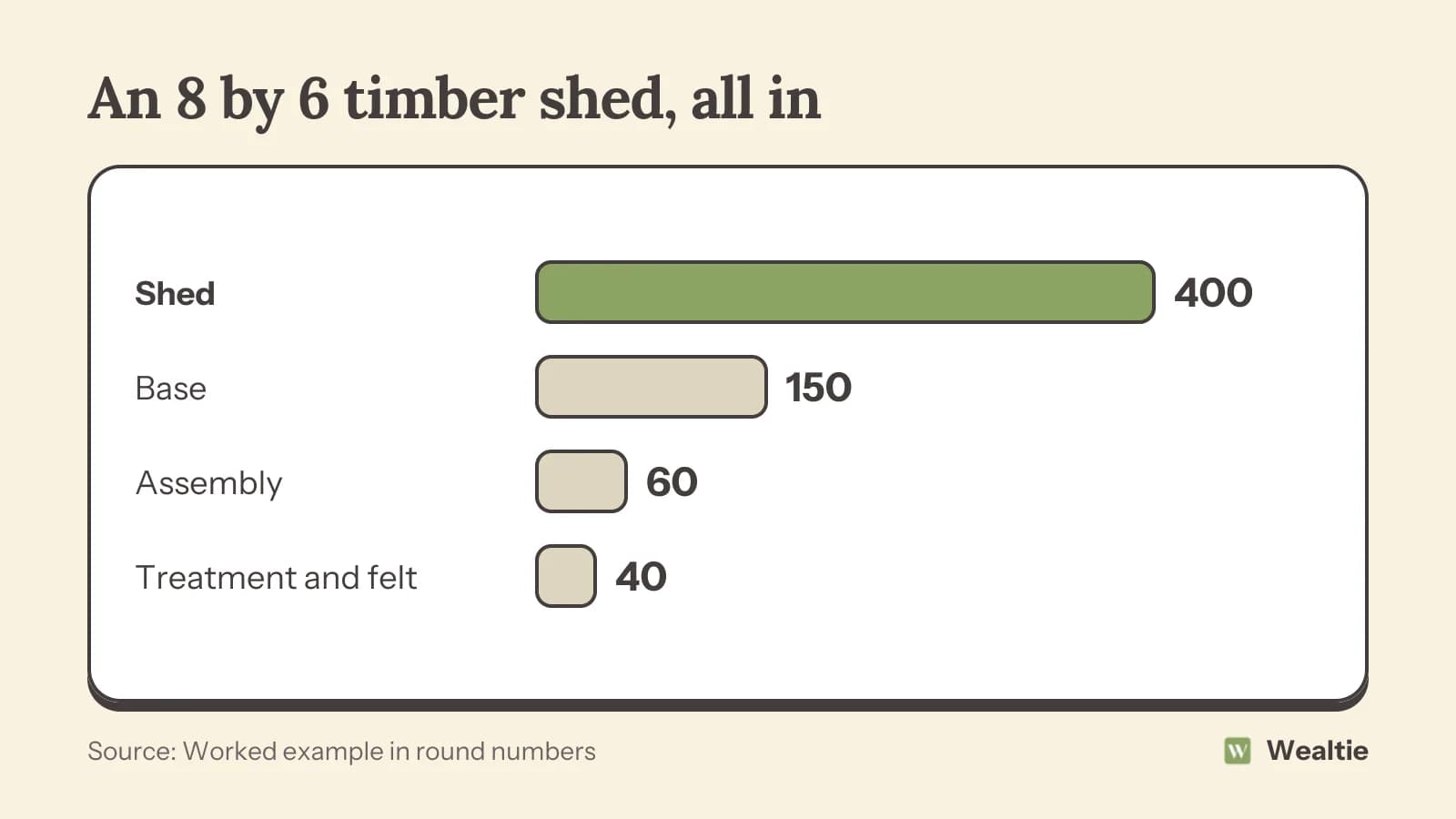
The shed itself is 400, but the base, assembly and treatment add 250. A metal shed of a similar size might cost around 300, and a plastic one around 500, often with less upkeep. Prices vary a lot by size, quality and supplier.
Which material should you choose?
Timber
Traditional and attractive, and easy to add shelves and hooks to. Timber needs treating every year or two to stop rot, and roofs may need re-felting.
Metal
Secure and low maintenance, often cheaper than timber. Metal sheds can get hot or develop condensation, and they're harder to customise.
Plastic
Low maintenance and rot-proof, with no treating needed. Usually more expensive than metal but easy to assemble.
Why does the base matter?
A shed needs a solid, level base, or it can warp, let in water and rot. Concrete slabs, paving slabs or plastic grid bases are common options. Paving or a grid base is often cheaper and easier to lay yourself than concrete. Skipping the base can shorten a shed's life and cost more in the long run.
How do you choose the right size?
List what you'll store, like a lawnmower, bikes, tools and furniture, and allow some extra space for things you'll add later. A shed that's too small means clutter, while one that's too big wastes money and garden space. Check whether planning rules limit shed size or height where you live.
How do you save on a shed?
Buy at the end of the season
Garden retailers often discount sheds in autumn and winter.
Assemble it yourself
Many sheds come flat-packed with instructions. With a friend and a free day, you can save the assembly fee.
Lay a simple base
Paving slabs or plastic grid bases can be laid without specialist help.
Buy second-hand
Sheds are often sold second-hand when people move. Check for rot and plan how you'll take it down and transport it.
Look after it
Treating timber regularly and fixing small leaks quickly makes a shed last many years.
Can a shed save you money?
If you're paying for a storage unit, a shed could pay for itself quickly. At 60 a month, a storage unit costs 720 a year, more than an all-in shed. Is a storage unit worth it? covers that comparison. A shed also keeps tools and bikes safe, which can help when you rent, borrow or buy tools. Before buying, it's worth decluttering, since you may need less space than you think. How to sell things you don't use covers clearing out.
Security matters if you'll store bikes, tools or garden machinery. A sturdy lock, strong hinges and frosted or no windows make a shed less tempting to thieves. Some home insurance policies cover items in sheds only if they're locked, so check your policy. A good padlock and a ground anchor for bikes cost little compared with replacing stolen items.
Think about where the shed will go before you buy. A spot with easy access, away from overhanging trees and with room to open the door fully, makes it much more useful. Leaving a little space around the shed for air to circulate and for treating the walls helps it last longer.
Inside, simple shelves, hooks and a pegboard make the most of the space, so a smaller shed can hold more. Many people find a well-organised small shed works better than a larger cluttered one.
If you're planning a workshop or garden office rather than storage, budget for insulation, electrics and better windows, which can cost much more than the shed itself.
Finally, plan for upkeep from the start. A yearly coat of treatment and checking the roof each autumn keep a timber shed in good shape for many years.
Keep the instructions and any guarantee paperwork somewhere safe, since some makers cover the timber against rot for several years if the shed was treated as recommended.
How can Wealtie help you plan garden costs?
Log the shed, base and treatment in a home or garden expense category, and set a budget for the project. Seeing all the extras together helps you plan the full cost before you buy.
Questions people ask
In a worked example, an 8 by 6 timber shed cost about 650 including the shed, base, assembly and treatment.
Yes. A solid, level base stops the shed warping and rotting, and helps it last much longer.
Metal is cheaper and low maintenance. Timber looks traditional and is easy to customise but needs regular treatment.
Buy at the end of the season, assemble it yourself, lay a simple base, buy second-hand and look after it.
This article is general information, not financial, tax or legal advice. Your situation is your own; check the numbers that apply to you before you act on them.