Budgeting: How to budget for a garden makeover without overspending
A garden makeover budget covers hard landscaping like a patio and fencing, soft landscaping like lawn and plants, and extras like lighting and furniture. In a worked example, a makeover of a small garden costs about 5,000.
 By Wealtie Team · 3 min read

Key takeaways
- A garden makeover budget covers hard landscaping, planting and extras.
- In a worked example, a makeover of a small garden costs about 5,000.
- Hard landscaping like patios costs the most, so plan it first.
- Doing it in stages, and doing some work yourself, spreads the cost.
How much does a garden makeover cost?
A garden makeover can range from a weekend of planting to a full redesign with new patios, paths, fencing and lighting. The cost depends on the size of the garden, how much you change and whether you do the work yourself or hire a landscaper. Hard landscaping, like patios, paths, walls and fences, usually costs the most. Soft landscaping, like lawn, plants and borders, costs less, especially if you do it yourself. In a worked example, a makeover of a small garden costs about 5,000.
Starting with a plan helps you avoid spending on things that need to be redone later.
What does a garden makeover cost?
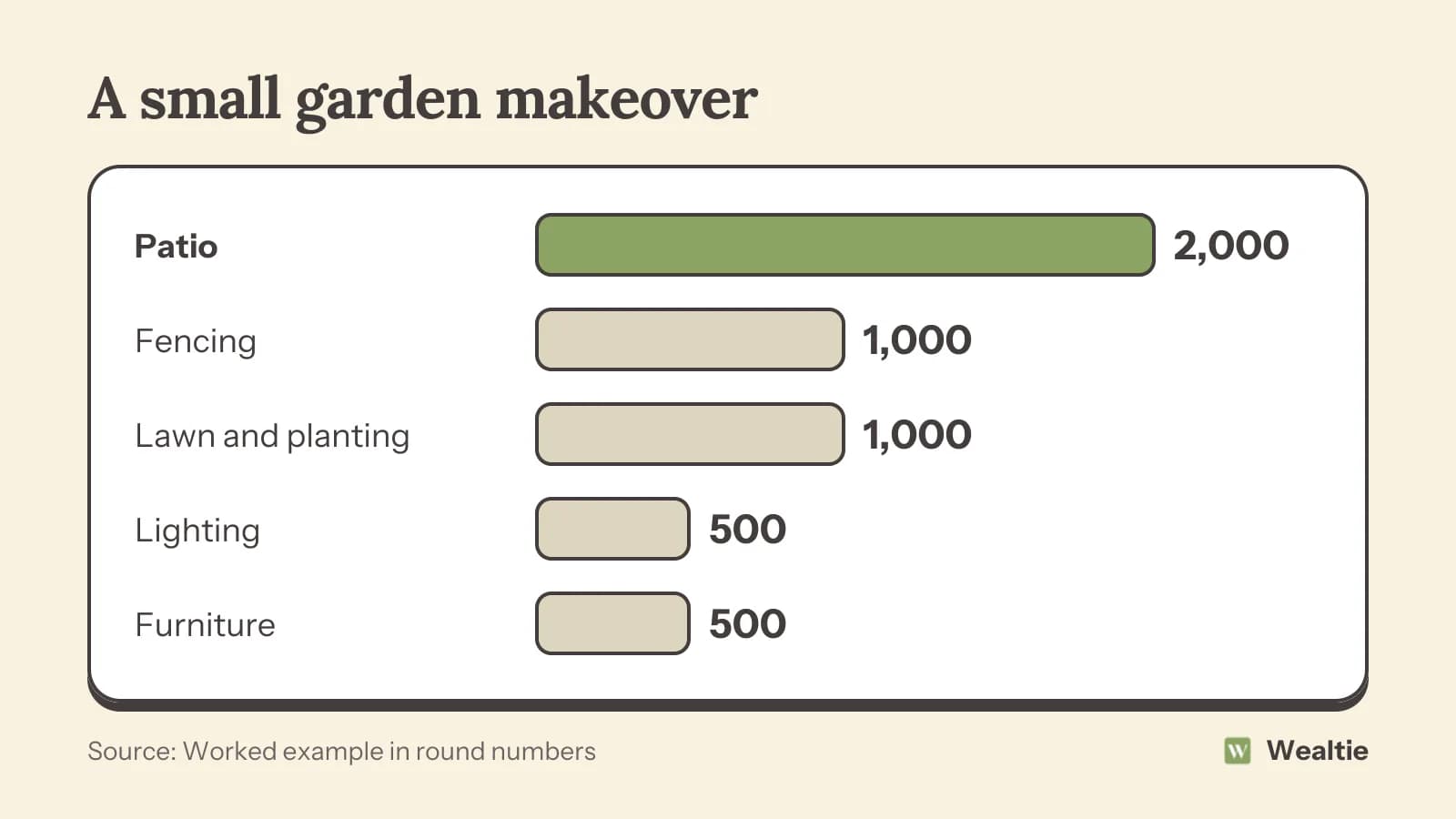
Here's a worked example for a small garden, in round numbers that work in any currency:
| Item | Cost |
|---|---|
| Patio | 2,000 |
| Fencing | 1,000 |
| Lawn and planting | 1,000 |
| Lighting | 500 |
| Furniture | 500 |
| Total | 5,000 |
A larger garden, expensive paving or a professional design can cost several times more. A refresh with new plants and a few pots can cost far less.
How do you set a garden makeover budget?
Decide how you'll use the garden
Think about what you want: space to eat outside, a lawn for children, a vegetable patch, somewhere quiet to sit, or low maintenance. Your answers decide where to spend. A garden that suits how you live is better value than one copied from a magazine.
Spend a few weeks watching how the sun moves across the garden and where it stays damp or shady. A patio in the wrong place, always in shade at dinner time, is an expensive mistake. Drawing a simple plan on paper, with the patio, lawn, beds and paths marked, helps you see the whole design before you spend anything. It also makes quotes easier to compare, since every landscaper is pricing the same thing.
Plan hard landscaping first
Patios, paths, walls and drainage are expensive and hard to change later. Get them right first, then plan planting around them.
Get quotes for the big jobs
For patios, fencing and walls, ask at least three landscapers for written quotes. Check what's included, from removing old materials to clearing up.
Leave room for extras
Waste removal, skip hire, tool hire and unexpected problems like poor drainage can add up. Set aside a little extra for them. Gardens often hide surprises, like buried rubble, tree roots or old foundations, that only appear once digging starts. A contingency of a tenth of the budget, about 500 in the worked example, covers most of these without derailing the plan. If you don't need it, it can go towards furniture or plants.
What should you do yourself and what should you hire out?
Planting, laying turf, painting fences and building simple raised beds are good jobs to do yourself. They save labour costs and don't need special skills. Patios, walls, steps and electrical work like outdoor lighting are usually best left to professionals, since mistakes can be costly or unsafe. Hiring tools for a weekend costs far less than buying them. Rent, borrow or buy tools covers how to decide.
How can you make over a garden for less?
- Work in stages: patio and fence this year, planting and lighting next year.
- Grow from seed or cuttings: much cheaper than buying grown plants.
- Swap plants with neighbours: many gardeners have plants to share.
- Use reclaimed materials: old bricks, paving and wood can look great and cost less.
- Choose plants that suit your garden: they thrive without extra cost or care.
- Buy furniture at the end of summer: prices often drop.
- Keep the lawn: reshaping it costs far less than replacing it.
How to save money on gardening has more ideas.
Do it in stages
In the worked example, the patio and fencing could be done first for 3,000, with lawn, planting, lighting and furniture following the next year for 2,000. It spreads the cost and lets you see how you use the space before finishing it.
How do you save for a garden makeover?
Divide the cost by the months until you want to start. For 5,000 over a year, that's about 420 a month. A sinking fund for the garden keeps the money separate. Remember that a garden needs looking after once it's done. The home maintenance budget covers ongoing upkeep.
How do you track a garden makeover in Wealtie?
Add a garden category to your expense categories and set a budget for it, so you can see how plants, materials and landscaper payments compare with your plan as the project goes on.
Questions people ask
In a worked example, a makeover of a small garden costs about 5,000 for a patio, fencing, lawn and planting, lighting and furniture.
Hard landscaping like patios, paths, walls and fencing usually costs the most.
Work in stages, grow plants from seed, swap plants, use reclaimed materials and do planting and painting yourself.
For patios, walls, steps and outdoor electrics, yes. Planting, turfing and painting are good jobs to do yourself.
This article is general information, not financial, tax or legal advice. Your situation is your own; check the numbers that apply to you before you act on them.