Budgeting: Garage conversion cost: what to budget for
Garage conversion cost is usually lower than building an extension, since the walls and roof already exist. In a worked example, converting a single garage into a bedroom or office costs 14,000.
 By Wealtie Team · 3 min read

Key takeaways
- Garage conversion cost is usually far less than a similar-sized extension.
- Insulation, the floor and replacing the garage door are the main costs.
- Check permissions and building rules before you start.
- Think about where you'll store what's in the garage now.
How much does a garage conversion cost?
Turning a garage into a living space is one of the most popular ways to add a room without building from scratch. The walls, roof and foundations are already there, which keeps garage conversion cost well below the price of an extension. Many people turn their garage into a bedroom, home office, playroom, gym or utility room.
Here's a worked example for converting a single attached garage into a bedroom or office, in round numbers that work in any currency:
| Stage | Cost |
|---|---|
| Floor, walls and insulation | 5,000 |
| Replacing the garage door | 3,000 |
| Electrics, heating and plastering | 3,500 |
| Windows, door and finishing | 2,500 |
| Total | 14,000 |
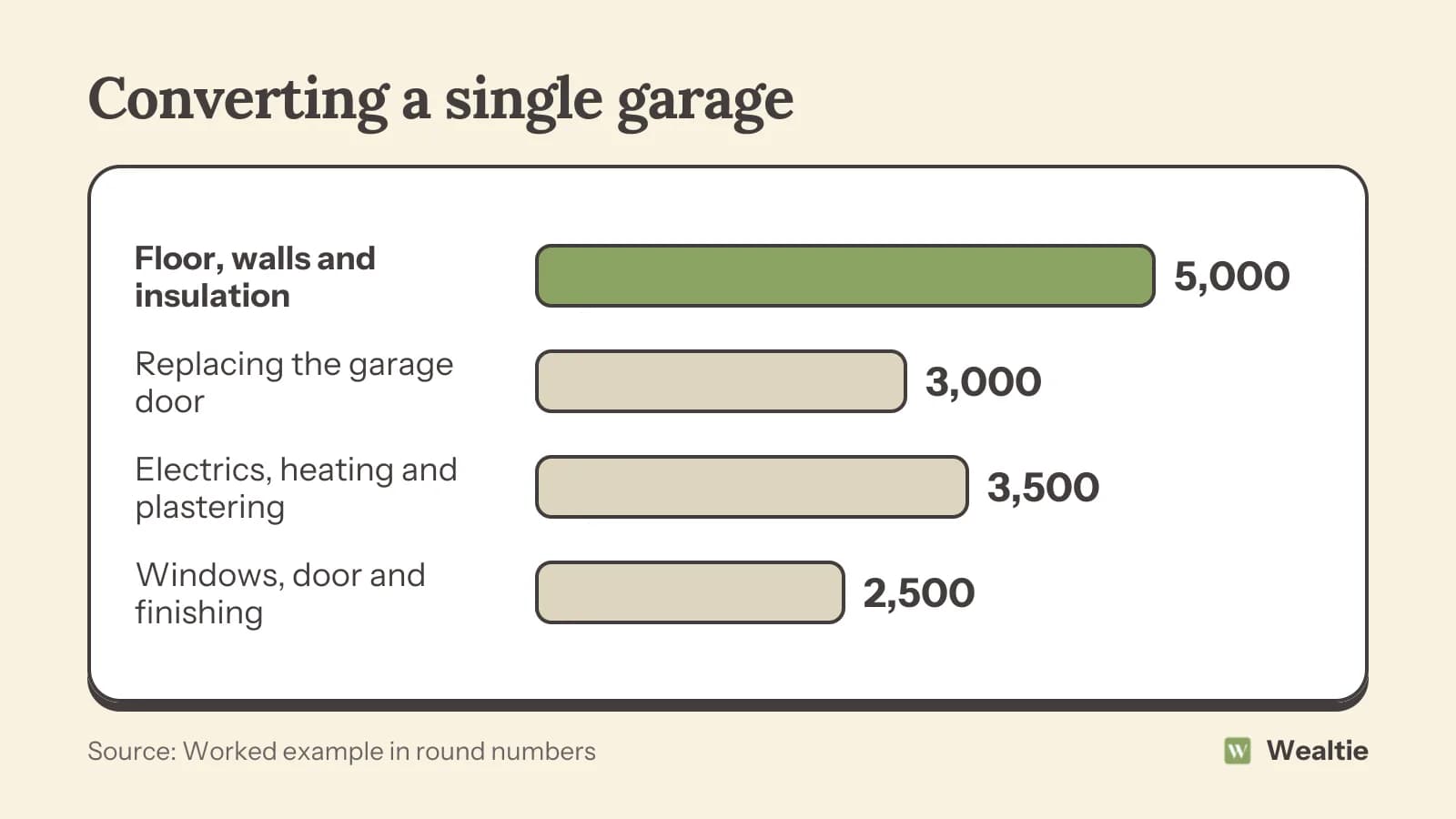
A similar-sized extension might cost 30,000 or more, so a conversion can give you the same extra space for less than half the price. Costs vary by area, the condition of the garage and how you finish the room, so get local quotes.
What does the work involve?
Raising and insulating the floor
Garage floors are often lower than the house and not insulated. Raising the floor, adding a damp-proof layer and insulation makes it comfortable and level with the rest of the home.
Insulating walls and roof
Garages are built to store cars, not keep people warm. Insulating the walls and roof is essential for a liveable room and lower heating bills.
Replacing the garage door
The garage door is usually replaced with a wall and a window, which is one of the larger costs, especially if brickwork needs to match the house.
Electrics, heating and plastering
You'll need sockets, lighting, heating and plastered walls. Extending your central heating or adding an electric heater are both options.
Finishing
Flooring, decorating, skirting boards, doors and any built-in storage complete the room.
What affects the cost?
Garage condition
A sound, dry garage with good foundations is cheaper to convert than one with damp, cracks or a weak roof.
Attached or detached
Attached garages are usually easier and cheaper to convert, since they connect to the house's heating, electrics and walls. Detached garages may need more work.
The room's purpose
A bathroom or kitchen in the new room adds plumbing and drainage, which raises the cost. Bedrooms and offices are simpler.
Size
Double garages cost more to convert but give you much more space for the money.
Do you need permission?
Many garage conversions don't need planning permission, but rules vary by country and area, and some homes have restrictions. Most conversions do need to meet building rules, for example on insulation, fire safety and ventilation. Check with your local authority before starting, and keep the paperwork, since buyers will ask for it if you sell.
Is a garage conversion worth it?
It can add value
An extra bedroom or office can make a home more appealing to buyers and may add value, especially in areas where space is in demand.
It can save moving costs
If you need more space, a conversion can cost much less than moving. Moving costs like fees, taxes and removals add up quickly.
It can earn money
A converted garage could become a room to rent out, depending on local rules. How to earn income by renting out a room covers what's involved.
You'll lose storage and parking
Think about where your bikes, tools and garden equipment will go, and whether losing a parking space matters where you live. If you'll need a storage unit, add that monthly cost to the comparison.
How do you budget for a garage conversion?
Get detailed quotes
Ask several builders for written quotes that list each stage. A detailed quote makes it easier to compare and spot what's missing.
Add a buffer
Keep about a tenth of the total, around 1,400 here, for surprises like damp or foundation problems.
Plan the finishing
Furniture, a desk or bed and decoration aren't always in the builder's quote. How to plan a home office budget covers kitting out a workspace if that's the plan.
Pay in stages
Agree stage payments tied to finished work rather than paying most of it upfront.
Before you commit, live with the plan for a while. Clear the garage, put a few chairs or a desk in it and see how the space feels and how you'd use it. It's also a good time to sort through what's stored there, sell what you don't need and work out how much storage you'll still want. That small step often changes the layout, the budget and sometimes the decision itself, and it's much cheaper than changing your mind halfway through the build.
Talk to neighbours who've converted similar garages, too. They can tell you what it cost, how long it took and what they'd do differently, which is useful when you're comparing quotes.
How can Wealtie help you manage the project?
Set a budget for the conversion and log each stage payment and purchase in its own expense categories. You'll see how much is left at each stage and spot overruns early.
Questions people ask
Costs vary by area and garage condition. In a worked example, converting a single garage into a bedroom or office cost 14,000.
Yes, usually. The walls, roof and foundations already exist, so a conversion often costs less than half the price of a similar extension.
Often not, but rules vary by area. Most conversions do need to meet building rules, so check with your local authority first.
It can, especially if it adds a bedroom or office in an area where space is in demand. Losing parking may matter to some buyers.
This article is general information, not financial, tax or legal advice. Your situation is your own; check the numbers that apply to you before you act on them.