Budgeting: Dog grooming cost: groomer vs grooming at home
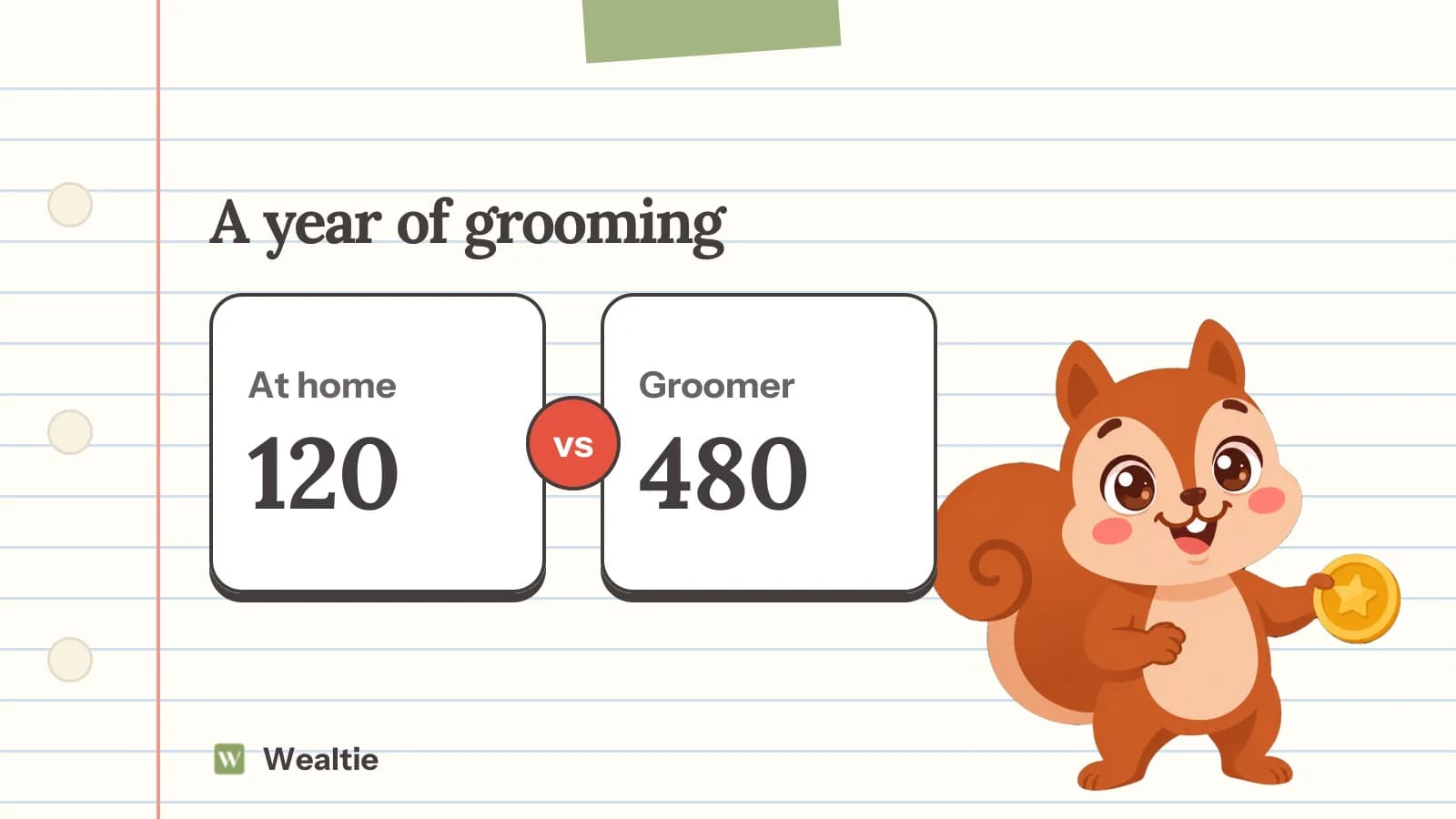
Dog grooming cost depends mostly on your dog's coat, since some breeds need a professional groom every few weeks. In a worked example, a groomer every six weeks costs 480 a year, while grooming at home costs about 120.
 By Wealtie Team · 3 min read
Key takeaways
- Dog grooming cost depends on coat type, size and how often you groom.
- Breeds with coats that keep growing need professional grooms most often.
- Brushing and bathing at home stretches the time between groomer visits.
- Home clippers pay for themselves over time for some dogs.
How much does dog grooming cost?
Grooming keeps your dog comfortable, healthy and clean. For some dogs, it's mostly brushing and the occasional bath at home. For others, especially breeds with coats that keep growing, it means a trip to a professional groomer every few weeks. Dog grooming cost depends on your dog's coat type, its size, how matted the coat gets and how often it needs a full groom.
Here's a worked example of a year of grooming for a medium-sized dog with a coat that needs regular trimming, in round numbers that work in any currency:
| Approach | Yearly cost |
|---|---|
| Groomer every 6 weeks | 480 |
| Groomer twice a year, home in between | 200 |
| Fully at home | 120 |
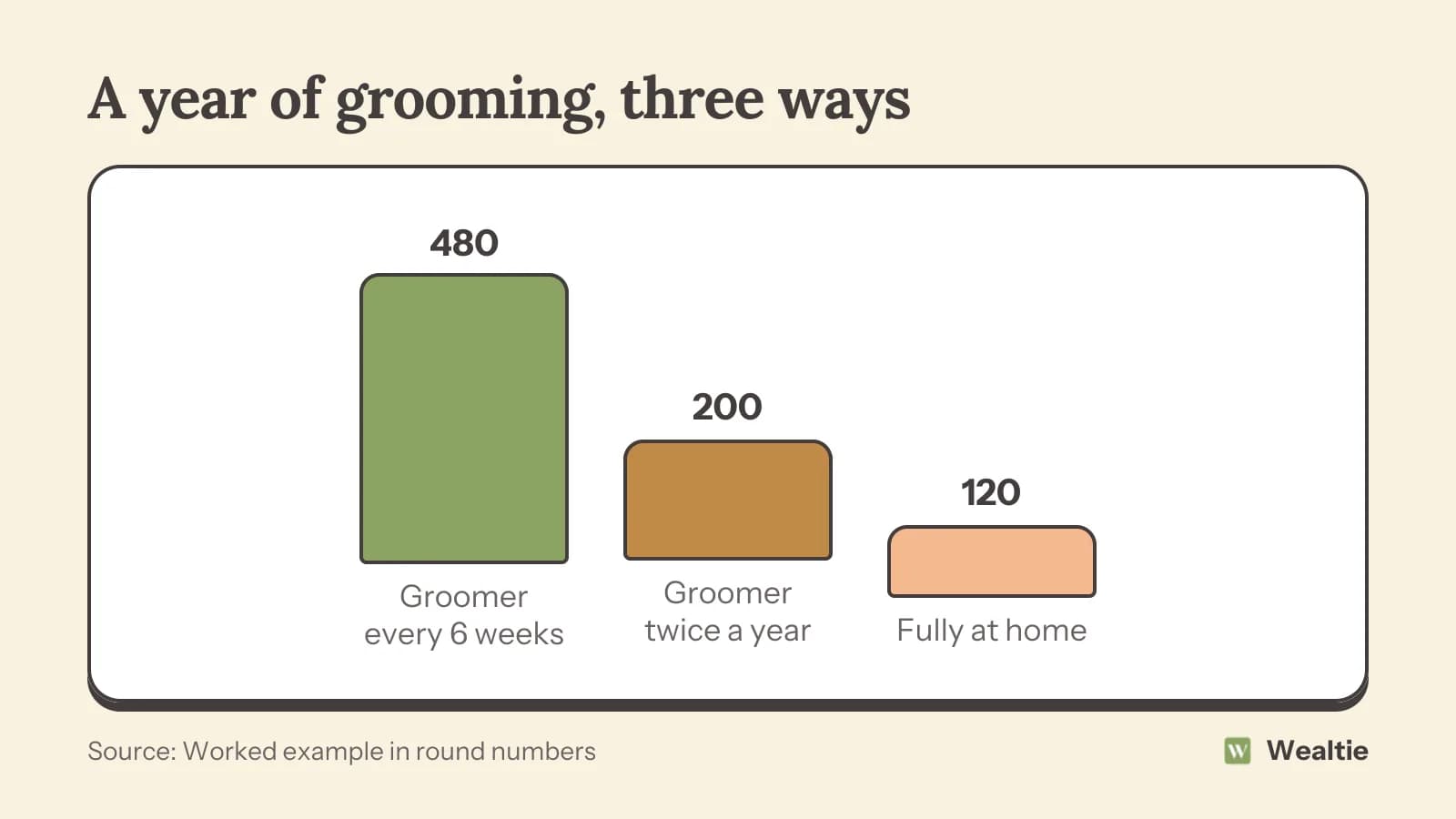
At 60 a visit, eight groomer appointments a year come to 480. Mixing two professional grooms with home care in between costs about 200, including a basic home kit. Grooming fully at home costs about 120 in the first year for clippers, brushes and shampoo, and less after that.
What affects the cost of a groom?
Coat type
Dogs with coats that keep growing, like poodles and many poodle crosses, need regular cuts. Double-coated breeds shed heavily and need de-shedding. Short, smooth coats usually need little professional help.
Size
Larger dogs take longer to bath, dry and trim, so they usually cost more.
Coat condition
Matted coats take longer and may need extra charges, or a full shave-down. Regular brushing at home prevents this.
Extras
Nail trims, ear cleaning, teeth brushing and special shampoos may cost extra.
Location and type of groomer
Mobile groomers who come to your home often charge more for the convenience. Salons in cities usually charge more than those in smaller towns.
What can you do at home?
Brushing
Regular brushing removes loose hair, prevents mats and keeps the coat healthy. It's the most useful thing you can do between grooms, and it costs only the price of a good brush.
Bathing
Most dogs only need a bath every so often. A dog shampoo and a towel are all you need for most breeds.
Nail trimming
Clippers or a nail grinder let you trim nails at home. If you're not confident, ask your vet or groomer to show you.
Ear and teeth care
Checking ears and brushing teeth at home helps prevent problems that can lead to vet bills.
Clipping
Learning to clip your dog's coat takes practice. Clippers can pay for themselves in a few months for dogs that need frequent cuts, but go slowly, and leave tricky areas to a professional at first.
How do you save on dog grooming?
Brush often
A well-brushed dog is quicker and cheaper to groom, and less likely to need extra charges for matting.
Stretch the time between visits
Home bathing and brushing can mean fewer professional grooms each year.
Choose a practical cut
A shorter, low-maintenance trim lasts longer between visits than a styled cut.
Ask about packages
Some groomers offer a lower price for regular bookings or for adding a second dog.
Learn from your groomer
Many groomers are happy to share tips on brushing and trimming between visits, which helps you keep your dog tidy for longer.
Where does grooming fit in a dog budget?
Grooming is one of several regular dog costs, alongside food, insurance, vet visits and daycare. For coat types that need frequent grooming, it can be a big part of the yearly total. How to budget for a pet covers all the costs together, and the first-year cost of a puppy covers what to expect early on. If you're choosing a breed, grooming needs are worth checking before you decide.
Getting your dog used to grooming early makes everything cheaper and easier. Puppies who learn to enjoy brushing, having their paws handled and being bathed are calmer at the groomer, which can mean quicker appointments and fewer extra charges for difficult dogs. Short, positive sessions with treats at home go a long way, and they also make vet checks easier throughout your dog's life.
If your dog finds grooming stressful, ask groomers whether they offer quieter appointments or one-to-one sessions. They may cost a little more, but a calm experience is better for your dog and can stop problems getting worse.
Keep a note of how often your dog needs a groom and what each visit costs. After a year, you will know the real figure and can decide whether home clippers or a different routine would save money without making your dog less comfortable.
How can Wealtie help you track grooming costs?
Add regular groomer appointments as recurring transactions, and log home grooming supplies in a pet expense category. Setting a monthly budget for your dog shows how grooming compares with food, insurance and other costs.
Questions people ask
Costs depend on coat type and size. In a worked example, a groomer every six weeks cost 480 a year at 60 a visit.
Dogs with coats that keep growing often need a groom every four to eight weeks. Short-coated dogs may rarely need one.
Yes. In a worked example, grooming at home cost about 120 in the first year, compared with 480 for regular groomer visits.
Brush often, bathe at home, choose a practical cut and ask about packages for regular bookings.
This article is general information, not financial, tax or legal advice. Your situation is your own; check the numbers that apply to you before you act on them.