Budgeting: Dental implants cost: how to plan and pay for them
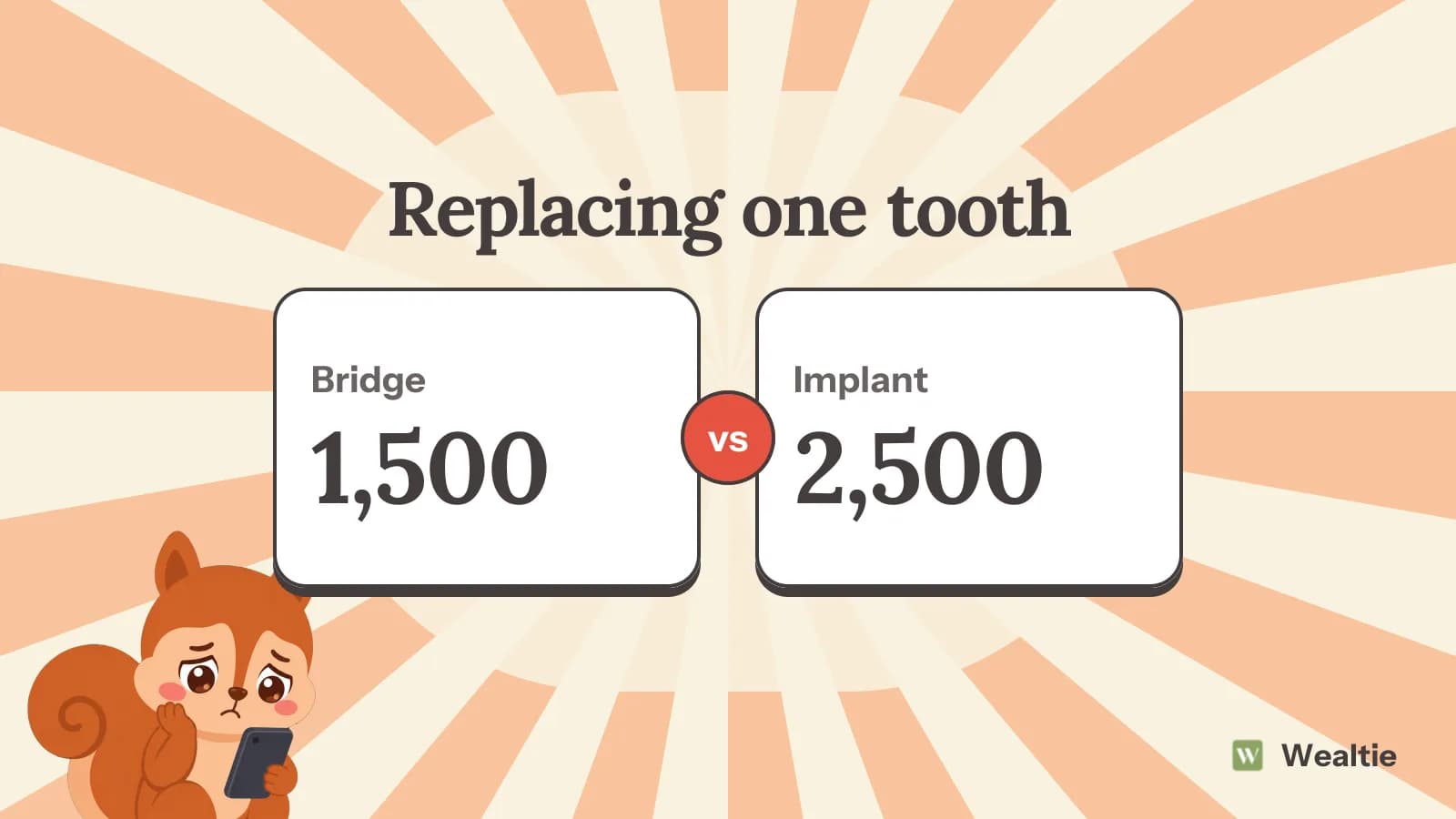
Dental implants cost more upfront than bridges or dentures, but they usually last much longer. In a worked example, a single implant with its crown costs 2,500, against 1,500 for a bridge.
 By Wealtie Team · 3 min read
Key takeaways
- Dental implants cost more upfront than bridges or dentures.
- The price covers several stages, from assessment to the final crown.
- Implants often last longer, which can make them better value over time.
- Saving ahead, finance plans and dental schools can make treatment affordable.
How much do dental implants cost?
A dental implant replaces a missing tooth with a small post placed in the jawbone, topped with a crown that looks and works like a natural tooth. Dental implants cost more than most other dental treatments, because the work happens in several stages over a few months. Prices depend on where you live, the clinic, how many teeth are being replaced and whether you need extra treatment first.
Here's a worked example of a single implant, in round numbers that work in any currency:
| Stage | Cost |
|---|---|
| Assessment and scans | 200 |
| Implant placement | 1,500 |
| Crown | 800 |
| Total | 2,500 |
Some patients need extra work before an implant, like a bone graft or a tooth extraction, which adds to the cost. Ask for a written treatment plan that lists every stage and its price.
How do implants compare with other options?
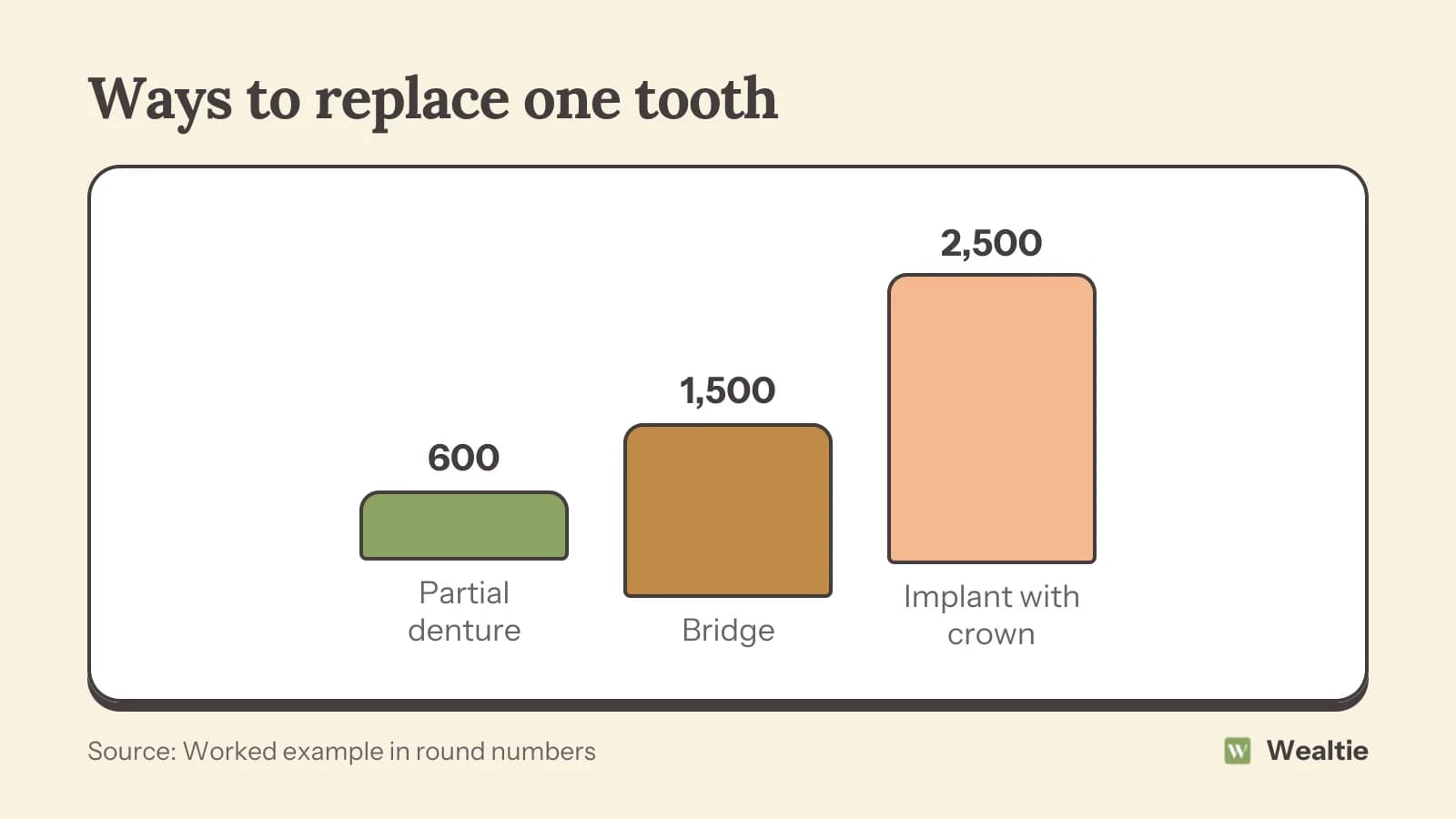
Implants aren't the only way to replace a missing tooth. Here's how the main options compare, in the same round numbers:
| Option | Cost |
|---|---|
| Partial denture | 600 |
| Bridge | 1,500 |
| Implant with crown | 2,500 |
Partial dentures
Removable dentures are the cheapest option, but they can feel less secure and may need replacing or adjusting over time.
Bridges
A bridge fills the gap using the teeth on either side for support. It costs less than an implant, but the neighbouring teeth usually need to be filed down, and bridges may need replacing after some years.
Implants
Implants don't rely on neighbouring teeth and can last many years with good care. That longer life is why many people see them as better value over time, even though the upfront cost is higher.
Your dentist will advise which options suit your mouth and health. Not everyone is suitable for implants, so it's worth getting an assessment before planning the cost.
Why does the price vary so much?
Location and clinic
Prices differ a lot between cities and countries, and between general dentists and specialist clinics.
Materials
Different implant systems and crown materials have different costs.
Extra treatment
Bone grafts, extractions or treatment for gum disease before the implant can add significantly.
Number of teeth
Replacing several teeth may cost less per tooth, especially with implant-supported bridges or dentures.
How do people pay for dental implants?
Saving ahead
Implants are rarely urgent, which gives you time to save. Saving 2,500 over 12 months is about 210 a month. A sinking fund keeps the money separate until treatment starts.
Paying in stages
Since treatment takes months, many clinics let you pay for each stage as it happens, which spreads the cost naturally.
Dental finance
Some clinics offer monthly payments, sometimes interest-free. Spreading 2,500 over 24 months is about 105 a month. Read the terms carefully, especially fees for missed payments. Buy now, pay later covers similar risks.
Insurance and dental plans
Some dental insurance or health insurance covers part of the cost, often with limits. Check your policy before booking. Is health insurance worth it? covers what policies usually include.
Dental schools
Some university dental schools offer implants at lower prices, with treatment carried out or supervised by experienced dentists. Waiting lists can be long.
Should you go abroad for cheaper implants?
Some people travel to countries where implants cost less. It can save money, but treatment needs several visits, and follow-up care or problems can be harder and more expensive to deal with from home. Add travel, accommodation and time off work to the comparison, and research the clinic carefully.
How do you keep dental costs down in general?
Regular check-ups and good daily care help prevent the problems that lead to expensive treatment. How to save money on dental care covers ways to keep everyday dental costs low.
Before agreeing to treatment, it's fair to get a second opinion, especially for larger plans involving several implants. A different dentist may suggest another approach or a different price, and either way you'll feel more confident about what you're paying for. Ask each one what's included, how long the implant is expected to last and what happens if something goes wrong during healing. Clear answers in writing make it much easier to compare quotes and plan the cost.
Looking after an implant well, with careful brushing, cleaning between teeth and regular check-ups, helps it last as long as possible. That long life is what makes the higher upfront price worthwhile, so the aftercare is part of protecting what you've paid for.
How can Wealtie help you plan treatment?
Log each payment in a dental expense category, and set a budget for the treatment plan so you can see how much is paid and how much is left. If you're saving ahead, a monthly line for it keeps you on track until treatment starts.
Questions people ask
Costs vary by location and clinic. In a worked example, a single implant with its crown cost 2,500 in round numbers.
Often, over time. An implant costs more upfront but can last many years and doesn't rely on neighbouring teeth.
Yes. Many clinics offer finance or let you pay for each stage as treatment happens. Check the terms before signing.
Save ahead, pay in stages, check insurance, compare clinics and look at dental schools that offer lower-cost treatment.
This article is general information, not financial, tax or legal advice. Your situation is your own; check the numbers that apply to you before you act on them.