Budgeting: The cost of kayaking: rent, join a club or buy?
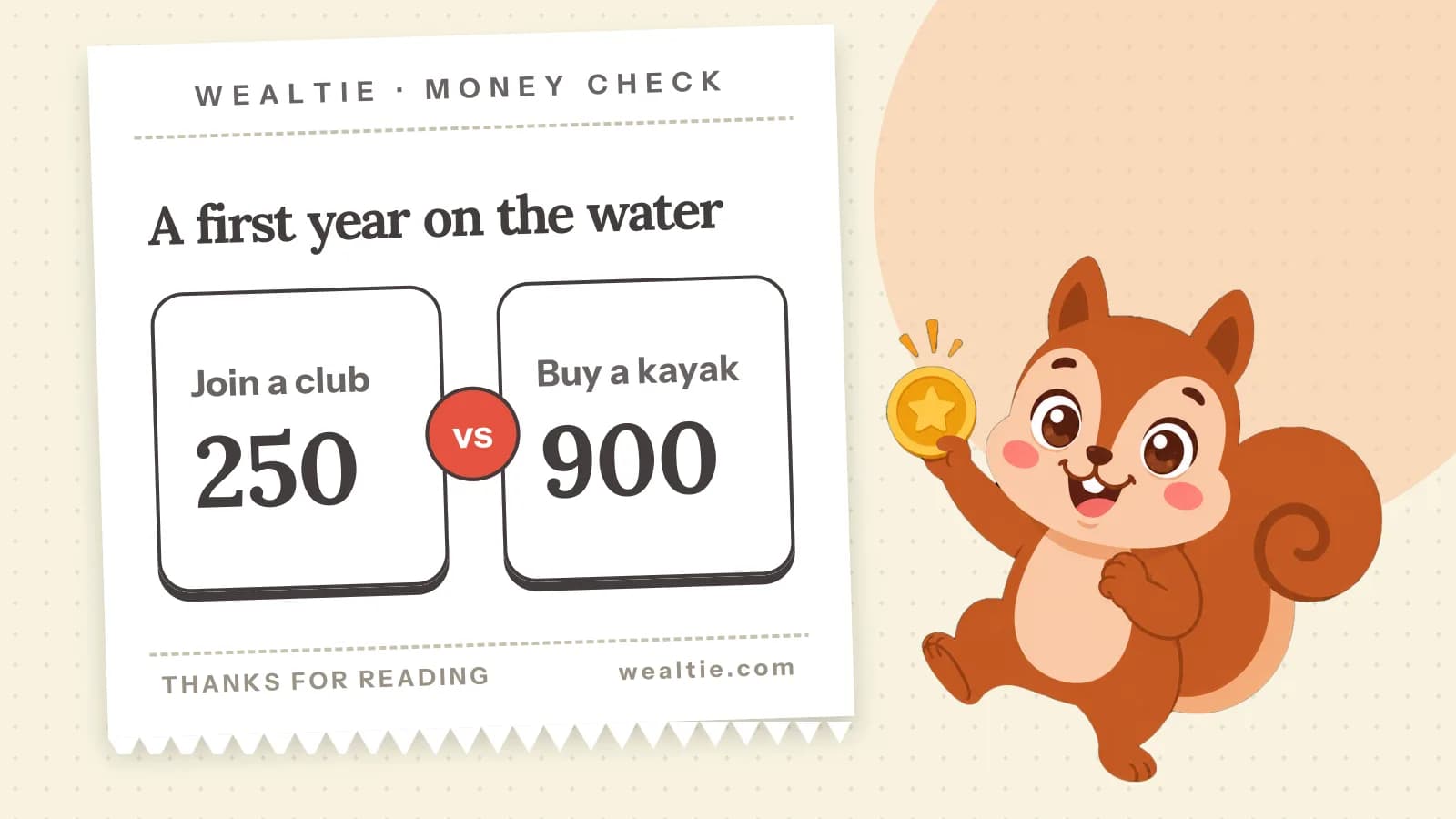
The cost of kayaking depends on whether you rent, join a club or buy your own, and the right choice depends on how often you'll paddle. In a worked example, a year of club membership costs 250, against 900 to buy a kayak and gear.
 By Wealtie Team · 3 min read
Key takeaways
- The cost of kayaking depends on renting, joining a club or buying.
- Clubs often include lessons, boats and safety gear for one yearly fee.
- Buying adds storage, transport and maintenance costs.
- Safety gear and a beginner course matter more than an expensive kayak.
What is the cost of kayaking?
Kayaking is a peaceful way to explore rivers, lakes and coastlines, and it's easier to start than many people think. The cost of kayaking depends mostly on how you get access to a boat. You can rent by the hour, join a club that provides boats and equipment, or buy your own kayak. Each option suits a different level of commitment.
Here's a worked example of a first year of kayaking, in round numbers that work in any currency:
| Option | First-year cost |
|---|---|
| Rent 10 times at 35 | 350 |
| Club membership | 250 |
| Buy kayak, paddle and gear | 900 |
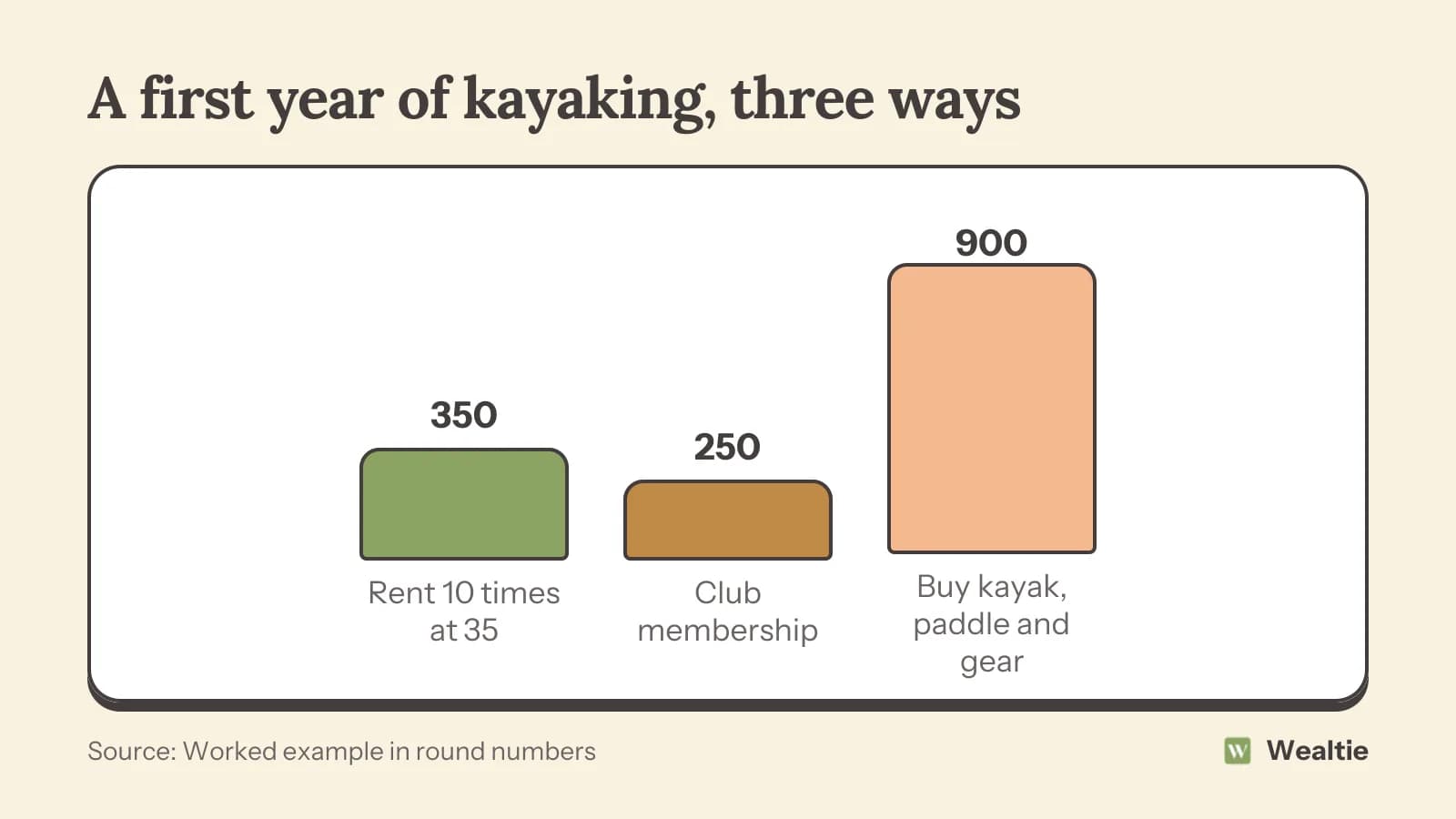
A club membership at 250 a year can be the cheapest way to paddle regularly, since it often includes boats, paddles, buoyancy aids and coaching. Renting suits occasional trips. Buying gives you freedom but costs 900 upfront in this example, before storage and transport.
Should you start with lessons?
A beginner course, which might cost around 120, teaches you how to paddle, steer, get in and out safely and what to do if you capsize. It also helps you decide whether you enjoy kayaking before spending more. Many clubs run taster sessions and courses for new members.
What are the options?
Renting
Rental centres on lakes, rivers and beaches let you paddle without owning anything. It's ideal for holidays and occasional trips, but costs add up if you go often.
Joining a club
Clubs usually provide boats and kit, organise trips and sessions, and offer coaching and safety support. Paddling with others is also safer and more sociable. For regular paddlers who don't want to store a kayak, a club is often the best value.
Buying your own
Owning a kayak means you can paddle whenever and wherever you like. It works best if you have somewhere to store it and a way to transport it. Inflatable and folding kayaks solve some storage and transport problems but have their own trade-offs.
What costs come with owning a kayak?
The kayak and paddle
Sit-on-top kayaks are popular with beginners and often cheaper. Touring and sea kayaks cost more.
Safety gear
A buoyancy aid is essential. Depending on where you paddle, you may also want a whistle, a spray deck, a wetsuit or a dry bag.
Transport
Roof racks, straps or a trailer may be needed to get the kayak to the water. These can cost a fair amount.
Storage
A kayak needs space, like a garage, shed or garden. If you don't have space, storage at a club or centre costs extra. Is a storage unit worth it? covers storage costs more generally.
Access and permits
Some waterways require a licence or permit, often included in club membership. Check local rules.
How do you keep kayaking affordable?
Join a club first
Paddling with a club for a season lets you try different kayaks and learn what you like before buying.
Buy second-hand
Kayaks are durable and often sold second-hand with paddles and gear included. Check for cracks and damage.
Share with a partner or friend
Sharing a kayak, or a tandem kayak, splits the cost.
Paddle locally
Choosing nearby water cuts travel costs, which add up over a season.
Look after your gear
Rinsing kit after use, especially in salt water, and storing it out of the sun helps it last longer. How to save money on a hobby covers more ways to keep hobbies affordable.
Is kayaking safe on a budget?
Saving money should never mean skipping safety. A buoyancy aid, checking the weather and water conditions, telling someone where you're going and paddling with others are essential. A club or course is the best place to learn these habits.
Think about where you'll paddle most. Calm lakes and slow rivers suit simple, cheaper kayaks, while sea kayaking needs more specialist boats, safety skills and gear. Starting on sheltered water with a club or guide is the safest and cheapest way to learn, and it helps you understand what kind of paddling you enjoy before spending on equipment that suits it.
Many families start with a tandem kayak or sit-on-top boats, which are stable and fun for children. Renting for a day on holiday is a good way to test whether the whole family enjoys it before buying anything. If they do, a second-hand tandem can be a cheaper option than two separate boats.
Keep track of how often you paddle in your first season. If you go out most weekends, buying may make sense the following year. If it's a few times in summer, renting or a club will usually be cheaper.
How can Wealtie help you track hobby costs?
Log lessons, rentals, club fees and gear in a hobby expense category, and set a monthly budget for kayaking. Comparing a season of rentals with a club fee shows which option suits you best.
Questions people ask
In a worked example, a year of club membership cost 250, renting 10 times cost 350 and buying a kayak and gear cost 900.
Renting is cheaper for occasional trips. For regular paddling, a club is often cheapest, while buying suits people with storage and transport.
A beginner course is strongly recommended. It teaches safe paddling and what to do if you capsize.
A buoyancy aid is essential. Depending on conditions, a whistle, wetsuit, spray deck and dry bag may also be needed.
This article is general information, not financial, tax or legal advice. Your situation is your own; check the numbers that apply to you before you act on them.