Budgeting: How much do braces cost, and how to pay for them
The answer to how much do braces cost depends on the type, how long treatment lasts and where you live, and many families spread the cost with a payment plan. In a worked example, a course of treatment costs about 3,000, or 125 a month over two years.
 By Wealtie Team · 3 min read

Key takeaways
- How much braces cost depends on the type, the length of treatment and where you live.
- In a worked example, a course of treatment costs about 3,000, or 125 a month over two years.
- Children may be eligible for public funding in some countries; check before paying privately.
- Retainers and follow-up appointments are often extra, so ask what the price includes.
How much do braces cost?
It depends on the type of braces, how complex the treatment is and where you live. Braces straighten teeth and correct bites over months or years, and they're one of the bigger health costs many families face. Prices vary a lot between countries and practices, so it's worth getting more than one quote.
The type of treatment that's right for you or your child is a decision for an orthodontist. This guide covers the money side.
How do the types compare?
Here's a worked example of typical costs for a full course of treatment, in round numbers that work in any currency:
| Type | Cost |
|---|---|
| Metal braces | 3,000 |
| Ceramic braces | 3,800 |
| Clear aligners | 4,000 |
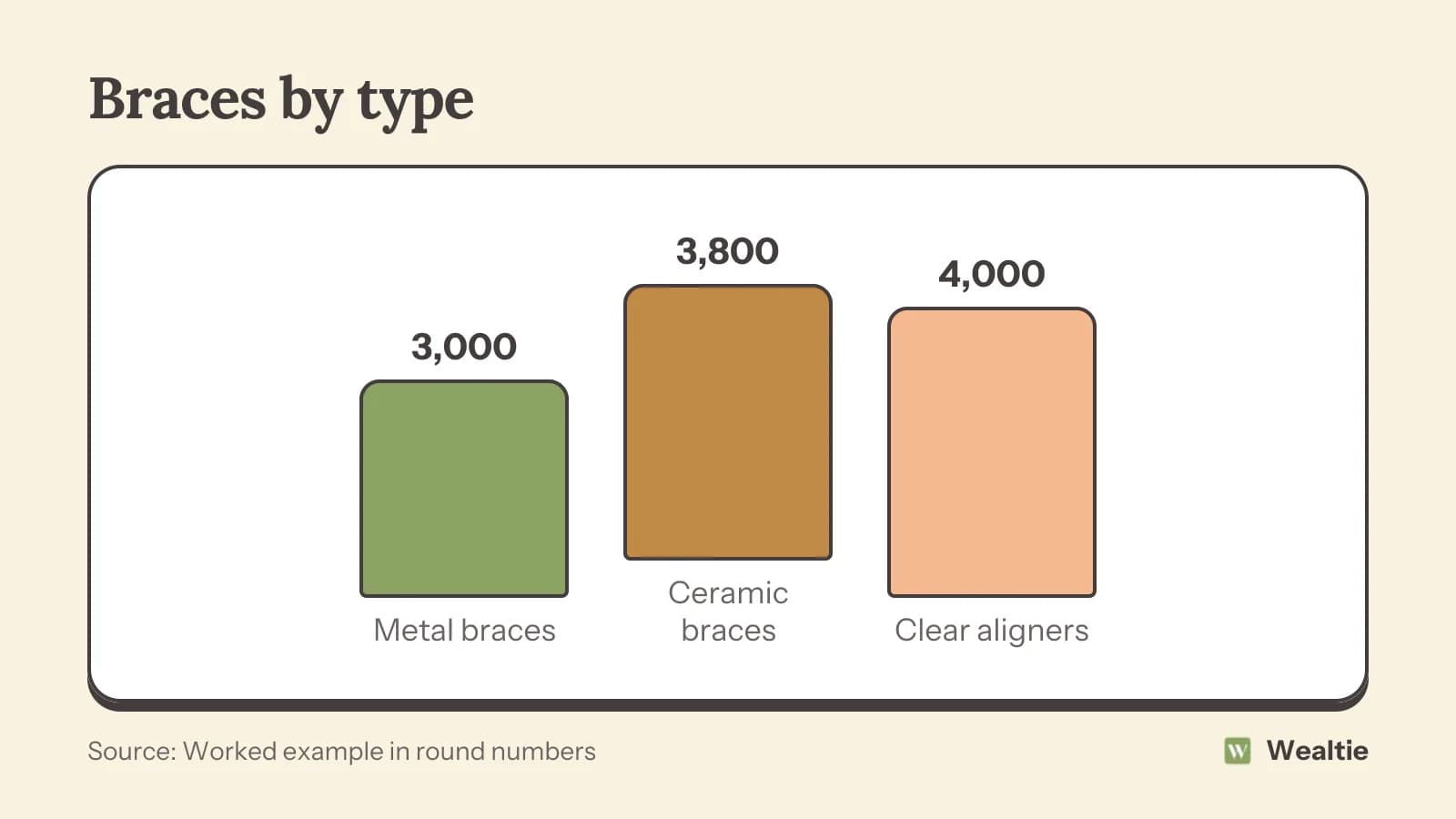
Metal braces are usually the most affordable and work for most cases. Ceramic braces are less visible but often cost more. Clear aligners, which are removable, can cost more again and aren't suitable for every case. Your own prices could be quite different.
What affects the price?
Several things:
- How complex the case is, since some need more adjustment than others
- How long treatment lasts, often one to two years or more
- The type of braces
- Where you live, since prices vary by area
- Whether one or both jaws need treatment
Ask what the quoted price includes. Some quotes cover everything from the first consultation to retainers, while others charge separately for X-rays, appointments or retainers. An orthodontist will usually explain the options at a first consultation, which is sometimes free, so ask for a written treatment plan and cost you can compare.
Is there public funding for braces?
In some countries, children can get orthodontic treatment through a public health service if their need meets certain criteria. Adults usually pay privately. Check with your dentist whether your child might be eligible before paying for private treatment. Some dental insurance policies cover part of orthodontic costs, especially for children, so check your policy too.
How to save money on dental care covers other ways to keep dental costs down.
Adult braces
More adults now have braces, often for comfort or confidence as well as health. Adult treatment is usually paid privately, so getting quotes from two or three orthodontists and asking about payment plans matters even more. Some practices offer lower prices for treating only the front teeth, where that's suitable.
How do you pay for braces?
Many practices offer payment plans that spread the cost over the treatment. In the worked example, 3,000 over two years is 125 a month. Check whether a plan is interest-free or adds interest, and whether there's a deposit. Paying upfront can sometimes get a discount. Ask what happens to the plan if treatment finishes early or takes longer than expected.
Saving before treatment starts is another option, if you have time. If your child's dentist has mentioned they may need braces in a year or two, putting a little aside each month means the cost is easier to manage. A sinking fund works well for costs like this.
Avoid high-interest borrowing
Credit cards and general loans can make treatment much more expensive. If a practice's own plan isn't available, compare the full cost of any borrowing before agreeing.
What about retainers and aftercare?
Plan for them. After braces come off, a retainer keeps teeth in place, and many people need to wear one for years. Retainers can be lost or broken, and replacing one might cost about 150 in the worked example. Ask whether the first retainer is included and what replacements cost. Looking after it, and keeping it in its case, saves money over time.
Are cheaper at-home aligners worth it?
They can cost less, but they're not right for everyone. Some at-home aligner services involve less in-person supervision. Talk to a dentist or orthodontist first about whether your case is suitable, and understand what happens if treatment doesn't go as planned. A cheaper option that needs correcting later can end up costing more.
How do you budget for treatment as a family?
Include the monthly payments in your family budget for the length of treatment, alongside regular dental check-ups. Remember small extras too, like travel to appointments, time off work or school, and special toothbrushes. Missed appointments can sometimes carry a fee, so keep a note of dates and give notice if you need to change one. How to budget for medical bills covers planning for health costs more generally.
How do you track braces payments in Wealtie?
Set up a payment plan as a recurring transaction with the bill tracker, so it logs itself each month until treatment ends. Give dental and orthodontic costs their own line in your expense categories, so you can see the full cost over time.
Questions people ask
In a worked example, about 3,000 for metal braces, 3,800 for ceramic and 4,000 for clear aligners. Prices vary a lot by place and case.
Often, yes. Many practices offer payment plans. In a worked example, 3,000 over two years is 125 a month.
In some countries, children who meet certain criteria can get treatment through a public health service. Check with your dentist.
Sometimes. Ask whether the first retainer is included and what replacements cost.
This article is general information, not financial, tax or legal advice. Your situation is your own; check the numbers that apply to you before you act on them.