Budgeting: The cost of an allotment, and how much food it gives back
The cost of an allotment covers the yearly rent, tools, seeds and plants, compost, water and a few extras like a shed or netting. In a worked example, a first year costs about 300, and later years about 150.
 By Wealtie Team · 3 min read

Key takeaways
- The cost of an allotment covers rent, tools, seeds, compost and extras.
- In a worked example, a first year costs about 300 and later years about 150.
- Tools are the biggest first-year cost, and second-hand ones work well.
- Growing what you eat most, and what costs most in shops, gives the best value.
What is the cost of an allotment?
An allotment is a plot of land you rent, usually from a local council or allotment society, to grow your own fruit, vegetables and flowers. The rent is often modest, but it's not the only cost. In the first year, you'll need tools, seeds and plants, compost and a few extras like netting and canes. After that, costs drop, since tools last for years and you can save your own seeds. In a worked example, a first year costs about 300, and later years about 150.
Rents, plot sizes, waiting lists and rules vary a lot by area, so check with your local council or allotment group. Some areas have long waiting lists, while others have plots available straight away. Half plots are often available too, and they're a good size for beginners. A smaller plot means less rent, fewer seeds and far less weeding, which makes it easier to keep on top of while you learn.
Some sites also ask new plot holders to clear the ground themselves, which can take a few weekends of hard work. Others hand over plots that are ready to plant. Asking about the condition of the plot before you sign up helps you plan your first year's work and spending.
What does a first year on an allotment cost?
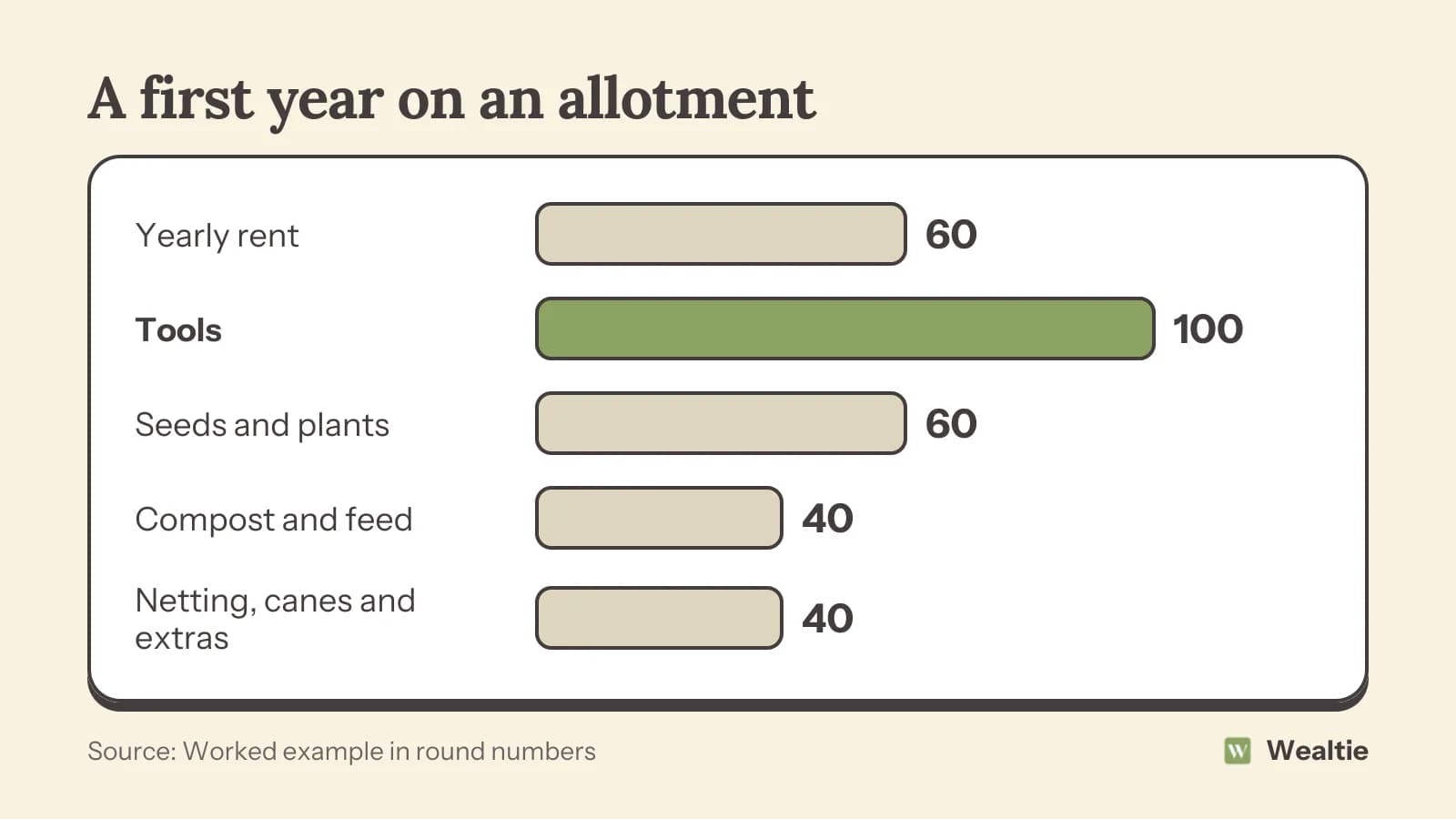
Here's a worked example for a standard plot, in round numbers that work in any currency:
| Item | First year |
|---|---|
| Yearly rent | 60 |
| Tools | 100 |
| Seeds and plants | 60 |
| Compost and feed | 40 |
| Netting, canes and extras | 40 |
| Total | 300 |
In later years, the rent, seeds and compost add up to about 150, since the tools and most of the extras are already in place.
What are the main allotment costs?
Rent
The yearly rent is usually paid upfront. Some sites charge extra for water or membership of the allotment society, which often gives access to cheap seeds and compost.
Tools
A spade, fork, rake, hoe, trowel and watering can are the basics. Second-hand tools are easy to find and often better made than cheap new ones. Many allotment sites have members happy to lend or give away spare tools.
Seeds and plants
Seeds are cheap, especially if you share packets with other plot holders. Young plants cost more but save time. Swapping seeds and seedlings with neighbours cuts costs further.
Compost and feed
Making your own compost from garden and kitchen waste is free and improves the soil over time. Some sites have shared manure or compost deliveries.
Extras
Netting to protect crops from birds, canes for climbing beans, a water butt and perhaps a shed or a small greenhouse can come later.
What else adds to the cost of an allotment?
The biggest hidden cost is time. A plot needs regular visits, especially in spring and summer, and a neglected plot can be taken back by the council. Travel to the site can add up if it's not close to home. A shed, greenhouse or polytunnel can cost far more than everything else put together, so it's worth waiting a season to see whether you need one. Bad weather and pests can also wipe out a crop, so expect some losses, especially in the first year while you learn what grows well on your plot.
Is an allotment worth it?
It can be, both for the food and for what it gives you beyond money. Fresh air, exercise and time outdoors are part of the value. On cost alone, growing the crops that are expensive in shops, like soft fruit, salad leaves, herbs and courgettes, gives the best return. Cheap staples like potatoes and onions save less. A productive plot can save a good amount on fruit and veg in summer and autumn, though savings in the first year are usually smaller while you learn. How to save money on groceries covers other ways to cut food costs.
Start small
You don't need to plant the whole plot in the first year. Cover part of it to keep weeds down, and grow a few easy crops well. It saves money on seeds and makes the work manageable. How to save money on gardening has more tips, and rent, borrow or buy tools helps with equipment.
How do you track allotment costs in Wealtie?
Add a garden or allotment category to your expense categories and set a yearly budget for it. Comparing what you spend with how much less you buy at the shops in summer shows whether your plot is paying its way.
Questions people ask
In a worked example, a first year costs about 300 for rent, tools, seeds, compost and extras. Later years cost about 150.
It can be, especially if you grow crops that are expensive in shops, like soft fruit, salad leaves and herbs.
A spade, fork, rake, hoe, trowel and watering can are the basics. Second-hand tools work well.
It needs regular visits, especially in spring and summer. Starting with part of the plot keeps the work manageable.
This article is general information, not financial, tax or legal advice. Your situation is your own; check the numbers that apply to you before you act on them.