Budgeting: How to manage money after a bereavement, one step at a time
To manage money after a bereavement, deal first with what can't wait, like the funeral and urgent bills, and give yourself time for the rest. A simple short-term budget helps while income and costs settle.
 By Wealtie Team · 3 min read
Key takeaways
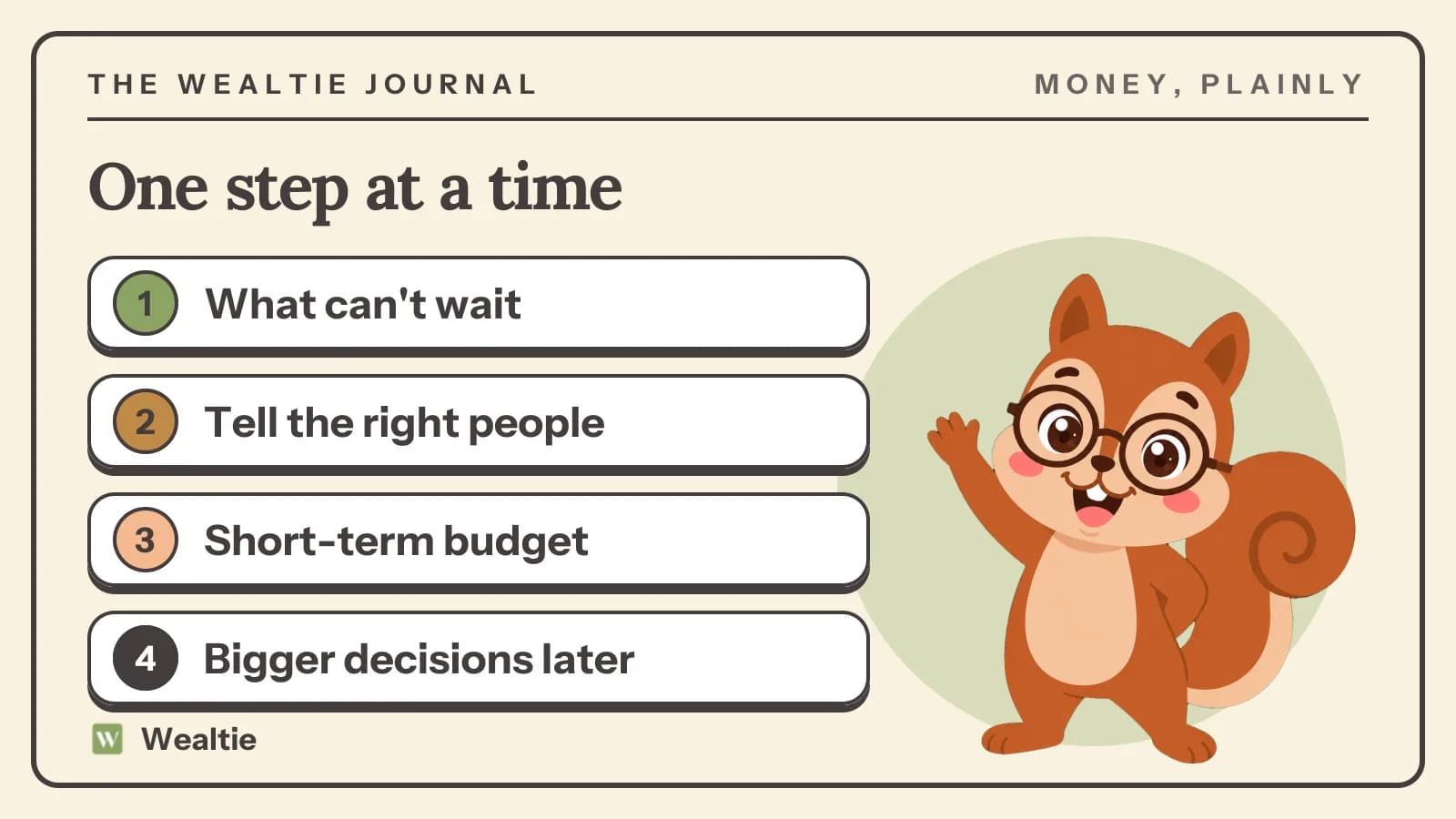
- After a bereavement, deal first with what can't wait and give yourself time for the rest.
- Tell banks, providers and employers, and ask about support for bereaved people.
- A simple short-term budget helps while income and costs settle.
- Avoid big financial decisions for a while if you can.
Where do you start with money after a bereavement?
Losing someone close is overwhelming, and money is often the last thing you want to think about. Yet some financial tasks can't wait, and others feel urgent even when they aren't. It helps to separate the two. Deal first with the few things that must happen soon, like arranging the funeral and keeping essential bills paid. Then give yourself time for everything else. Most decisions about money after a bereavement don't need to be made in the first weeks.
If you can, ask a friend or family member to help with paperwork and phone calls. It's a lot to carry alone, and many people are glad to be given a practical way to help. Keeping a simple notebook of who you've called, what they said and what happens next saves repeating yourself and helps whoever is supporting you.
What needs doing first?
Arrange the funeral
Funeral costs are often the first big expense. Some people have a funeral plan, savings or life insurance that covers it, and in some places, there's support for people on low incomes. How to budget for a funeral covers the costs and options.
Keep essential bills paid
Make sure rent or mortgage, energy and other essentials keep being paid. If the person who died paid bills from their own account, those payments may stop when the bank is told, so check which bills need moving.
Register the death and get copies
You'll usually need official copies of the death certificate for banks, insurers and other organisations. Ordering several at once saves time later, since many organisations want to see an official copy before they'll close or transfer an account.
Who should you tell?
Banks, building societies, insurers, pension providers, employers, utility companies and any lenders need to know. In some countries, a single government service can notify several organisations at once. Ask each one whether they have a bereavement team, since they often make the process gentler and may freeze interest or payments while things are sorted out. Rules about estates, wills and benefits vary by country, so check what applies where you live, or ask an advice service.
How do you budget when income changes?
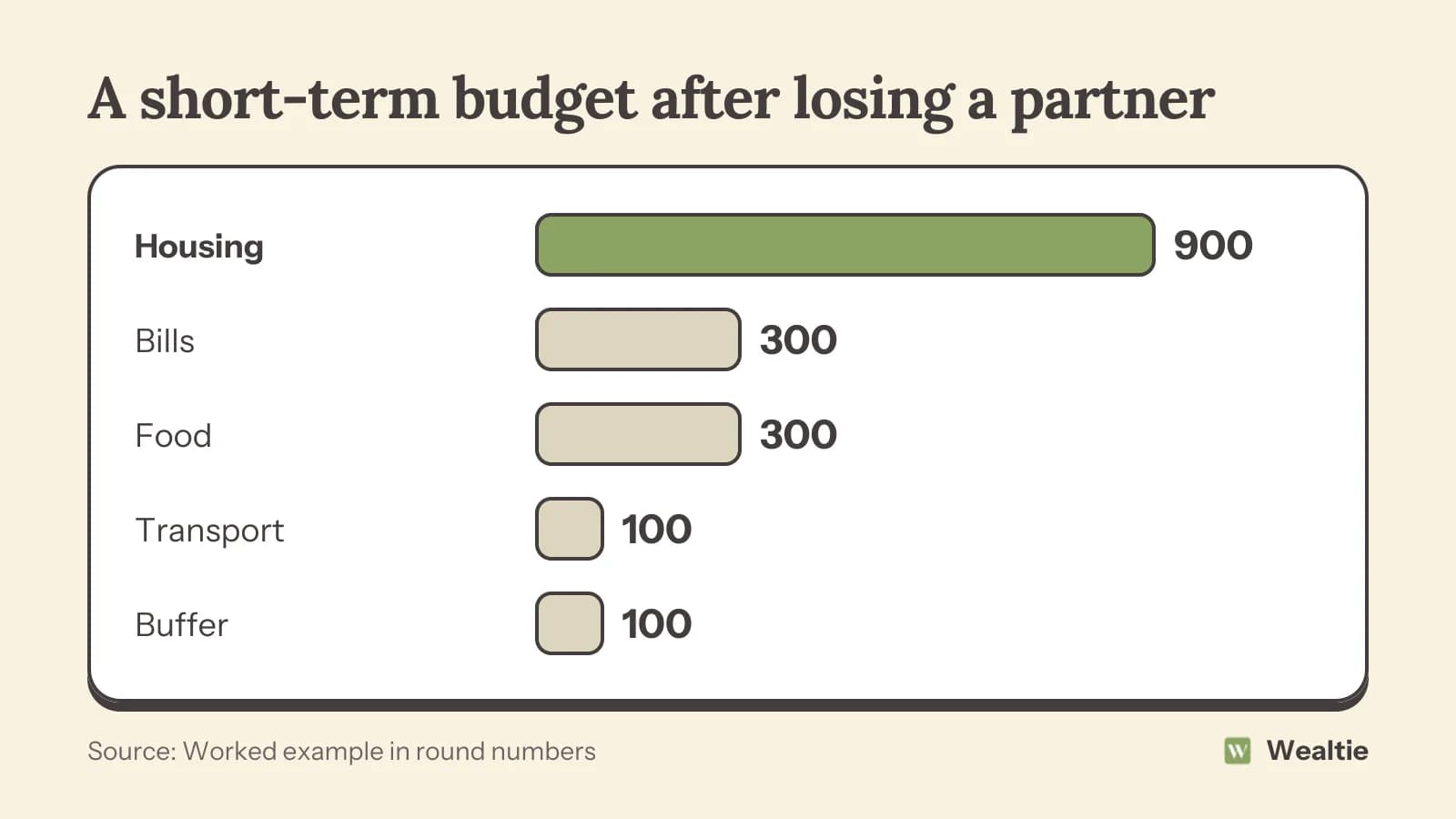
If you've lost a partner, household income may drop sharply, while many costs stay the same. A simple short-term budget helps you see where you stand. Here's a worked example for someone now living on one income, in round numbers that work in any currency:
| Cost | Each month |
|---|---|
| Housing | 900 |
| Bills | 300 |
| Food | 300 |
| Transport | 100 |
| Buffer | 100 |
| Total | 1,700 |
Start with essentials only. Pause anything you can for now, and look at whether you qualify for bereavement benefits, a pension from your partner or a life insurance payout. These can take time to arrive, so knowing what's coming helps you plan the next few months.
Talk to lenders if money is tight
If you're struggling to pay a mortgage, loan or card, contact the lender early and explain what's happened. Many have support for bereaved customers, like payment breaks. Free debt advice services can also help.
When should you make bigger decisions?
If you can, wait a while before making big financial decisions, like selling a home, moving, investing a large sum or lending money. Grief affects how we think, and decisions made in the first months can be hard to undo. If you receive an inheritance or insurance payout, it's fine to leave it somewhere safe while you decide. What to do with an inheritance covers the options when you're ready.
Review your own plans
A bereavement often makes people think about their own affairs. When the time feels right, check your insurance and make or update a will. Which insurance do you need? and the cost of writing a will cover both.
Where can you get support?
Bereavement charities, advice services and counsellors can help with both the emotional and practical sides. If grief is affecting your daily life, talking to a doctor or counsellor can make a real difference. How to afford therapy covers ways to make support fit your budget.
How can Wealtie help in the months after?
Add your accounts in Wealtie to see your money in one place, and add essential bills as recurring transactions, so they log themselves on their date and you can see what's due. Keep spending in a few expense categories with a simple monthly budget while things settle. There's no need to track every detail at first.
Questions people ask
Arrange the funeral, keep essential bills paid and get copies of the death certificate. Most other decisions can wait.
Banks, insurers, pension providers, employers, utility companies and lenders. Ask each one for its bereavement team.
Make a short-term budget with essentials only, check for bereavement benefits and payouts, and talk to lenders early if money is tight.
It's usually best to wait a while before selling a home, moving or investing a large sum, since grief affects decisions.
This article is general information, not financial, tax or legal advice. Your situation is your own; check the numbers that apply to you before you act on them.