Budgeting: How to borrow money from family without damaging the relationship
To borrow money from family, ask clearly, agree how much and when you'll repay, put it in writing and stick to the plan. In a worked example, a loan of 2,000 is repaid at 100 a month over 20 months.
 By Wealtie Team · 3 min read
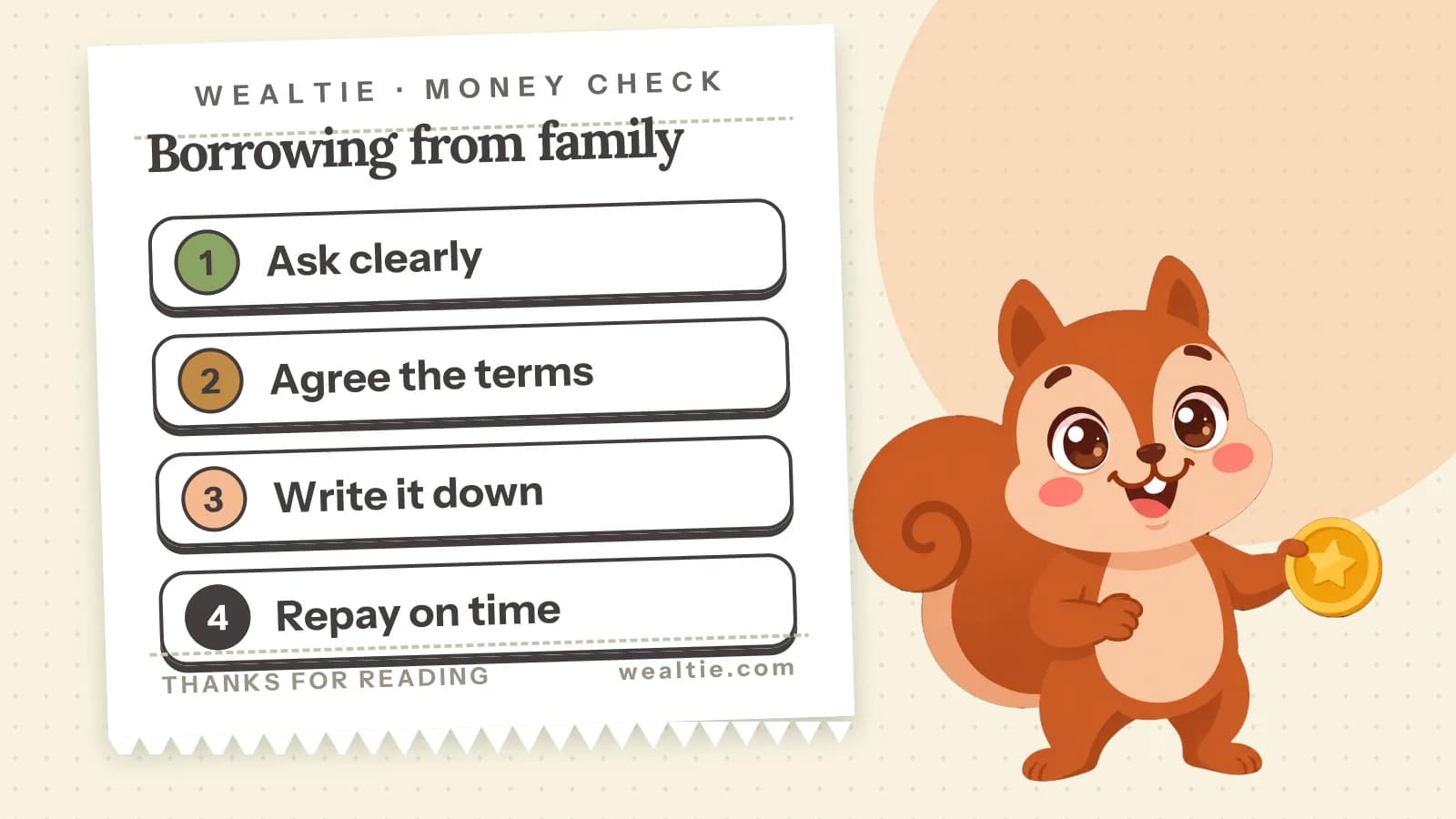
Key takeaways
- To borrow money from family, ask clearly and agree terms upfront.
- Put the amount, repayment plan and what happens if you can't pay in writing.
- In a worked example, 2,000 is repaid at 100 a month over 20 months.
- Treat repayments as a bill, and talk early if you can't pay.
Should you borrow money from family?
Borrowing from family can be a lifeline. It's often cheaper than a bank loan or credit card, with no interest or a low rate, and it can help when other options aren't available. But money between relatives can strain relationships if expectations aren't clear. A loan that's never discussed again can turn into resentment, and a repayment plan that slips can make family gatherings awkward.
The key is to treat it like a real loan, even though it's with someone you love. Clear terms protect both of you and the relationship.
Before asking, think about whether borrowing is the right step at all. Sometimes a budget review, a payment plan with a company you owe or a short-term cut in spending can close the gap without involving family. If borrowing is still the best option, coming to the conversation with a plan shows respect for the person you're asking. It also makes it easier for them to say yes, since they can see how and when the money will come back.
How do you ask to borrow money from family?
Be honest about why you need the money, how much, and how you plan to pay it back. Show that you've thought it through, perhaps with a simple budget. Ask in private, at a calm time, and make it easy for them to say no. They may have their own money worries, and a no shouldn't be taken personally. Payday loan alternatives covers other options if family can't help.
What should you agree?
The amount
Agree the exact amount. Borrow only what you need, not a round number that's more than necessary.
Repayment
Agree how much you'll repay, how often and when you'll start. A regular monthly amount on a set date is easiest to keep track of.
Interest
Many family loans are interest-free, but some families agree a small rate, especially for larger sums. Talk about it openly.
What if you can't pay
Agree what happens if you lose your job or can't make a payment. Knowing the plan in advance avoids awkward conversations later.
Is it a loan or a gift?
Be clear. If it's a gift, say so. If it's a loan, treat it as one. Confusion here causes many family money disputes.
Should you put it in writing?
Yes. A simple written agreement, signed by both of you, sets out the amount, the repayment plan and what happens if things go wrong. It doesn't need to be formal, but it should be clear. It protects both sides and can matter for tax or inheritance, especially with larger sums. Rules vary by country, so for a large loan, such as help with a home, it's worth getting advice.
How do you repay a family loan?
Here's a worked example, in round numbers that work in any currency. You borrow 2,000 and agree to repay 100 a month:
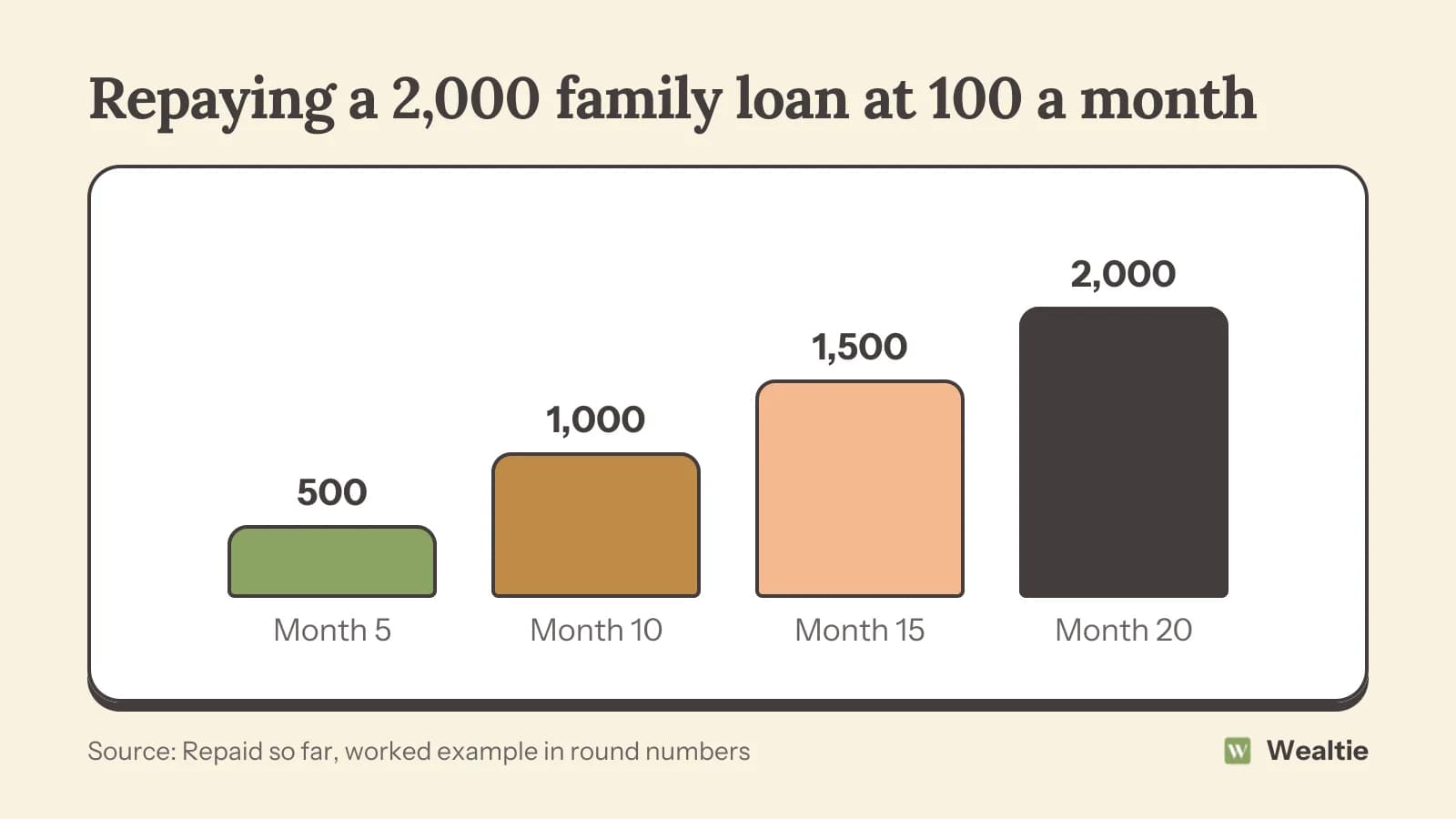
After 20 months, it's fully repaid. Set up the repayment as a standing order on payday, so it happens automatically. Treat it like any other bill: pay it before spending on extras. If you can pay more in a good month, do, and let them know.
Keep them updated
A quick message when each payment goes out, or a running total, reassures the lender and shows you're taking it seriously.
What if things go wrong?
If you can't make a payment, tell them before it's due, not after. Explain why and suggest a new plan, like a smaller amount for a few months. Silence is what damages trust most. If the relationship becomes strained, it can help to have the conversation with a neutral third person. If you're the one lending, how to lend money to a friend covers the other side. If the arrangement involves living at home with parents, how much rent to pay your parents covers that kind of family deal.
Talk to your partner
If you have a partner, make sure they know about the loan and agree with the plan, especially if repayments come from shared money. How to talk about money with your partner covers how.
How do you track a family loan in Wealtie?
Add the monthly repayment as a recurring transaction, so it logs itself on its date. Keep it in its own expense category, and include it in your monthly budget, so you always have the money set aside.
Questions people ask
Be honest about why you need it, how much and how you'll repay it. Ask privately at a calm time and make it easy for them to say no.
Yes. A simple signed agreement with the amount, repayment plan and what happens if things go wrong protects both sides.
Set up a regular repayment on payday and treat it like a bill. In a worked example, 2,000 is repaid at 100 a month over 20 months.
Tell them before the payment is due, explain why and suggest a new plan. Silence damages trust most.
This article is general information, not financial, tax or legal advice. Your situation is your own; check the numbers that apply to you before you act on them.