Budgeting: Is a balance transfer card worth it?
A balance transfer card is worth it if you can clear most of the debt before the low-interest period ends and you stop adding new spending. In a worked example, moving a 3,000 balance and paying 150 a month clears it in 20 months, while a transfer fee and the end of the offer are the traps to watch.
 By Wealtie Team · 3 min read
Key takeaways
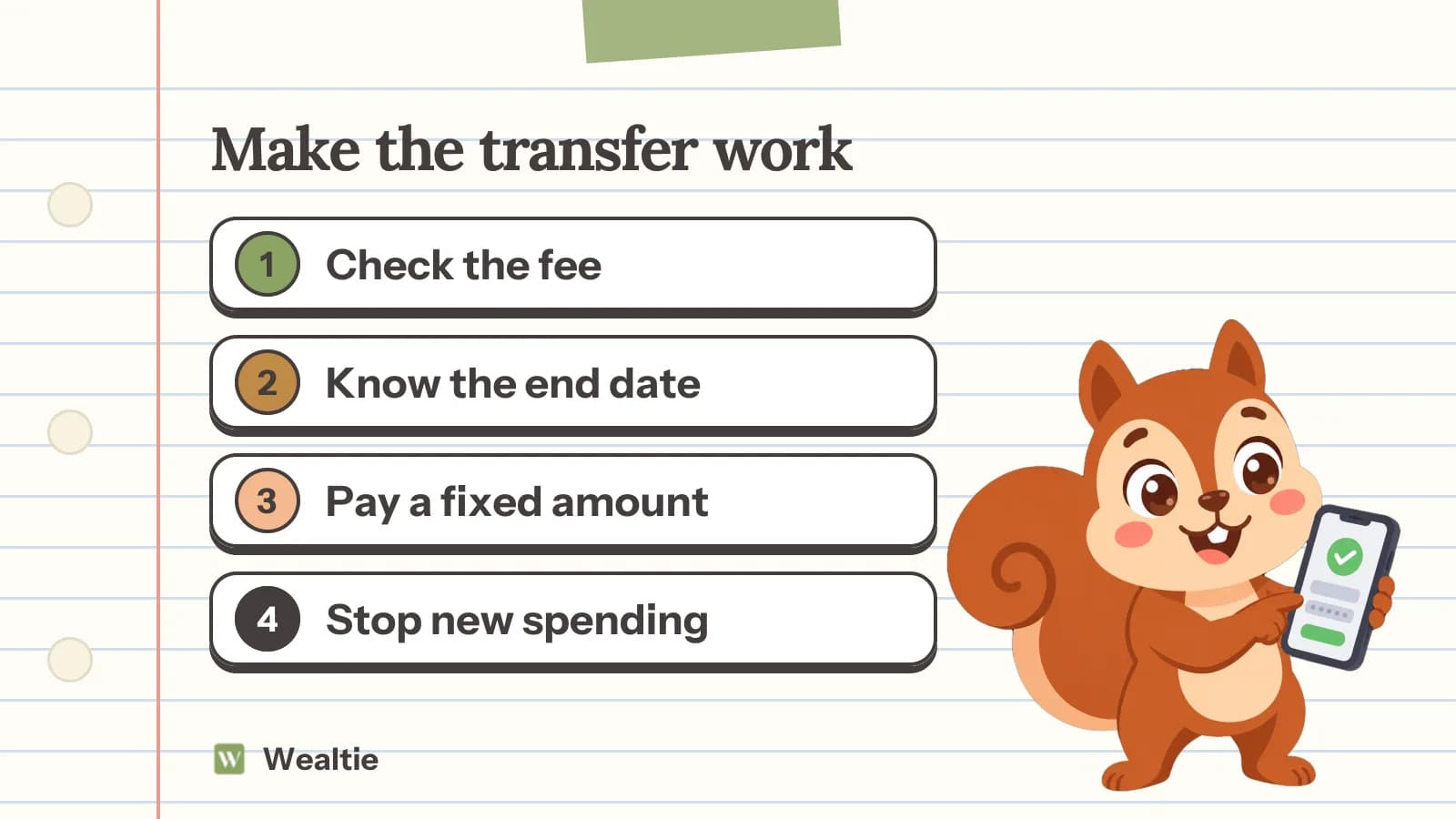
- A balance transfer card can cut interest if you clear the debt within the offer period.
- In a worked example, 150 a month clears a 3,000 balance in 20 months.
- Transfer fees, missed payments and the end of the offer can wipe out the saving.
- A transfer only helps if you stop adding new spending to cards.
What is a balance transfer card?
A balance transfer card lets you move debt from one or more credit cards onto a new card, usually with low or no interest for a set period. During that time, more of each payment goes towards the debt itself rather than interest, so you can clear it faster. Balance transfer cards are available in some countries but not all, and the terms vary between lenders.
Used well, a balance transfer can save a lot of interest. Used carelessly, it can leave you with more debt than before.
How does a balance transfer work?
You apply for a new card, and if you're accepted, the new lender pays off your old card balance. You then owe that amount on the new card. Most cards charge a transfer fee, added to the balance when you move it. The low-interest period starts, and when it ends, the normal interest rate applies to anything still owed.
Key things to check before applying:
- The transfer fee, and how it compares with the interest you'll save
- How long the low-interest period lasts
- The interest rate after the offer ends
- The deadline for making the transfer to get the offer
- What happens if you miss a payment, since many offers end early
- The interest rate on new purchases, which is often different
How much can a balance transfer save?
Here's a worked example for a 3,000 balance, paying 150 a month with no interest during the offer, in round numbers that work in any currency:
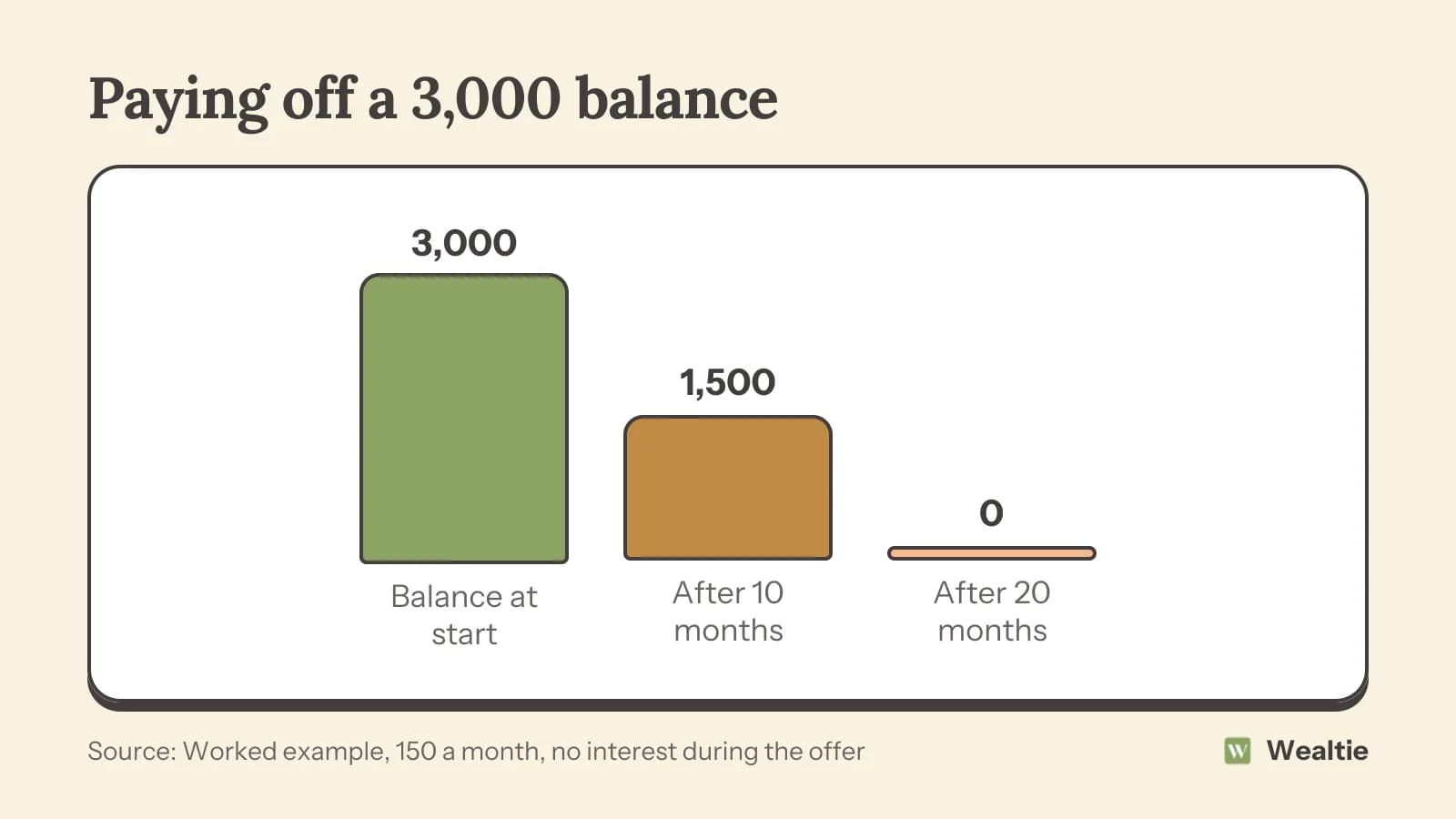
At 150 a month, the balance is halved after 10 months and cleared after 20. On a card charging interest, the same payments would take longer, since part of each payment would go on interest. The saving depends on your current interest rate, the transfer fee and how quickly you pay.
Work out the monthly amount
Divide the balance, including the fee, by the number of months in the offer. That's what you need to pay each month to clear it in time. If the offer lasts 20 months and you owe 3,000, that's 150 a month. Setting this up as a fixed automatic payment makes it much more likely you'll finish on time.
When is a balance transfer worth it?
When you can clear most or all of the debt during the offer, and you'll stop adding to card balances. It works best for people with a clear plan, steady income and the discipline to pay a fixed amount every month.
It's less likely to help if you can only afford minimum payments, if you're likely to keep spending on cards, or if the transfer fee is high compared with the interest you'd save.
What are the traps to watch?
The most common problems are:
- Paying only the minimum, which leaves a large balance when the offer ends
- Missing a payment, which can end the offer and bring charges
- Spending on the new card, where purchases may be charged at a higher rate
- Spending on the old card again, once it's cleared
- Transferring too late, after the deadline for the offer
Make a note of the date the offer ends, and check your progress every few months. Why the minimum payment keeps you in debt explains why paying more matters.
What are the alternatives?
A balance transfer isn't the only option. A debt consolidation loan combines debts into one fixed monthly payment over a set term. The snowball and avalanche methods help you pay down several debts in a planned order. Is a debt consolidation loan worth it and debt snowball vs avalanche cover both. Some lenders also offer hardship plans or lower rates if you ask, especially if you've paid reliably.
If your debts feel unmanageable, free debt advice services can help you choose the right approach. A balance transfer requires a credit check, and being turned down can be discouraging, so advice first can help.
How do you stop the debt coming back?
Change the habit that built it. If spending on cards created the debt, set a budget, use a debit card for everyday spending and keep a small emergency fund so unexpected costs don't go back on credit. How to stop using credit cards has practical steps.
How do you track a balance transfer in Wealtie?
Add the new card as an account and set up your monthly payment as a recurring transaction with the bill tracker, so it logs itself each month and the balance falls on schedule. Track everyday spending in your expense categories, so nothing new goes on the card unnoticed.
Questions people ask
Yes, if you can clear most of the debt before the offer ends and stop adding new spending. Check the transfer fee first.
A new card pays off your old card balance, usually with low or no interest for a set period, often for a transfer fee.
The normal interest rate applies to anything still owed, so aim to clear the balance before then.
Divide the balance, including the fee, by the months in the offer. A 3,000 balance over 20 months needs 150 a month.
This article is general information, not financial, tax or legal advice. Your situation is your own; check the numbers that apply to you before you act on them.