Multi-currency & travel: Is an all-inclusive holiday worth it? How to work it out
Is an all-inclusive holiday worth it? It is if you'd spend more on food, drinks and snacks than the extra it costs over room only, and in a worked example a family of four saves about 400 on a week.
 By Wealtie Team · 3 min read

Key takeaways
- An all-inclusive holiday is worth it if you'd spend more than the extra cost on food and drink.
- In a worked example, a family of four saves about 400 on a week.
- It suits families, big eaters and people who want a fixed cost.
- It suits people who want to explore and eat out less well.
Is an all-inclusive holiday worth it?
An all-inclusive holiday bundles your room, meals, snacks and usually drinks into one price paid upfront. It looks expensive next to a room-only or bed-and-breakfast deal, but that comparison misses the cost of eating and drinking for a week. To know whether it's worth it, compare the all-inclusive price with the room-only price plus what you'd spend on food, drinks and snacks.
For many families and people who like to relax at the hotel, all-inclusive works out cheaper and less stressful. For people who like to explore and eat out, it can mean paying for meals they don't eat.
The answer also depends on where you go. In some destinations, all-inclusive resorts are the main option and eating out nearby is limited or expensive. In others, there are cheap, excellent restaurants just outside the hotel gates. Looking at a map and a few reviews of places nearby tells you a lot about how much you'd use the hotel's food. It's worth doing before you compare prices, since it changes which option is the real bargain.
How do you compare all-inclusive with room only?
Here's a worked example for a family of four on a week's holiday, in round numbers that work in any currency:
| Option | Cost |
|---|---|
| All-inclusive | 3,200 |
| Room only | 2,000 |
| Food and drink | 1,600 |
| Room only total | 3,600 |
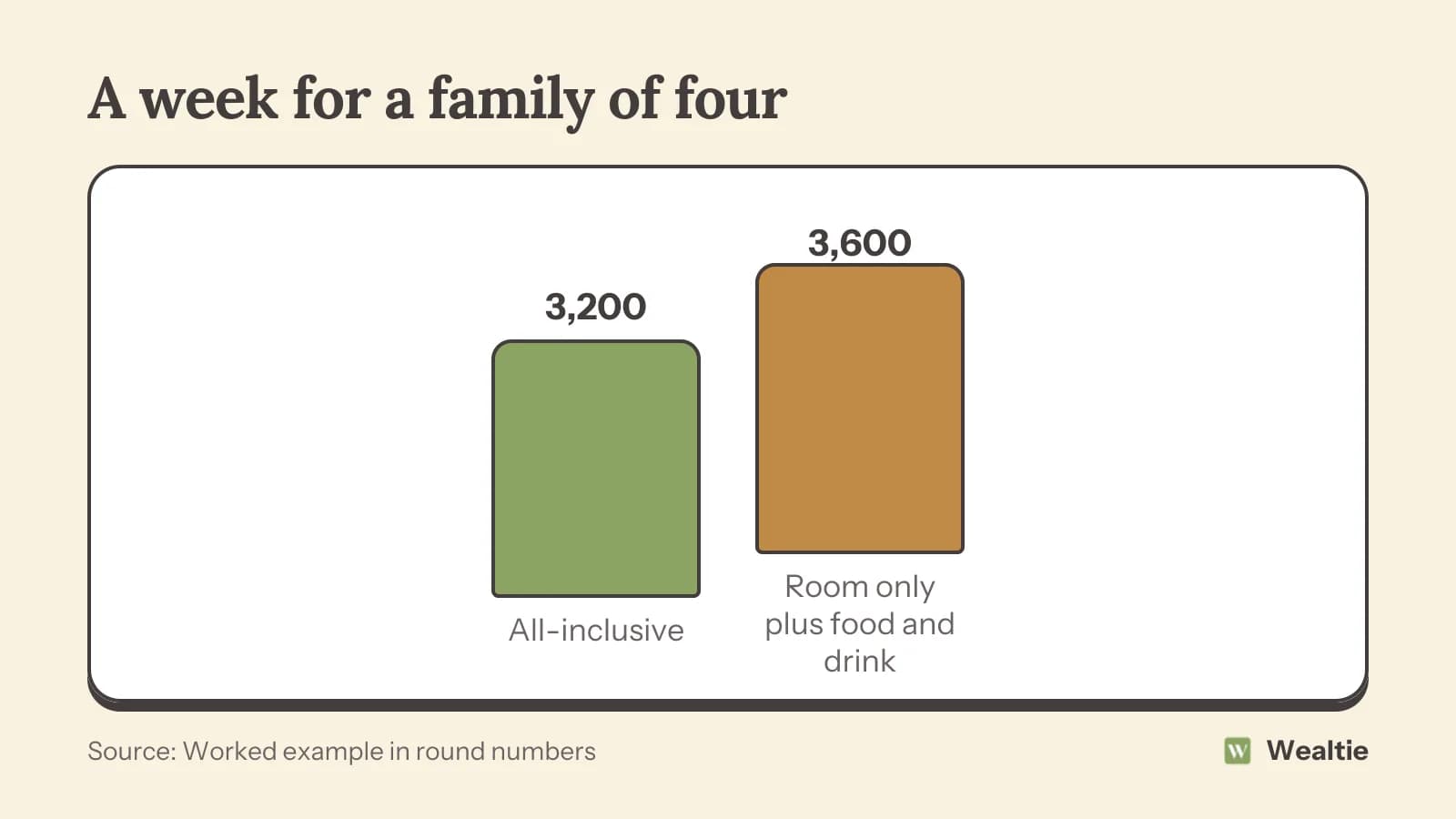
The food and drink figure is about 230 a day for four people, covering breakfast, lunch, dinner, snacks, drinks by the pool and ice creams. In this example, all-inclusive saves about 400.
Now take a couple who plan to explore and eat out most evenings. If all-inclusive costs 1,000 more than room only, but they'd only spend 700 on food and drink, room only is cheaper by 300.
Who is an all-inclusive holiday best for?
Families
Children get hungry and thirsty often, and snacks, drinks and ice creams add up quickly. All-inclusive means saying yes without counting the cost each time.
People who want a fixed cost
Paying upfront means you know the total before you go. There's no worrying about the bill each evening, and you can spend the holiday relaxing.
People staying at the resort
If you plan to spend most days by the pool or on the hotel beach, all-inclusive makes sense, since you'll eat most meals there.
Expensive destinations
In places where eating out costs a lot, all-inclusive can save a large amount.
Who might not find it worth it?
If you love trying local restaurants, exploring towns and taking day trips, you'll miss many of the meals you've paid for. You might also find the food at a resort repetitive after a few days. In destinations where eating out is cheap, room only or bed and breakfast can cost far less, and you get to enjoy local food. Light eaters and people who don't drink alcohol may also get less value.
There's a middle option too. Half board, with breakfast and dinner included, leaves lunch free for days out while still covering the two biggest meals. Bed and breakfast suits people who want to eat out every evening. Pricing two or three options for the same hotel and dates, and adding your likely food spending to each, shows which works best for the way you holiday. It takes a few minutes and often changes the answer.
What should you check before booking all-inclusive?
Not all all-inclusive deals are the same. Check which drinks are included, since some charge for branded spirits, cocktails or bottled water. Find out whether all restaurants are included or whether some charge extra or need booking. Check the hours: some deals stop serving snacks or drinks in the late evening. Reading recent reviews gives a good idea of the food quality and how busy it gets.
Budget for extras
Even all-inclusive holidays have extra costs: transfers, day trips, activities, spa treatments, tips and souvenirs. Set a budget for these too. The daily travel budget covers planning spending money for each day.
How can you save on any holiday?
Booking early, travelling outside school holidays and comparing deals all help, whichever option you choose. How to save money on hotels and how to save money on holiday rentals cover accommodation, and how to save for a vacation covers setting money aside before you go.
How do you track a holiday in Wealtie?
Add a travel category to your expense categories and set a budget for the trip, so the booking and extras count towards one total. If you spend abroad, log costs in the local currency and Wealtie converts them with multi-currency support.
Questions people ask
It's worth it if you'd spend more on food, drinks and snacks than the extra it costs over room only. In a worked example, a family of four saves about 400 on a week.
Families, people who want a fixed cost, people staying at the resort most of the time and those visiting expensive destinations.
When you plan to explore and eat out, or when you're visiting a place where eating out is cheap.
It varies, but transfers, day trips, premium drinks, some restaurants, spa treatments and tips are often extra.
This article is general information, not financial, tax or legal advice. Your situation is your own; check the numbers that apply to you before you act on them.