Budgeting: University allowance: how much should parents give?
A university allowance works best when it's based on a student's real costs after loans, grants and part-time work. In a worked example, a student short of 200 a month gets a 50 weekly allowance from their parents.
 By Wealtie Team · 3 min read
Key takeaways
- A university allowance should fill the gap between a student's costs and their income.
- Work out the budget together before agreeing an amount.
- Weekly or monthly payments are easier to manage than a lump sum.
- Agree what the allowance covers and what it doesn't.
How much university allowance should parents give?
There's no standard amount. The right university allowance depends on what your child's studies and living costs will be, what they'll receive in loans or grants, whether they'll work part-time and what you can afford. The clearest way to decide is to work out the student's budget together and see where the gap is.
That approach has another benefit. Your child learns to plan their own money, and the allowance becomes one part of a budget they understand, rather than a top-up whenever they run short.
How do you work out the gap?
Start with monthly costs, then subtract the student's own income. Here's a worked example, in round numbers that work in any currency:
| Monthly cost | Amount |
|---|---|
| Rent | 600 |
| Food | 200 |
| Travel, phone and books | 150 |
| Social and personal | 150 |
| Total | 1,100 |
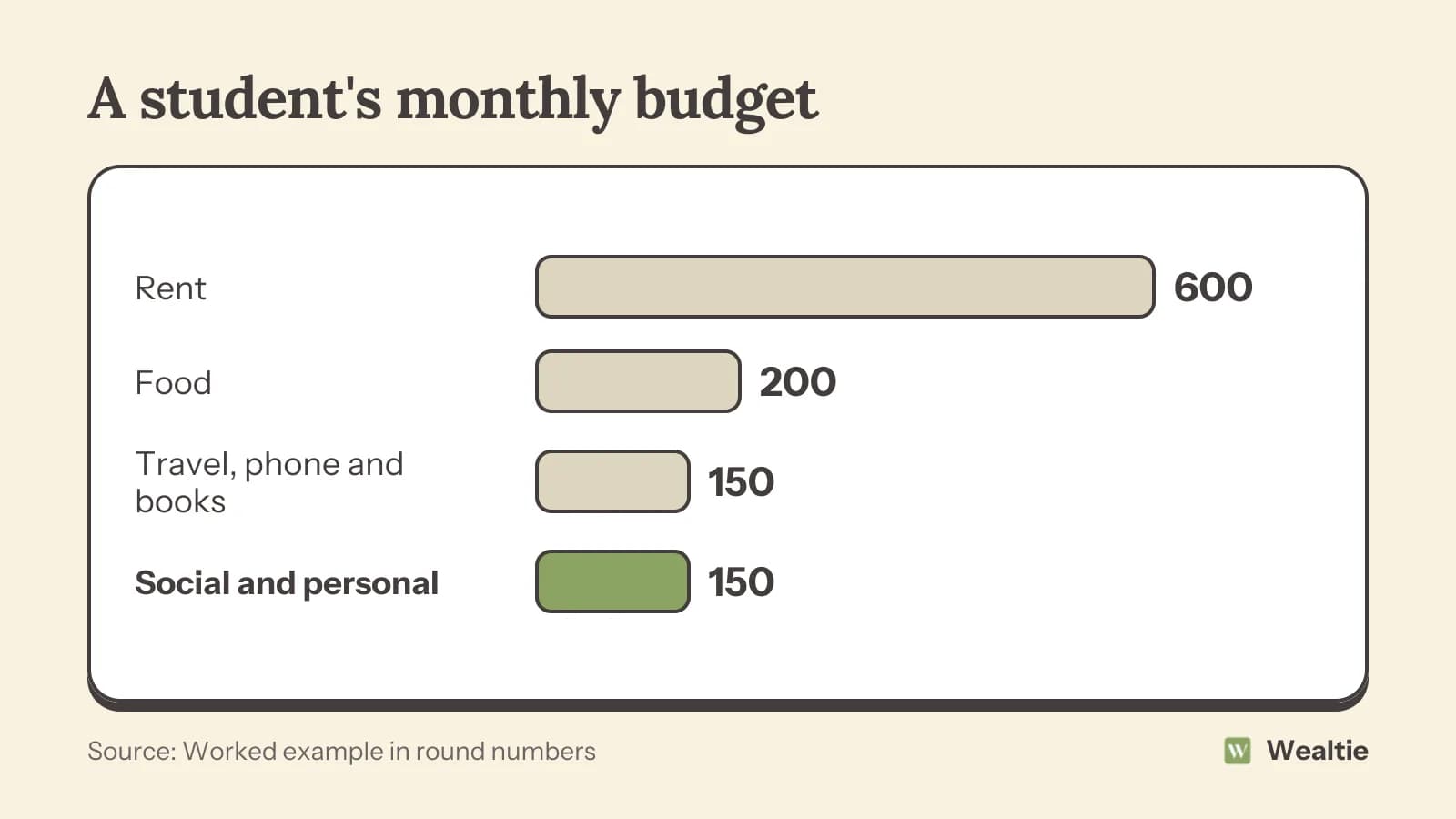
If the student receives 700 a month from loans or grants and earns 200 from a part-time job, their income is 900. That leaves a gap of 200 a month, or roughly 50 a week. That gap is a sensible starting point for an allowance. How to make a college student budget covers building the cost side in more detail, and university accommodation costs covers the biggest line.
What should the allowance cover?
Essentials or extras
Agree whether the allowance is for essentials like food and travel, or for extras like nights out and clothes. Many families cover a share of essentials and leave the social budget to the student's own earnings.
Big one-off costs
Laptops, deposits, course trips and equipment are often paid separately. Decide upfront who pays for these, so they don't come as a surprise request.
Holidays
Students often come home during breaks. Agree whether the allowance continues during holidays, and whether rent on term-time accommodation is still covered.
Should you pay weekly, monthly or per term?
Weekly
Weekly payments are easiest for students who are new to managing money. If they overspend early in the week, the next payment is never far away.
Monthly
Monthly payments match rent and most bills, and help students practise budgeting over a longer period. They suit students who've managed money before.
Per term
A lump sum each term gives the most independence but is the easiest to run through early. It works best alongside a clear budget.
Many families start weekly in the first term and move to monthly once the student is settled.
How do you agree the amount fairly?
Look at what you can afford
Your own savings, debts and retirement still matter. An allowance you can sustain for the full course is better than a generous one you have to cut halfway.
Be consistent between siblings
If you have more than one child, think about how support compares over time, adjusting for different costs and courses.
Agree what happens if they run short
Decide in advance whether you'll top up in an emergency, and what counts as one. That stops every shortfall from becoming a negotiation.
Review each year
Costs, loans and part-time earnings change between years. A quick review before each year starts keeps the allowance fair.
How can students make the allowance go further?
Encourage your child to set a weekly spending limit, track what they spend and avoid relying on an overdraft. Shared shopping and cooking with flatmates, student discounts and a part-time job during the holidays all help. Talking openly about money now builds habits that last well beyond university.
The first term is often the most expensive. Students buy kitchen items, bedding, books and course materials, and freshers' events add to the social budget. Some parents give a one-off starter amount before term begins to cover these costs, then switch to the regular allowance. That stops the first few weeks from eating into money meant for food and travel later in the term.
It also helps to agree how you'll talk about money during the year. A short check-in once a month, or at the end of each term, lets your child raise problems early instead of waiting until they've run out. Keeping those conversations calm and practical makes it more likely they'll come to you before a small shortfall turns into an overdraft or a credit card balance.
How can Wealtie help students budget?
A student can set a weekly or monthly budget in Wealtie and log spending in expense categories like food, travel and social, so they see what's left before the next allowance arrives. Parents can add the allowance as a recurring transaction in their own budget to plan for it each month.
Questions people ask
Base it on the gap between their monthly costs and their income from loans, grants and work. In a worked example, the gap was 200 a month.
Weekly suits students new to managing money. Monthly matches rent and bills and suits students who've budgeted before.
Agree whether it covers essentials, extras or both, and decide separately who pays for one-off costs like laptops and deposits.
Many do. A part-time job reduces the gap parents need to cover and gives students their own money for social spending.
This article is general information, not financial, tax or legal advice. Your situation is your own; check the numbers that apply to you before you act on them.