Budgeting: How to budget for school trips without a last-minute scramble
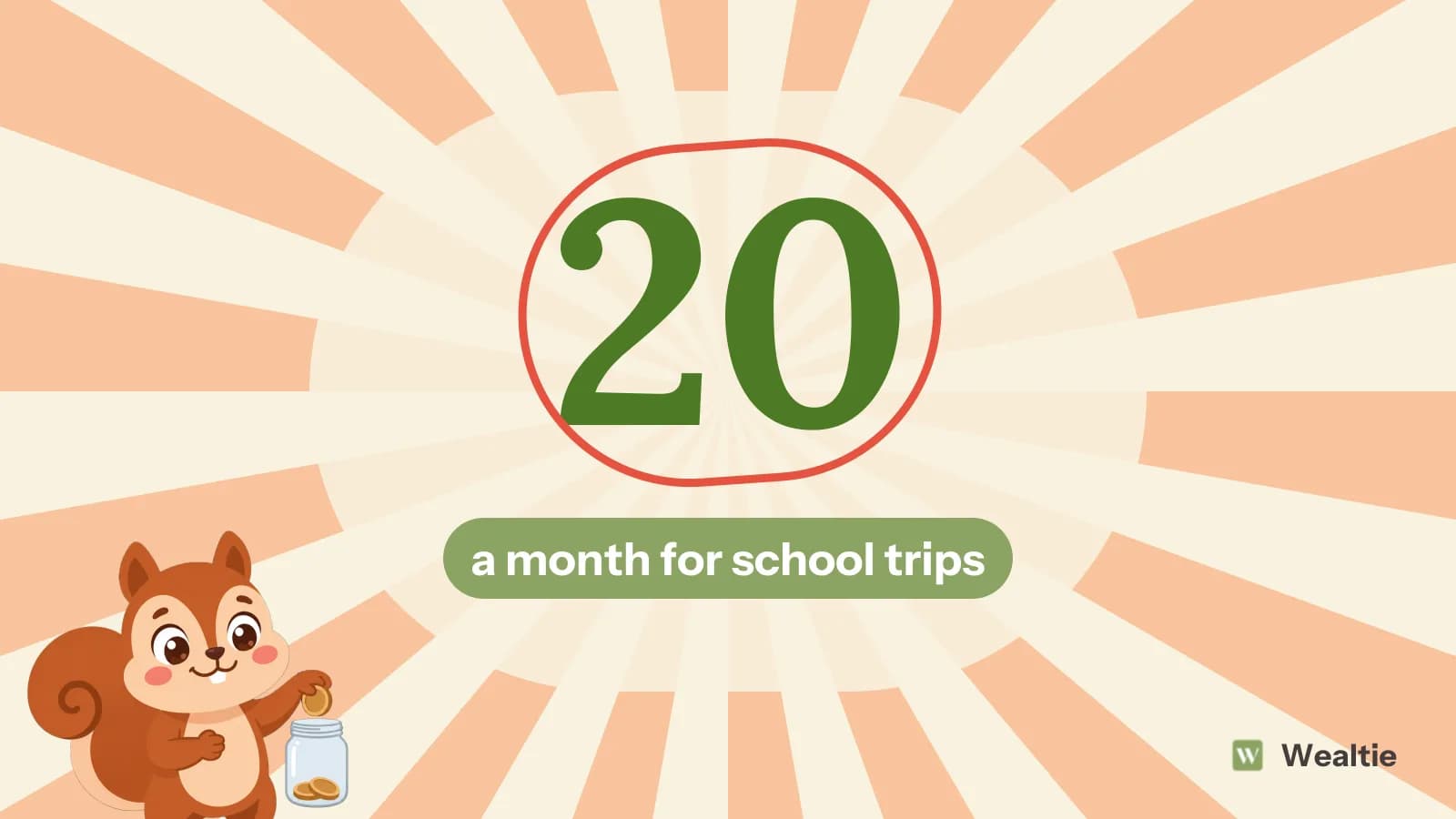
A school trips budget works best as a small monthly amount saved across the year, plus a plan for any big residential trip. In a worked example, a year of trips for one child costs about 240, or 20 a month.
 By Wealtie Team · 3 min read
Key takeaways
- List the trips your child is likely to take in a year, since many are announced with little notice.
- In a worked example, a year of trips for one child costs about 240, or 20 a month.
- Ask about payment plans for expensive trips, since many schools spread the cost.
- Many schools have support for families who can't afford a trip, so ask quietly.
How do you budget for school trips?
Save a small amount every month, so trips don't land as a surprise and you can say yes without stress. School trips can be announced with only a few weeks' notice, and a couple of them in the same term can strain a budget. A steady monthly amount, plus a separate plan for any big residential trip, keeps them affordable for the whole family.
What do school trips cost in a year?
Here's a worked example for one child, in round numbers that work in any currency:
| Trip | Amount |
|---|---|
| Two or three day trips | 60 |
| A theatre or museum visit | 30 |
| A share of a residential trip | 150 |
| Total | 240 |
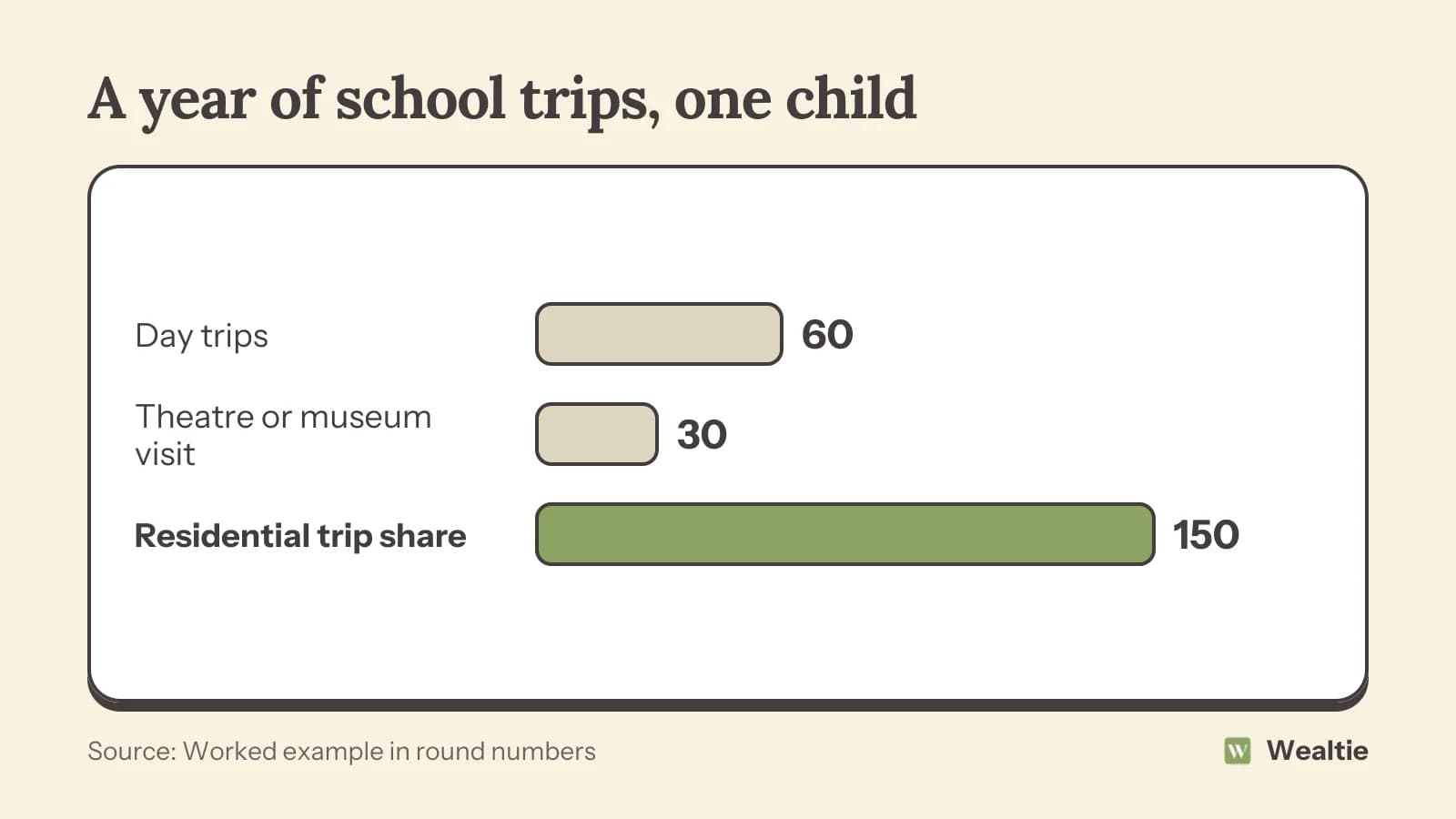
That's 20 a month. Costs vary a lot by school and age, and older children's trips, especially residential ones and trips abroad, can cost much more. With two or three children at school, the total can be several hundred a year, so it's worth adding up each child's likely trips separately. Secondary schools often have more trips tied to subjects, like field trips or language exchanges.
How do you prepare for trips you don't know about yet?
Look at last year. Ask other parents, or check the school calendar, for the trips usually taken in each year group. A quick message to a parent of an older child in the same school often tells you exactly what's coming and what it cost. Many schools repeat the same trips each year, so you can estimate the year ahead. Save a little more than you think, since one surprise trip is common, and any leftover can roll into next year's pot.
How do you handle residential trips?
Plan early. Residential trips and trips abroad can cost several hundred, and schools often announce them months or a year ahead. If a trip costs 450 and it's three years away, saving 150 a year covers it. If it's a year away, that's about 38 a month.
Many schools let you pay in instalments for bigger trips. Ask about a payment plan as soon as the trip is announced, and set the payments up in your budget. Talk with your child about whether a big trip is right for them, since some children would rather spend the money on something else, and it's a good chance to involve them in a money decision.
What if you can't afford a trip?
Ask the school quietly. Many schools have funds to help families with trip costs, and some trips are subsidised for children who qualify for free school meals or other support. Schools usually handle these requests discreetly. In some places, schools can't charge for trips that are part of the curriculum, and can only ask for voluntary contributions, so check the rules.
What other costs come with trips?
Spending money, packed lunches, special clothing or equipment, and sometimes transport to the pick-up point. For residential trips, there may be a kit list. Check what you already have and borrow where you can, rather than buying new for one trip. Waterproofs, sleeping bags and walking boots are often available from friends or second-hand.
Agree a spending money amount with your child, especially for trips with a gift shop. A small, fixed amount teaches them to choose, and some schools set a maximum to keep things fair between children.
What about trips abroad?
They can be the most expensive, with flights, accommodation and sometimes a passport to sort out. Schools usually announce them well ahead, so start saving straight away, check the passport is valid, and ask about payment plans. Travel insurance may be included by the school, so check before buying it separately. Agree how much spending money to send in the local currency, and whether your child will carry a card.
How do you save for trips?
Put a small monthly amount into a separate pot, alongside other child costs like birthdays and back-to-school. A sinking fund works well. The back to school budget covers the other school costs that come up during the year.
How do you track school trip costs in Wealtie?
Add a savings account for school costs and move a monthly amount into it as a transfer, which isn't counted as spending. Log trip payments in a School category, so your expense categories show what trips cost over a year. Your net worth tracker shows the pot growing.
Questions people ask
It varies by school and age. A worked example for one child comes to about 240 a year, or 20 a month.
Start saving as soon as it's announced, and ask the school about paying in instalments.
Ask the school quietly about help. Many have funds to support families, and some trips are subsidised for children who qualify.
Agree a small, fixed amount based on the trip, which helps them learn to choose.
This article is general information, not financial, tax or legal advice. Your situation is your own; check the numbers that apply to you before you act on them.