Money as a couple: Roommate not paying bills? What to do, in the right order
If you've got a roommate not paying bills, check the facts first, talk to them soon, and put a repayment plan in writing. If that fails, your lease and the name on the bill decide what you can do.
 By Wealtie Team · 4 min read
Key takeaways
- Before you raise it, check the bill, the split and who's already paid, because a mix-up is often the cause.
- Talk within a few days of noticing, and ask what's going on before you ask for the money.
- Agree a repayment plan with dates and amounts, and confirm it in a message.
- Whoever's named on the bill or the lease is usually the one the company or landlord will chase.
What should you do first with a roommate not paying bills?
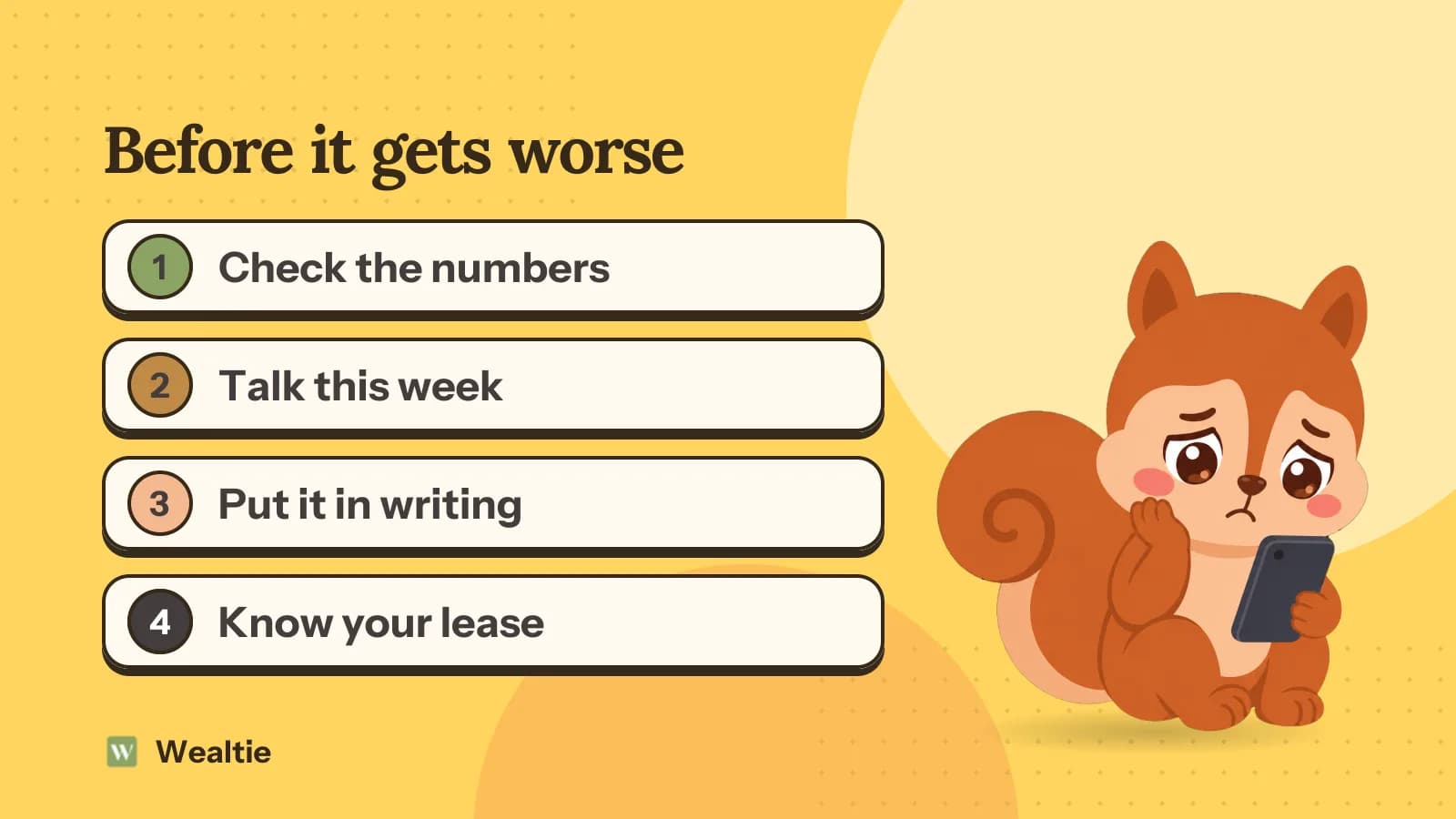
Check the numbers before you say anything. Look at the bill, what each of you owes, and what's been paid. Sometimes the money went to the wrong account, or a direct debit bounced, or one person assumed the other had it covered.
Then look at how long it's been. One late payment is an annoyance, and three in a row is a pattern. Write down what's owed and when each bill was due. You'll want those dates later if it goes further.
How do you bring it up?
Soon, in person if you can, and start by asking. A few days after you notice is much better than a few months, since a small amount is easier to talk about.
Something like: "The electricity's due on Friday and I haven't seen your half. Is everything OK?" It gives them room to tell you what's happening. People who've lost hours at work or had a bad month often avoid the subject out of embarrassment.
Keep it about the bill and the date. "You never pay anything" tends to end the conversation. Avoid doing it in front of the other flatmates, too.
What if they can't pay right now?
Agree a plan with dates and amounts, then confirm it in a message. Here's an example, for a debt of 360 in round numbers that work in any currency:
| Date | Payment | Remaining |
|---|---|---|
| End of this month | 90 | 270 |
| End of next month | 90 | 180 |
| The month after | 90 | 90 |
| The month after that | 90 | 0 |
Then send something like: "Thanks for talking. Just to confirm, you'll pay me 90 at the end of each month until the 360 is cleared." It's friendly, and it's a written record if you need one.
Ask that the current month's bills are paid on time as well as the catch-up amount. Otherwise, the debt keeps growing while the old one's being paid down.
Should you cover their share?
Only if a bill's about to go unpaid and it would hurt you. If your name's on the account, a missed payment can land on your credit record, or the service can be cut off. In that case, paying it and chasing them afterwards might be the least bad option.
Make it clear it's a one-off, and write down that you paid it. If you keep covering, the problem stops being theirs. Don't pay what you can't afford. Tell the company early if the full amount can't be paid, since many have payment arrangements.
Who's legally responsible?
Usually whoever's named. The company will come after the account holder, whatever you've agreed among yourselves. For rent, it depends on your lease. Many shared leases make every tenant responsible for the whole rent, so the landlord could ask you for your roommate's share too.
Read your lease and the bill before making threats. Rules differ a lot between countries and states, so a local tenant advice service or housing charity is a good place to ask. It's usually free.
What if nothing changes?
Move from a friendly reminder to a formal one. Send a dated message setting out what's owed and the date you need it by. If there's a written agreement between you, refer to it.
After that, your options depend on where you live and what you've signed. For smaller debts, a small claims court is often an option. It's designed for people without lawyers, though you'll need your records, and it can take months. You could also talk to your landlord if the rent's involved.
Think about what you want in the end. Is it the money, or is it for them to move out? Those lead to different conversations, and getting someone to leave usually depends on the lease and on local law.
How do you stop it from happening again?
Set up the system so nobody has to ask. The best approaches take away the moment where someone has to remember.
Put each bill in the name of someone who's reliable, and have everyone pay their share into one account before the due date. Or give each person responsibility for a bill, so nobody has to collect. Agree who pays what before you move in, in writing, even if it's only a shared note. Splitting rent with roommates and splitting groceries with roommates cover the setup.
Plan a short money check-in once a month, so bills get talked about before they're overdue.
If you're choosing a new roommate, ask how they've handled bills in past places. It's a reasonable question, and the answer can tell you a lot.
How can you share bills in Wealtie?
A shared account lets everyone see what's been paid and who owes what, with owner, editor and viewer roles. You can use pooled or per-person balances and split an expense to the cent, so nobody's relying on memory. The account owner needs Pro to invite people, and whoever accepts can be on any plan. There's more on the shared accounts page. Wealtie keeps the record and doesn't move money between you, so you'll still settle up yourselves. The bill tracker logs recurring bills on their due dates.
Questions people ask
Check the numbers, then talk to them soon and agree a repayment plan in writing. If that fails, a formal written request and small claims court are the usual next steps.
You may be, depending on your lease. Many shared leases make each tenant responsible for the whole rent, so read yours and check with a local tenant advice service.
Often, yes, through a small claims process if you've got records of what's owed. The rules vary by country and state, so check what applies where you live.
Only if an unpaid bill would hurt you, for example if your name's on the account. Treat it as a one-off and write down what you paid.
This article is general information, not financial, tax or legal advice. Your situation is your own; check the numbers that apply to you before you act on them.