Budgeting: How much does a child's first phone cost?
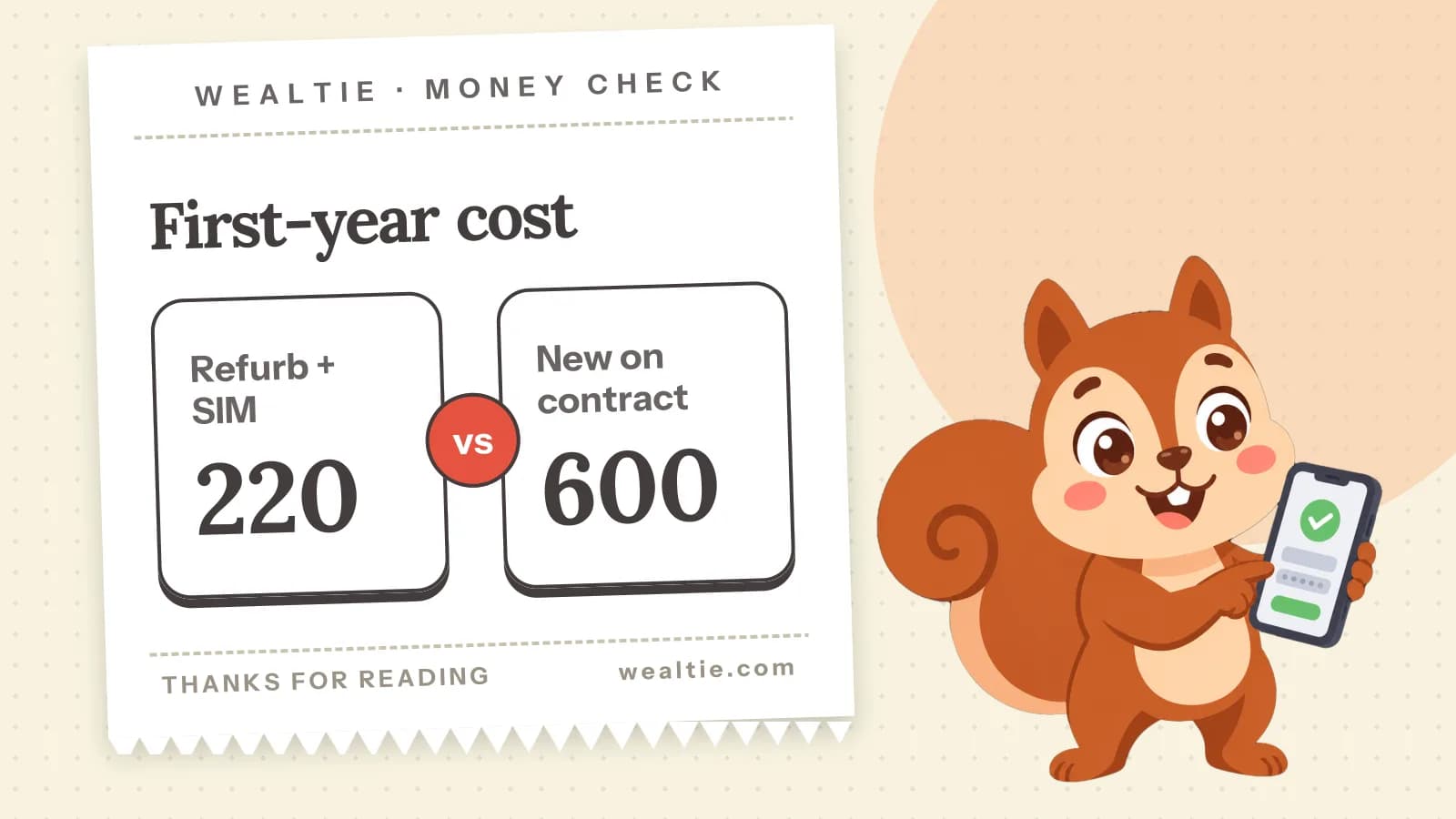
A child's first phone costs more than the handset, with a monthly plan, a case, insurance and possible in-app spending to plan for. In a worked example, a refurbished phone and a small SIM-only plan cost about 220 in the first year, against about 600 for a new phone on contract.
 By Wealtie Team · 3 min read
Key takeaways
- A child's first phone cost includes the plan, case, insurance and any in-app spending.
- In a worked example, a refurbished phone and SIM-only plan cost about 220 in the first year, against 600 on contract.
- A basic or second-hand phone is often enough for a first phone.
- Set spending limits and parental controls to avoid surprise charges.
How much does a child's first phone cost?
More than the phone itself. A child's first phone comes with a monthly plan, a case, perhaps a screen protector and insurance, and the risk of in-app purchases or going over a data allowance. Planning these before you buy keeps costs predictable and avoids surprises on the bill. Agreeing rules with your child before the phone arrives is much easier than adding them later.
When to give a child a phone is a family decision, and this guide doesn't recommend an age. It focuses on the money side.
What does the first year cost?
Here's a worked example, in round numbers that work in any currency:
| Option | First-year cost |
|---|---|
| Refurbished phone, SIM-only plan and case | 220 |
| New phone on a contract | 600 |
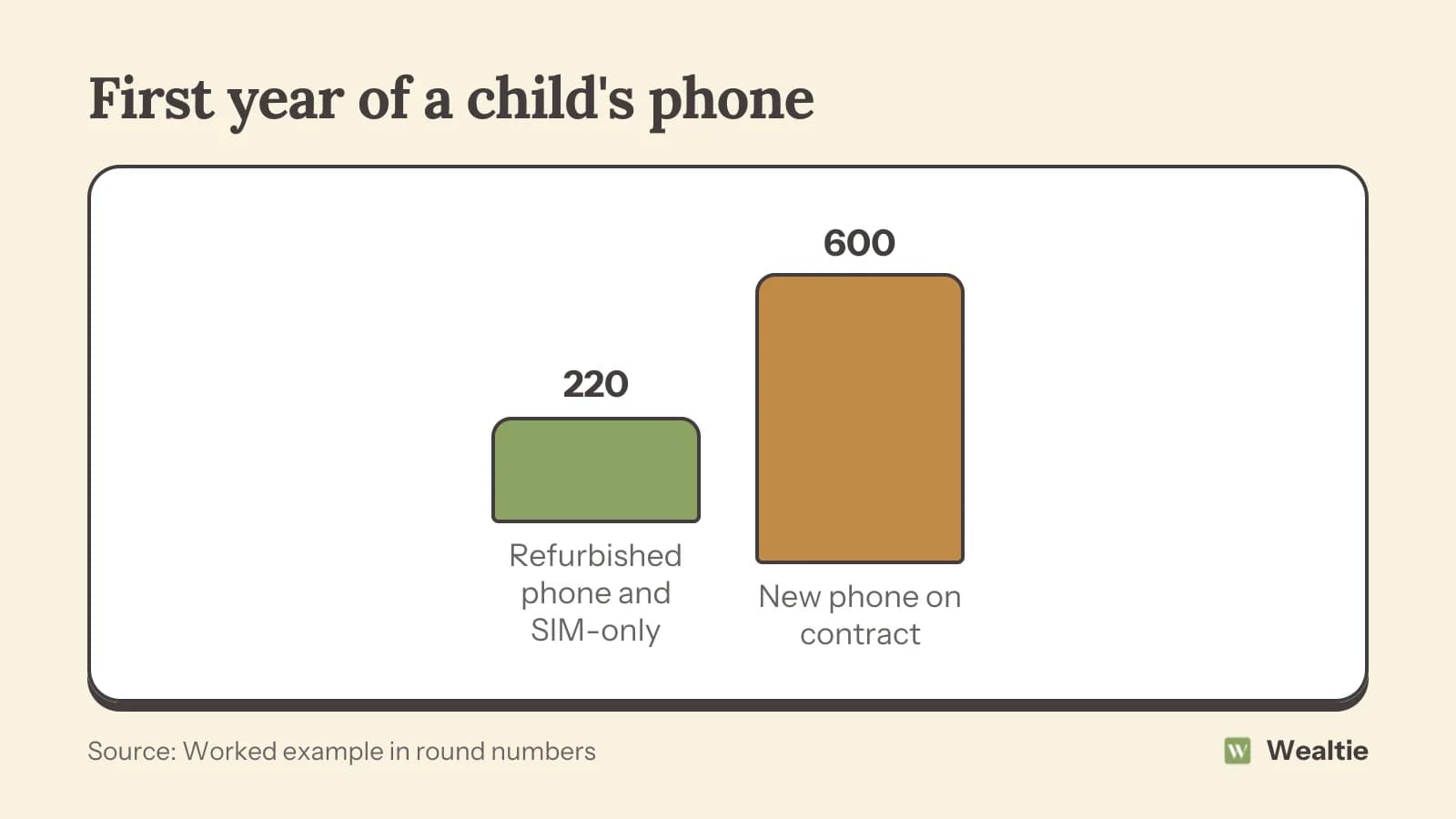
In this example, a refurbished phone costing about 130, a small SIM-only plan at 7 a month and a sturdy case cost about 220 in the first year. A new phone on a contract costs about 600 a year. Your own costs depend on the phone and plan you choose. Over two or three years, the difference between the two options can be several hundred.
Does a first phone need to be new?
Usually not. A basic or second-hand phone, or a hand-me-down from a family member, is often enough for calls, messages and a few apps. Children lose and break phones more often than adults, so an expensive phone carries more risk. A refurbished phone with a warranty is a good middle ground. Some families start with a simple phone for calls and texts and move to a smartphone later. How to save money on your phone bill covers choosing a plan.
Protect it
A sturdy case and screen protector cost little and prevent the most common damage. Check whether your home insurance covers phones, or whether separate cover is worth it for the value of the phone.
Which plan should you choose?
A SIM-only plan with a small data allowance is usually enough for a first phone, and monthly rolling plans let you change easily. Look for plans that let you cap spending, block premium services and set data limits. Some providers offer family plans or child-friendly features. Adding a child to a family plan can be cheaper than a separate contract.
Pay as you go
Pay-as-you-go plans, where you top up credit, give firm control over spending, since the phone stops when credit runs out. They can suit younger children or anyone learning to manage a budget.
How do you avoid surprise charges?
Set controls before handing over the phone:
- Turn off or password-protect in-app purchases
- Block premium-rate numbers and services
- Set data limits and alerts
- Use the phone's parental controls for apps and screen time
- Avoid storing a card on the child's account
In-app purchases in games can add up quickly. Talking with your child about how they work, and giving them a set amount to spend, teaches useful money habits. Pocket money by age covers giving children money to manage. Reviewing app purchases together each month keeps spending visible and opens a conversation about value.
Teaching good habits
A first phone is a good chance to teach money habits. Show your child how the plan works, what happens if they go over their allowance and how in-app purchases add up. Letting them manage a small top-up or app budget builds skills they'll use for life.
Should your child contribute?
Some families ask older children to contribute towards their phone or plan from pocket money or a part-time job. It helps them understand the cost and take care of the phone. Agree the arrangement upfront, including what happens if the phone is lost or broken. Writing it down, even informally, avoids arguments later.
How do you plan for upgrades?
Decide in advance how often you'll replace the phone, and who pays. Children may want the latest model their friends have, but a working phone doesn't need replacing. Saving a little each month for a future replacement avoids a big cost later. Passing your own old phone down when you upgrade is another option. Wipe it, reset it and set up parental controls before handing it over.
How do you track a child's phone costs in Wealtie?
Set up the monthly plan as a recurring transaction with the bill tracker, so it's logged each month. Log the phone, case and any top-ups in a children's line in your expense categories, so you can see the yearly cost.
Questions people ask
In a worked example, about 220 in the first year with a refurbished phone and SIM-only plan, against 600 on contract.
Usually not. A basic, refurbished or hand-me-down phone is often enough and carries less risk if lost.
A small SIM-only or pay-as-you-go plan with spending caps and data limits.
Turn off or password-protect in-app purchases, avoid storing a card and use parental controls.
This article is general information, not financial, tax or legal advice. Your situation is your own; check the numbers that apply to you before you act on them.